
Siraj Syed’s IFFI 2016 diary, II, Andrzej Wajda’s lingering Afterimage
Siraj Syed’s IFFI 2016 diary, II, Andrzej Wajda’s lingering Afterimage
Six of Poland’s much raved and long-revered director Andrzej Wajda’s films were on display at IFFI 2016. In a fitting tribute to the international master, who died on 9 October this year, of pulmonary failure, his last film, Afterimage, was the inaugural film here. Afterimage was completed just before his death, and he had even made a draft of the trailer and sent it to his editor, before dying, at age 90. A team that included his producer, costume designer and editor were at IFFI to witness the screening and share memories of the making of the film. Although Afterimage is anti-Stalin and anti-socialism, it is seen as more of a historic chronicle about a severely handicapped artist than a commentary.
Besides, five other films, lauded all over the world, were here as a retrospective. They included the representative from the ‘Man of…’ trilogy, Man of Iron, and covered a 50-year span, from 1958 to 2007. Wajda made his first film in 1954. He had made a war trilogy in the 50s. A supporter of the capitalist regime and a member of Lech Walesa's Solidarity Advisory Council, 1981-89, he was targeted by the communist government. Besides the stunningly visual Afterimage, the films were:
1. Ashes and Diamonds, 1958
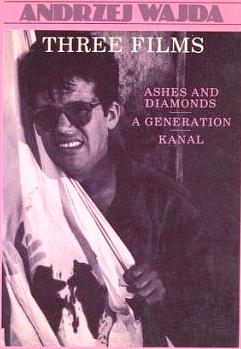
On the last day of World War II in a small town somewhere in Poland, Polish exiles of war and the occupying Soviet forces confront the beginning of a new day, and a new Poland. In this incendiary environment, we find soldier Maciek Chelmicki, who has been ordered to assassinate a Russian commissar. But a mistake stalls his progress, and leads him to Krystyna, a beautiful barmaid who gives him a glimpse of what his life could be.
2. Katyn, 2007
In 1939-40, at the beginning of World War II, Soviet soldiers conduct a mass execution of captured Polish officers. With Hitler’s German forces rapidly advancing into Eastern Europe, a surviving Polish officer, Lt. Jerzy, at great risk to his own life, chooses to stay behind with his wife, Ann. The film is an assemblage of a novel by Andrzej Mularczyk, and real life accounts.
3. Man of Iron, 1981
The historic moment of Solidarity (the mass movement that dislodged Poland’s communist regime) is viewed through the eyes of Winkel, a weak-willed TV reporter, sent to Gdansk, to dig-up dirt on the ship-yard strikers, particularly on Maciek Tomczyk, an articulate worker and a strike-leader. At first posing as sympathetic reporter, and then caught up in the historic moment, Winkel is reborn a new man, just as his Polish homeland is reborn, with a new political system. Man of Iron won the Palme d’Or at the Cannes Film Festival.
(In 1977, censors from Poland’s Script Commission, the propaganda department of the Central Committee, released Man of Marble, to the Polish audience. The film was hugely popular, as it truthfully told of the Stalinist era of the 1950s, and the 'soft-core' communism of the 1970s. 22 years after Man of Iron, Wajda made a biopic, Walesa: Man of Hope, the final chapter in his Solidarity trilogy. It was a portrait of the life of Nobel Peace Prize winner and founder of Poland's Solidarity movement, Lech Walesa, as events in the 1970s lead to a revolution).
4. The Maids of Wilko, 1979
Wiktor, a veteran of World War I, finds himself sad and disaffected in the city, after the death of a close friend. After 15 years of being away from the city, Wiktor returns to Wilko. He comes to realise that he has had a considerable impact on the town and its people. His presence, in turn, forces the young girls of Wilko to evaluate their complicated lives and personal failures.
5. The Promised Land, 1975
Quite a rage at Filmostav Bombay1976 (an early version of IFFI; Mumbai was earlier known as Bombay), Andrzej Wajda’s viscerally vivid adaptation of Nobel Prize-winner Wladyslaw Reymont’s late-19th-century novel is a ruthlessly clear-eyed anatomising of the industrial revolution from the perspective of three young entrepreneurs vying to be the most ruthless.
Wajda, on his family
“My father was an officer, a junior lieutenant in the Polish Army. My mother was a teacher; she graduated from a teaching college and worked at a Ukrainian school. So they were a typical intelligentsia marriage. My father was promoted very quickly and he was moved to Suwalki, to the 41st Infantry Regiment garrison. And that's where I was born. Officers were constantly transferred from one garrison to another, so my father soon moved to Radom.
Professions such as a teacher or a military officer are directed towards other people. A teacher teaches children, an officer also educates, in a sense, disciplining the soldiers in his care. So, both are people who work for others, not only for themselves. I think this quality was very distinct among the Polish intelligentsia in those times and I didn't know that a person could behave otherwise. You live for others, not for yourself.
And suddenly, in 1939, everything collapsed. My father was lost; he went to war and never came back. My mother could not stay at home, she had to go to work, we became workers. Our intelligentsia family found itself in completely different surroundings. I was 13 when the war broke out, so the only things I retained were the things that my home, school and the church had given me until that age.
My father, Jakub Wajda, lived only to the age of 40 and died at Katyn.”
Wajda on “the director’s two eyes”
The good Lord provided the director with two eyes - one to look into the camera, the other to observe intently everything that is going on around him. It is a skill which you should develop and endlessly improve, until you stop making movies (in the case of those trying to make political films this might happen at any moment, so time is running out!) For example: when the camera starts running, the director should watch and see simultaneously:
how the actors are playing;
what the crew members are doing: are they watching the take so that later they will be able to draw conclusions who's responsible for what?
whether the lights haven't been moved: do they illumine the actors as agreed? (basically this is the operator's job, but it is worth taking note of)
the sky: can the take be completed before the clouds obscure the sun?
that actor walking over the rails; is he going to brush his sleeve against a priceless Chinese vase? the microphone, already dangerously low; is it going to get into the frame? and many, many other things, happening on location.
Many years ago, at the start of my career as a director, I used to ask my assistants to take note for me of some things during a take. This inevitably led to misunderstandings, and the evaluated material usually turned out to be disastrous. Unfortunately, this is a job the director cannot share. The members of the crew must know that at any given moment he is in control and has an eye on absolutely everything; only then will they accept his wishes and work really effectively.
(Excerpted from "Podwojne spojrzenie", Warsaw 1998)


