
Run-up to IFFI 57, 2026, 09: BRICS by BRICS
Run-up to IFFI 57, 2026, 09: BRICS by BRICS
IFFI 57 will feature a package of 'Films from BRICS', a showcase of cinema from BRICS countries, that engages with questions of democracy, freedom, identity, history and contemporary global concerns. Drawing on histories, social realities and personal journeys, the films offer perspectives from the societies they emerge from.
BRICS is an intergovernmental organisation and geopolitical bloc of major emerging economies designed to increase cooperation and counter-balance Western-dominated global institutions. BRIC was originally coined in 2001 by Goldman Sachs economist Jim O'Neill, to describe fast-growing economies (Brazil, Russia, India and China), projected to heavily influence the 21st-century global economy. The group formally launched as a diplomatic forum in 2009, added South Africa in 2010 (becoming BRICS), and has since expanded further.
Original / Core Members Member Countries of BRICS are Brazil, Russia, India, China, and South Africa. Expanded Members comprise Egypt, Ethiopia, Iran, Saudi Arabia, the United Arab Emirates (UAE) and Indonesia. Partner Countries include Belarus, Bolivia, Kazakhstan, Cuba, Malaysia, Nigeria, Thailand, Uganda, Uzbekistan, and Vietnam.
Featuring 21 films, the selection moves across countries, languages and genres, bringing narratives that engage with questions of freedom, identity, social inequality, family, conflict, displacement and belonging. Several of these films look back at defining moments of struggle and change, from pro-democracy movements to the fight against slavery and colonial rule.
Here is a sneak-peak into some of these 21 films, to help you choose and book your tickets in advance. I have not seen any of them, so no recommendations. Like some of you, I hope to be pleasantly surprised by what I discover.
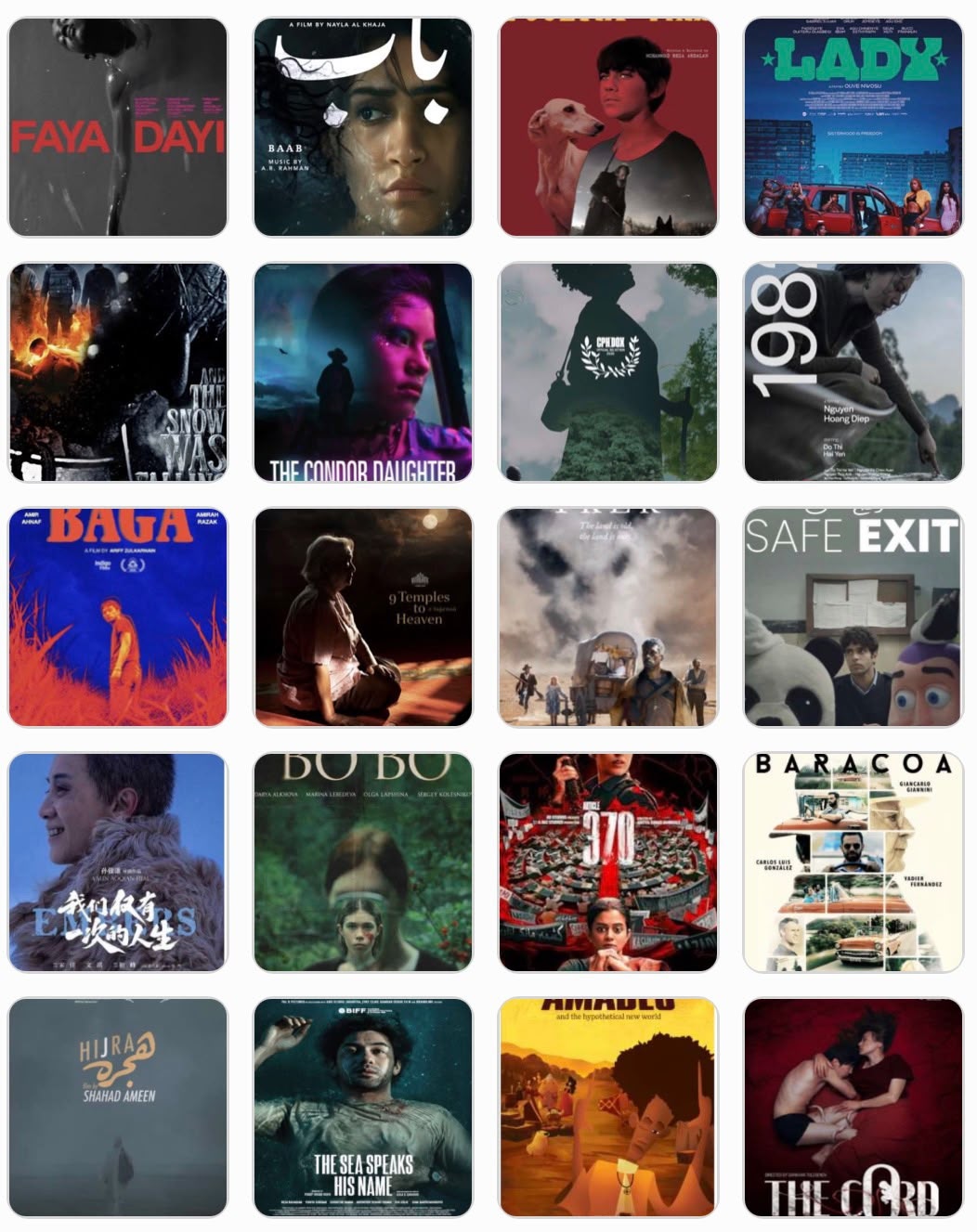
Brazil’s Amadeo and the Hypothetical New World imagines an African inventor in 1830s Brazil whose invention becomes part of the struggle to liberate enslaved people. Indonesia’s The Sea Speaks His Name follows the disappearance of a student activist during the country’s 1998 pro-democracy movement and his family’s search for answers. South Africa’s The Trek takes viewers across the Kalahari Desert in the mid-19th century, confronting the brutality of the colonial frontier.
Contemporary concerns also find a place in the selection. Dreaming of Serenada, a Uganda-UK documentary, explores climate change through a father-daughter relationship and the impact of flooding on a rainforest landscape. Faya Dayi, from Ethiopia and the United States, examines communities connected to khat (Catha edulis or qat, is an evergreen shrub or tree native to East Africa and the Arabian Peninsula whose fresh leaves and shoots contain the natural stimulants cathinone and cathine. When chewed, it produces amphetamine-like effects such as euphoria, increased alertness, talkativeness, and appetite loss) cultivation and consumption, bringing into focus livelihoods, social realities and the aspirations of young people. Iran’s Poultry Farm follows an undocumented child from Iraq whose search for a missing friend puts his own life at risk.
Family, identity and personal choices form another strong theme. Saudi Arabia’s Hijra (hijra, in Arabic, means to separate, to depart, to migrate) follows a young girl, her grandmother and her missing sister on a journey that uncovers family secrets and generational differences. China’s Embers traces the consequences of a mix-up involving cremated ashes, bringing two women face to face with loss and mortality. The Condor Daughter, a Bolivia-Peru production, portrays a young woman from an indigenous Andean community torn between inherited musical traditions and her dream of becoming a performer. Nigeria-UK production Lady follows a young taxi driver in Lagos whose encounter with a group of sex workers leads her towards solidarity and self-discovery.
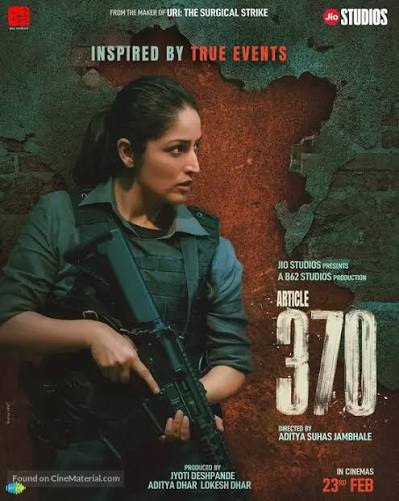
The Indian entry, Article 370, directed by Aditya Dhar, is set against the backdrop of the 2016 Kashmir unrest and follows a mission to abrogate Article 370. The film received three honours at the 72nd National Film Awards in the categories of Best Film, Best Actress and Best Music.
The complete line-up also includes Kindik (The Cord) (Kazakhstan), Baracoa (Cuba and Italy), Bo Bo (Russian Federation), Safe Exit (Egypt, Germany, Libya, Qatar and Tunisia), 9 Temples to Heaven (Thailand, Singapore, France, Norway, China, One Hong Kong, Indonesia and Qatar), Cotton’ (Uzbekistan), Baga: Tomorrow Belongs to No (Malaysia), 1982 (Vietnam), And the Snow Was Falling (Belarus) and Baab (meaning door or gate, in Arabic/United Arab Emirates).
Together, the 21 films offer audiences a cross-section of cinematic perspectives, with stories that move beyond national boundaries while engaging with shared questions of freedom, belonging, memory, resilience and change.


