Om Ka Hari, Review: Om, sweet Om
Om Ka Hari, Review: Om, sweet Om
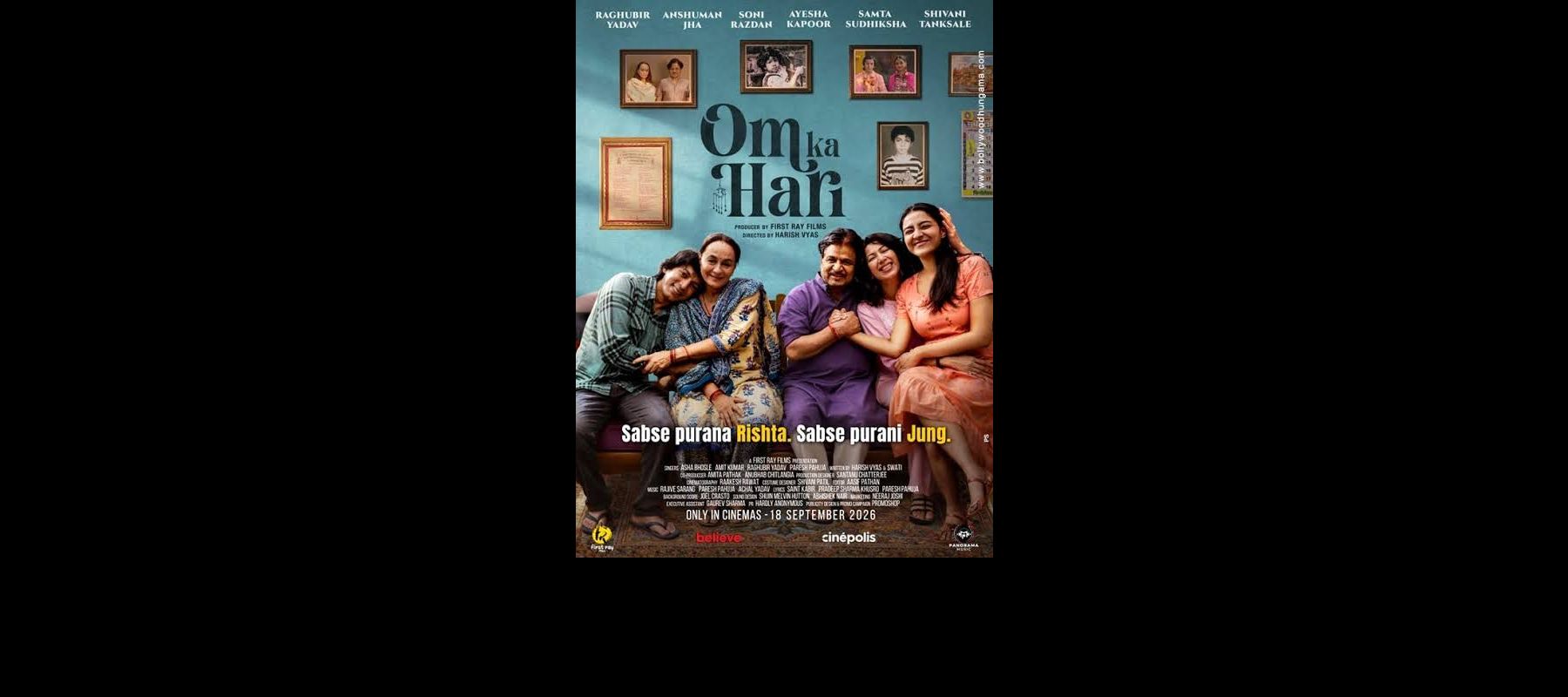
Probably inspired by the TV epic serial Mahabharat, where ‘samay’ (time) was the narrator, story-writer and director Harish Vyas decided to personify a home in Bhopal, Madhya Pradesh, through a Voice-Over that introduces the house as Sharmas’ ancestral home, a small bungalow like structure. Built by the father of Hari Prasad Sharma, the present-day owner’s father, the house starts telling us the tale of the Sharmas: The retired civil servant, his tolerant yet independent thinking wife, his slacker, insolent son, Om Prasad Sharma, his college-going daughter, who is studying economics with the hope of landing a job in a bank, and his married daughter, who now lives in Delhi. Unlike the serial, the house has no real role or importance in the story, so the choice of using it as the narrator (sootradhaar) seems questionable. A lot of action takes place outside the home, even outside their small town, and involves Sharma, and his son, justifying the title, which is an obvious pun on the Hindu greeting/prayer, “Hari Om.” Wikipedia lists the film as a 2024 production, named Om Ka Hari, while IMDB names it Om Ka Hari (2024). That is because in its festival run, the title was in reverse. Going by the story unfolding on screen, it must have been shot in 2021-2022. After travelling across major film festivals in Australia, North America, Canada, and India, as Om Ka Hari, it was screened in May 2025, in London. Om Ka Hari gets its commercial release in India this week, at Home, where it might not get the kind of reception the makers might have anticipated.
Due footage is allotted to the other members of the Sharma family, and a fake God-man on the Banaras Ghats. Titles like Om Ka Hari are usually religious or mythological subjects, or take-offs and spoofs. This one is neither here, nor there. After surviving what he perceives as a heart attack, Hari Prasad, astrologer and keertan (devotional songs), predicts that he has only six days left in his life. Determined to spend them in Varanasi, so that his ashes can be immediately scattered in the holy river Ganga, he drags his estranged son Om, on a ‘last’ train journey that forces the father–son duo to confront buried resentments and unspoken love. Back home, Om and his wife have started a salon. Earlier, Om had opened a restaurant, but then Covid struck and he had to close it down. Hari cites the closure as a major failure of Om and keeps reminding him that he had financed the venture. Now, Om is jobless and profession-less, while Hari thinks that Om is just a bum, with no sense of familial responsibility. But his mother, who has borne the brunt of her ill-tempered husband’s outbursts and rantings, joins hands in running the salon, and it attracts many a client.
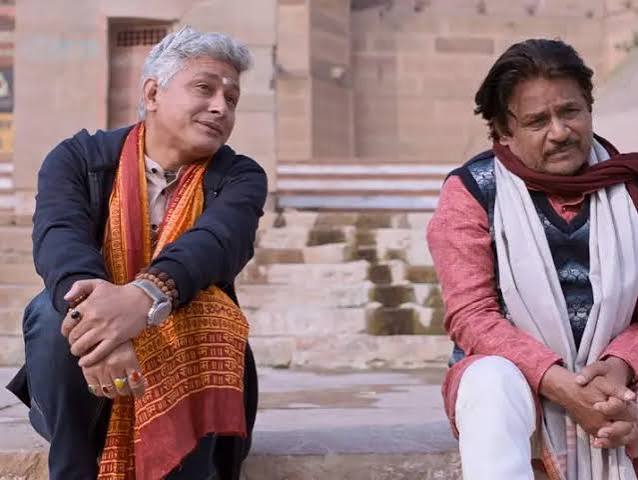
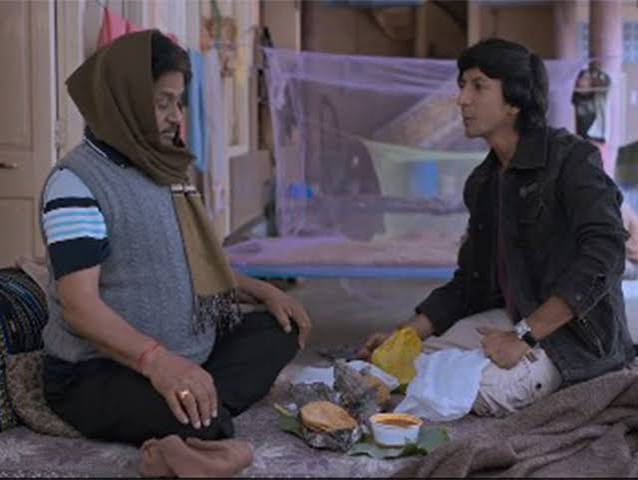
In Banaras (Varanasi), the father-son meet a God-man named Atmaram, who introduces himself, give them a visiting card and claims to offer all kinds of services required by pilgrims and bereaved families, who come from far, to either pay obeisance to the river, or to bury their dead, with full funeral rites. Initially, Hari is convinced that Atmaram is a fraud, and takes jibes at him, but gradually, he discovers that deep inside, Atmaram, whose real name is Amit Dubey, is a kind soul and just about manages to meet his daily needs. Amit’s honest, earthy philosophy moves Hari, the two become friends and Hari begins to change, for the better.
With characters as realistic as they can get, and the total absence of clap-trap situations and other formula ingredients, Harish had a good thing going, as a story writer. With no separate credit for screenplay and dialogue, one must assume that they too are the handiwork of Harish. Though he manages to write credible dialogue, the screenplay is the film’s weakest point. As the eavesdropper, the House shows us scenes of Hari’s self-centeredness, anger and stubbornness, Om’s desire to be independent, Hari’s conviction that a rich, well-established groom will be ideal for his older daughter to get married off to, even if he lives in faraway Delhi, the older daughter suppressing her feelings she had for another man, in Indore, close to Bhopal, where the story is set, to let her father have his way, and the dream of the younger sister landing a cushy job yet to be fulfilled. But having established these basic premises, the screenplay is not able to weave them into something tangible. The mise en scène leaves much to be desired, except one or two twists towards the end of the film. For the major part, it is a case of more of the same. And the happy end is predictable, with the only character exhibiting negative vibes undergoing a change of heart.
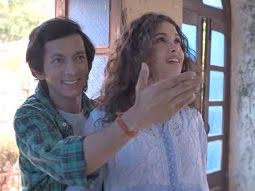
As the director, Vyas fails to impress in the way he makes Hari shout at the top of his voice ad nauseum, all the time, the way he treats the character of Atmaram and the ambivalent behaviour of the mother. The flirtation of a neighbouring girl with another body-builder boy neighbour is also well tackled. Moreover, he is able to extract above average performances from the entire cast. Om Ka Hari reunites him with actor-producer Anshuman Jha, after Angrezi Mein Kehte Hain (2018) and Hum Bhi Akele, Tum Bhi Akele (HBATBA, 2020). The former was about three couples and the circumstances that led to their marriages. Harish Vyas co-wrote and directed the film, which was not produced by First Ray Films.
The latter, produced by First Ray, like Om Ka Hari, was released in May 2021 on Hotstar. I guess First Ray Films is a banner owned by Harish Vyas or Anshuman Jha or both. At its screening during the Rajasthan International Film Festival, 2021 or 2022, I could not see it. Actually I went in and sat down in the auditorium before the film started. But all of a sudden, my eyes started watering excessively, and I had to go out. While I was sitting on the sofa, wiping all the aqueous humour off my eyelids, Anshuman spotted me, and asked me why I was not watching his film. I told him about the eyes watering and some pain going with it. He would hear nothing of it. “You are missing the best film of this festival. You must go.” “I would like to very much watch it, but look, my eyes are watering. This will be aggravated if I watch the film.” Nevertheless, he literally pushed me into the cinema. The watering increased in a minute, and I walked out of the cinema, but not before catching a scene that made it clear that the film is about LGBT issues. Thank God, by that time Anshuman had moved elsewhere, out of sight. I was to discover a year later that my eyesight was rapidly deteriorating. On its release, most critics gave it a 2/5* rating. First Ray Films, the company that produced HBATBA, then made Lakadbaggha (2023), which dealt with the subject of animal trafficking. It received lukewarm response, liked its two predecessors. I am afraid the makers will have to settle for this predicament in their present outing.
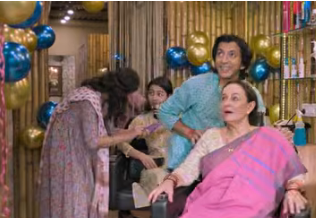
Stellar performances by Raghubir Yadav and Soni Razdan (a highly unlikely choice for the role of a Bhopali house-wife) as the parents, and a studied portrayal by Anshuman prop-up the film. Soni is totally effortless, and some members of the audience where I was watching the film commented, “she looks so much like Alia Bhatt (her daughter)”.

However, one notices a slur in the speech of Raghubir, which could have been corrected by doing another take. That may not be practical, though, in some circumstances. The unconventional looking but packing a six-pack, Anshuman fits the role quite well. But how can he help when the director cuts several shots with him looking here or there, aimlessly. Of course, this should have been given due attention by the editor too. As Atmaram, Jagat Rawat looks promising. Ayesha Kapur plays his wife, Priya, an equal partner in his plans and enterprises. A fine touch is the decision of the young couple to name their salon Om, Priya and daughters and daughters, breaking the Sons mould, even before they have any children. The role of the older daughter, a brief one, is played with due emotions and sincerity, by Shivani Tanksale. As the younger daughter, Ayesha Kapur is as chirpy and bubbly as the role demands. Supporting cast includes Samta Sudiksha, Pramod Parashar, and Abhishek Tripathi.
To give the others their place on this page, here we go: Cinematography by Rakesh Rawat faces no technical issues, largely due to the fact that the larger part of the narrative is in a house. Editing by Aasif Pathan leaves something to be desired. To be fair, the film did not have enough meat to last 143 minutes, so his failings are commiserated. Music by Rajieve Sarang, Paresh Pahuja and Achal Yadav is tuneful, and some of the songs natural place in the film, what with Hari being a singer. For lyrics, the makers have looked towards Pradeep Sharma and Paresh Pahuja, contemporary poets. They also include works of iconic philosopher poets like Kabeerdas and Ameer Qhusro. A major attraction is the two songs that have been sung in trade-mark style by Asha Bhosle, who died earlier this year.
Slapped with narrator duty for the umpteenth time, actor Vijay Raaz has become an expert at it. He represents the house that Grandpa Sharma built. There is nothing like home, sweet home, but Hari and Om sweet Om find meaning in their lives while spending six days in the venerated town of Banaras. How much meaning does the film-going audiences of this country will find in the film remains to be known over the next one week.
Rating: **
Trailer: https://www.youtube.com/watch?v=b-bkoBrq9p8
Coming up: Suraiya and I, Part 4
This writer contributes to filmfestivals.us pro bono, without any monetary compensation, for the last 15 years. He is India Correspondent of the website, and writes purely out of the passion for the arts, particularly cinema.


