The Uprising, Review: Decapitation, Up and Rising
The Uprising, Review: Decapitation, Up and Rising
Has somebody provided links to recent Indian films from the South to producer-writer-director Paul Greengrass, and informed him that these blood and gore films are minting billions of rupees! Maybe he has seen a few of them, and concluded that if this formula works so well in India, the country that produces the maximum number of films year-on-year, it might work in the Western part of the world too! Going by the credo ‘more of the same’, he has made a film which has outdone some of its Indian counter-parts in terms of head-count and rivers of blood. Like supra-violent films from Chennai, and Hyderabad, he digs into history, and comes up with a story which begins with a single farmer named Ploughman (could there be a more apt name?). Ploughman has lost his wife and two children to the plague. In the opening scene, the camera pans from left of screen to its centre, to reveal Ploughman ploughing his barren land himself, which does not have a single blade of green grass, without any animal support, and ends with several thousand soldiers, and an equal number of plebians, being sent to the hereafter. He calls it The Uprising (briefly marketed in the U.S. as The Uprising: The Rise of Robin Hood).
To be fair, the Uprising is a piece of history and not mythology. There was indeed a peasant revolt or uprising in England, way back in the year 1381. It was the first great, popular rebellion in English history. Its immediate cause was the imposition of the unpopular poll tax of 1380, which brought to a head the economic discontent that had been growing since the middle of the century. The rebellion drew support from several sources and included well-to-do artisans and serfs, as well as the destitute. Probably, the main grievance of the agricultural labourers and urban working classes, was the Statute of Labourers (1351), which attempted to fix maximum wages during the labour shortage, following the Black Death, a plague epidemic.
The uprising was centred in the south-eastern counties and East Anglia, but there were disturbances affecting many other places, including Cambridgeshire, Hampshire, Somerset, and West Riding of Yorkshire. In some towns, local conditions were decisive; at St. Albans and Bury Saint Edmunds the townsfolk rose to end the rule of the abbot, and to secure municipal freedom. The revolt began in Essex in May 1381, (sparked by a young man called Ploughman, who was the only surviving member of his family, in the film version) taking the government of the young king Richard II (then just 14 years old) by surprise. In June, the rebellion spread from Essex to Kent, and the rebels freed John Ball, the so-called “mad priest of Kent,” from Maidstone prison. Ball had been ex-communicated in 1366 for preaching about a classless society, and he was jailed, frequently. In the film, he is dubbed a ‘heretic’.
On the 13th, the Kentish men, under Wat Tyler (retained in The Uprising), entered London, where they massacred some Flemish merchants and razed the palace of the king’s uncle, the unpopular John of Gaunt, Duke of Lancaster. In the film, they brutally murdered all the members of the King’s Council, who were despotic and blood-suckers. With its armies far from the capital (in the film, they were fighting battles in France) continuing to prosecute the war against France, the government was compelled to negotiate. On the 14th, Richard met the men of Essex, outside London, at Mile End, where he promised cheap land, free trade, and the abolition of serfdom and forced labour. During the king’s absence, the Kentish rebels in the city forced the surrender of the Tower of London; the chancellor, Archbishop Simon of Sudbury, and the treasurer, Sir Robert Hales, both of whom were held responsible for the poll tax, were beheaded.
The king met Tyler and the Kentishmen at Smithfield, on the following day. A disturbance broke out, and Tyler was treacherously cut down in Richard’s presence, by the enraged Lord Mayor of London, William (later Sir William) Walworth. (This is not depicted in the film). Tyler’s followers carried their grievously wounded leader to St. Bartholomew’s Hospital, from which he was later dragged away and beheaded. Tyler’s head was mounted on a pole and paraded through London, before being mounted on London Bridge. The film has a totally different ending.
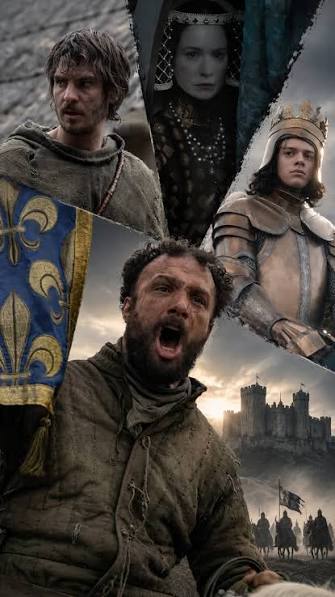
71 year-old Paul Greengrass is an English film-maker and former journalist. He has received a BAFTA Award and a nomination for the Academy Award for Best Director. Bloody Sunday (2002), won the Golden Bear at 52nd Berlin International Film Festival. Greengrass has directed include three of the Jason Bourne action-thriller film series: The Bourne Supremacy (2004), The Bourne Ultimatum (2007) and Jason Bourne (2016). He has crafted the screenplay with precision. But as the 128 minutes pass, minute-by-minute, a single man’s anger and his beating to death of a soldier, who was enforcing inhuman ration quotas on penniless farmers keeps growing into a mob, a crowd and an army of sickle wielders, who gradually acquire other weapons, snatched from targetted army-men. Heads are chopped and mounted on spears/poles, and limbs severed, for public displays. Blood-dripping is glorified, as is beating men to pulp. Greengrass succeeds in presenting the right time-frame and ambience. He takes care not to show any romance between Ploughman and one of his female supporters. In fact, there is no romance or any other kind of relief in the whole film.
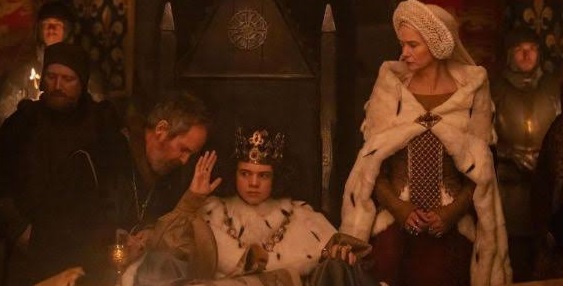
There is a lot of sympathy for the rebel rousers and rebels, and complete antipathy for the King’s council, which repeatedly resorts to higher taxation, to meet the King’s and Kingdom’s ‘needs’. Young Richard II and his mother are sharply delineated characters. Yet, you will have wait for the last 15 minutes or so to see the real twist in the tale, and exclaim “Touché.” And that is really the problem with the film. There is another problem too, a more glaring one. Several sound-tracks are mixed, as is the norm, but the dialogue track is almost entirely drowned by the loud background music and the even louder ambient sound sounds. Add to that the super-fast dialogue delivery, in classic English, with the accent firmly in place, and you might miss out on several explanations, many identities the reasons of the developments on screen. In one scene, Richard II lures the peasants into a trap, by placing before them barrel-fulls of scroll, wrapped into circular rolls, granting them titles to their land, and exemption from taxation. But he is using this as trap, by asking the large army of pauper peasants to lay down their arms, and come and collect their deeds, while having made preparations to decimate them, one they are bereft of arms. In such a situation, there was no need to actually write the deeds, and the papers would have no names, as he would not know them individually. Yet, he takes the trouble to keep rolled written deeds in their view, only to burn them all before their eyes.
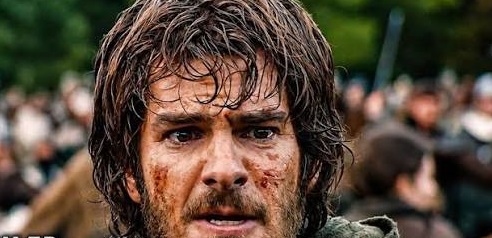
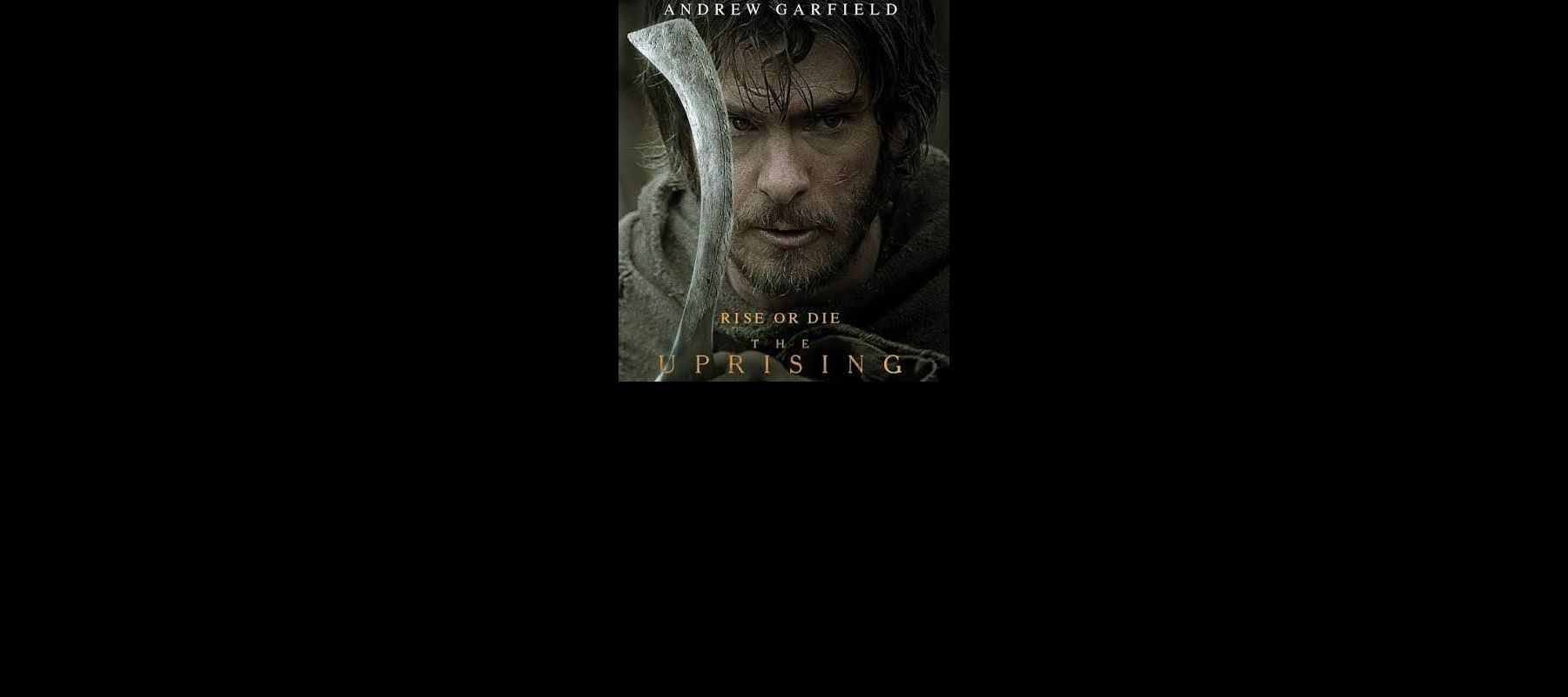
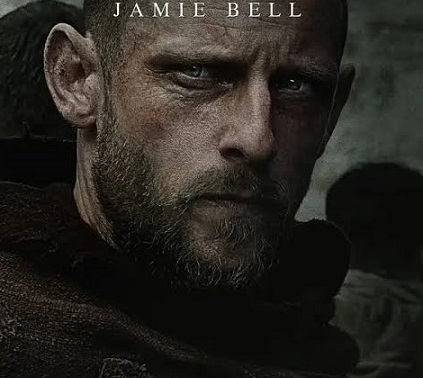
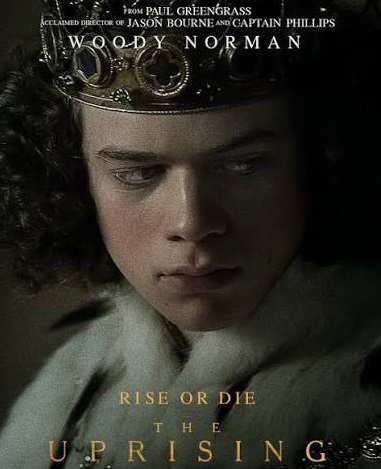
Though it came across as Plaman, Ploman and Plowman in the audio, it is actually Ploughman, we discover with the help of the Internet. He is played by British-American actor Andrew Russel Garfield, known for his heroics as another ‘man’, Spiderman, in Spider-Man (2012–2014) and Spider-Man: No Way Home (2021). Never restricted by genres, Garfield is quite convincing in this role too. Woody Norman as Richard II is a discovery. At 17, he has been a child actor and has just a handful of films to his credit. The Uprising could help change that score. Commendable support comes from Jamie Bell as John Ball, Stephen Dillane as Simon Sudbury, Tom Hollander as Sir Robert Hales, Cosmo Jarvis as Wat Tyler, Thomasin McKenzie as Alyce, Jonny Lee Miller as William Walworth and Katherine Waterston as Joan of Kent, in a meaty role, as snobbish royalty, who goads Richard II to take more responsibility, and saves him from certain death, on one occasion.
Earlier titled The Hood and the Rage, this epic drama has a cast of thousands, some 5,000. It was shot on location and in studios at Upper Bavaria, Nuremberg, Lichtenau Fortress, Franconian Open-Air Museum and Bad Windsheim, in the United Kingdom, Germany and the United States. No wonder the project cost $20 million. The locales are well captured by cinematographer Pål Ulvik Rokseth, whose camera is constantly in motion: pan/tilt/overview, etc. Colours are barely discernible, with earthy grey being the mainstay. Edited by William Goldenberg, the film is of acceptable length. Transitions, from one scene to another are smooth, though often predictable.
Is the film industry entering an era of dominance by epic action, body-count and super-hero variation, with killings, maiming, and decapitation up and rising? Can films continue to be made on human relations, comedy, rom-coms, suspense, adventure and more of the ilk? Only time will tell. I am no prophet of doom or a doom-monger, but certainly, there is cause to worry and think about the level of desensitisation reached, among filmgoers. That such films are well-packaged and full of grandeur only adds to the concern. As far as The Uprising goes, it at least has a solid historical reference and logical progression of the narrative.
Rating: ** ½


