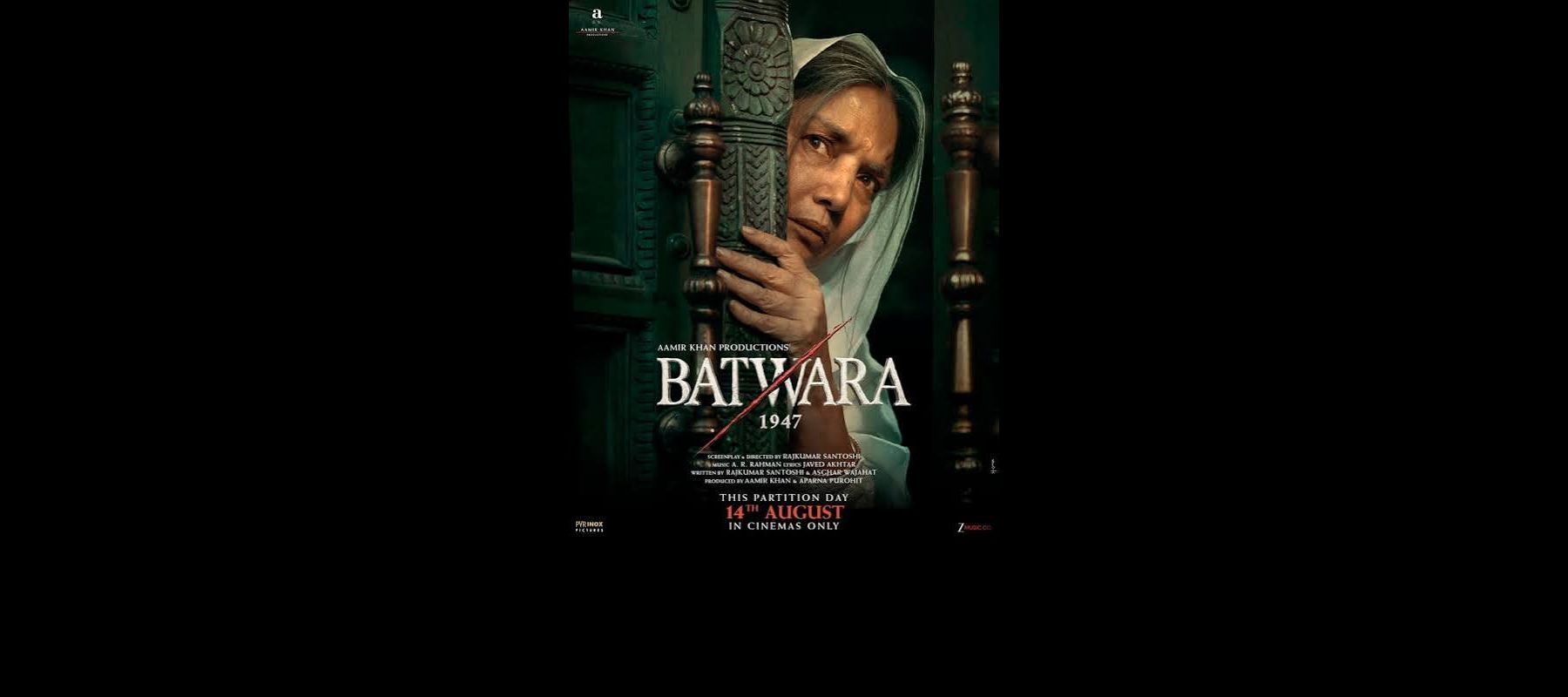
Batwara 1947, Review: Religion divides, humanity unites
Batwara 1947, Review: Religion divides, humanity unites
Syed Asghar Wajahat Rizvi was one year-old when the Partition (Batwara) took place, creating India and Pakistan as two countries. It is not known whether his family was directly or indirectly affected by the affected the massacres that followed, on both sides. I am not even aware whether he has ever visited Lahore, in Pakistan, or has any family members or friends living there. But the period, the setting, the characters and the precariously balanced writing of the play Jis Lahore Nahi Dekhya O Jamya Hi Nahi, which translates roughly as “one who has not seen Lahore is yet to be born,” is a piece of masterful theatre. Published around 1980-81, the play was first staged by none other than the doyen of Indian theatre, Habib Tanvir, it was staged in Hindi, Punjabi, Gujarati, Marathi and Kannada, and, maybe, more languages. Dinesh Thakur staged it in Hindi, premièring in 2003, with resounding success. Wajahat considers Tanvir’s staging the best so far. 45 years after it was published, writer-director Rajkumar Santoshi’s film version, produced by Aamir Khan, has just been released. Even if you have read or seen the play, don’t bother about comparisons, just watch it.
Partition not only resulted in the gruesome deaths of an undefined number of people, probably in millions, but an equal number of people, or more, migrated from one country to the other. They were displaced refugees, who had lost everything in the horrendous journey. Some managed to take a part of their belongings, money and valuables with them, others landed-up with nothing, except tattered clothes and raw wounds. These migrants were called mohajirs in Pakistan, derived from the word hijr (separation). Thousands of refugee camps were set-up, and houses vacated by the fleeing owners were allotted to the new arrivals. Mohajirs were not really welcomed in Pakistan, because they were foreigners, and were very different from the locals, in terms of clothing, food and language.
In the play, and the film, Sikandar Mirza, an entrepreneur in Meerut, who runs a cloth dyeing enterprise, is about to be targetted by crazed and vengeful members of the majority community. Initially, he does not take the mirror riots seriously, but when they attack his house, he just about manages to escape with his wife Hameeda, son Javed and daughter Tannu. With no indication of the riots stopping, they head for the railway station, where a train is due to arrive soon. This train will take them directly to Lahore. But there are thousands of other who want to board that train, and in the melee, Sikandar’s best friend is killed, even as Javed rushes to save him. As a result, Javed misses the train, and the three-member family manages to reach Lahore.
After living for some time at a refugee camp, the Mirzas are allocated a big haveylee (mansion), thanks to the timely intervention of poet Habeeb Anvar. The Hindu owners of this palatial house, with 22 rooms, had left to migrate to India. To their disbelief, the Mirzas find that The tension intensifies when Sikandar discovers a septuagenarian, haggard, Punjabi Hindu woman still living in the haveylee, in a locked room, on the upper level. She accuses Sikander and his family of trespassing. The old matriarch, real name Durgavati, but known only as Mai, claims to be the rightful owner of her ancestral haveylee. Sikander is determined to get rid of the old woman, but she defiantly refuses. Tannu develops a soft corner for the grandma, whose son, Ratan, and his family, have gone missing since the day of partition, and Sikander and Hameeda too begin to sympathise with her. She is kind and benevolent, and starts mixing with the Mirzas. She even opens up about her son, a wealthy jeweller, daughter-in-law and grand-child. Every day, Hameeda gets up in the morning, has a bath, uses vessels and crockery especially bought for Mai, cooks food for her, and offers it to Mai, and only then do the Mirzas have their meals. In a state of constant mourning for their son Javed, the family is delighted when he suddenly lands up at the haveylee, a few days later. He narrates the horror unleashed by religious opponents in Meerut, which includes the poisoning of the food of Muslim children by their father’s close friend, and their immediate deaths. Having been severely traumatised, Javed refuses to accept the presence of the Hindu Mai in their house, especially since she performs pooja (Hindu worship). A local goon, Yaqoob, a fundamentalist who aspires to contest the forthcoming elections, gets a whiff of the situation, and makes several attempts to remove Mai from the haveylee. Mirza confronts him every time, risking his own life, and, somehow, she is spared. But now, Javed joins hands with Yaqoob, and plan to kill the gentle, old widow.
As a one paragraph synopsis, the script has great possibilities. The subject itself is so strong, so emotional, sensitive. Staged as play, it would be handicapped in showing things like a train, the streets of Meerut and Lahore, the mansion in Lahore, refugee camps, open green fields, bazaars, horse-carriages, bloody fights, and so on. Rajkumar Santoshi takes care of all that, as the screenplay writer, he cannot let the opportunities to let Sikandar Mirza take on a bunch of gangsters, armed or unarmed, pass by. He is also seen rushing to perform a rescue act on a horse-carriage, running at a gallop, which, in real-life, can reach average speeds of 40 to 48 kilometres per hour.
For the dialogue, credits are shared between Santoshi and Wajahat. It sounds odd when Pakistanis use words like ‘chinta’(worry), which is pure Hindi, not spoken across the border, and also mis-pronounce some Urdu words. In a lighter moment, Hameeda asks Mai why ‘laukee’ (bottle gourd) is not available in Lahore. Mai asks her to describe it, and them chuckles, “It is available here. We call it ‘ghia’.” That is good, as a lighter moment, but you wonder whether Hameeda actually went to a vegetable market, and could not find ‘laukee’/’ghia’. If she had, she would have surely seen the vegetable, and there would be no confusion in the monikers. So, the dialogue lacks credibility here. Durga, in character, speaks Punjabi, and we do not know whether Wajahat had written her dialogue in Punjabi, himself, or, with some help. It is also possible that Santoshi edited/expanded the dialogue, to make it more impactful or relevant. There are at least 10 natural clap-trap pieces of dialogue, but only about 5 are encashed. One would have expected an overdose, and strong rendering, of such dialogue, in a film of this nature. The name of the film is spoken only once, by Durga, but the director cuts it halfway, to let a back-shot complete it, quite unnecessarily. Opportunity wasted.
If a film is based on a play titled Jis Lahore Nahi Dekhya O Jama Hi Nahi, we expect to see Lahore in all its glory. What’s more, the initial appellation was Lahore 1947. Instead, the film restricts itself two a few roads and streets, and nothing about the city, except the haveylee, is so scintillating as to justify the title. In the play, there would be obvious restrictions of space, but in a film, you could shoot or re-create major monuments, parks, large markets, etc. Santoshi does not look in this direction. It appears rather odd and fool-hardy that, on receiving the news of his beloved, Tabassum’s, impending death in a hospital, Habeeb darts across green fields, to go to a city far away from the Refugee Camp, where he works. That he is first accosted and then escorted by members of other religions, to his destination, after one of them recognises him as a camp worker, appears too convenient. The character of the poet is the least defined one. Though he is a poet, he is never shown writing or reciting even one line of poetry. He claims that he regularly recites his poems at mushairas (a gathering of poets), but we are not told where he lives, and what he does for a living. Yaqoob’s character is over-blown and clichéd. The repeated clashes between Yaqoob’s men and Sikandar require a high-degree of suspension of disbelief. It is obvious that scenes have been woven in to push the image of Sunny Deol as an action hero. But surely, as a man who runs a cloth dyeing facility, he would not be expected to take on up to 10 ruffians at a time, and beat them black and blue. And it is hard to believe that a Don is unable to get rid of a family man and a septuagenarian granny, in spite of several attempts.
Call it co-incidence, but Batwara 1947 has an amazing amount of dualisms associated with it. Some of these twosomes are:
India: Pakistan
Bigotry: Fairness
Religious fundamentalism: Humane liberalism
The bond between a Hindu Grandmother and a young Muslim girl
The clash between an ambitious gangster and a pious maulvi (priest), over the latter’s refusal to join hands with the villain
Laukee: Ghia
A Muslim woman first bathing and then using separate vessels and crockery to feed a Hindu woman, before having their own Muslim meal
A progressive father, and his revenge seeking hot-blooded son
Burial and Cremation
Those who make it across the border, and those who don’t
A Mafia Don’s daughter squealing on him, and calling the police to save innocent lives
Corrupt officials and an honest, ethical poet
Two sensitive films dealing with the horror of partition: Garm Hava and Batwara, made 52 years apart
The second venture of Rajkumar Santoshi and Ashgar Wajahat, Gandhi Godse—Ek Yudh (2023) being the first
Rajkumar Santoshi’s acumen, as writer-director, to deliver rip-roaring comedies, like Andaz Apna, Ajab Prem Ki Ghazab Kahani, Phata Poster Nikla Hero and Bad Boy, and, in sharp contrast, emotional, patriotic and highly relevant social films, like Ghayal (1990, debut), Damini, The Legend of Bhagat Singh, Khakee and Batwara 1947
The pairing of Rajkumar Santoshi and Sunny Deol, for the fourth time, 36 years after they worked together in Ghayal.
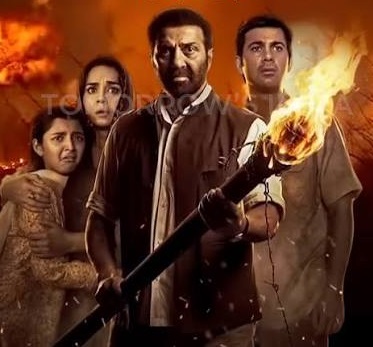
Watch Batwara 1947 for Shabana Azmi, if nothing else. As Mai, she delivers her most outstanding performance I have ever seen. No trace of the awkward smile and the trade-mark dialogue delivery. Here she is angry, graceful, emotional, religious, loving, sacrificing, and all that we expect a goody-goody grandma to be. It is a casting coup, and could win her more than one award for best actress. She is just the right age for the character (75 in real-life), though, at 68, Sunny plays a man at least 20 years younger, and carries it through.
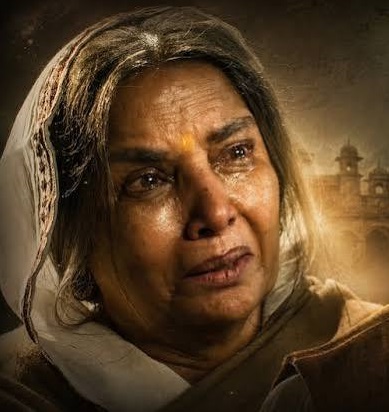
Preity Zinta looks more Punjabi or Kashmiri, rather than Meeruti. She turns in a sedate, accommodating performance. Sunny’s real-life son Karan plays Javed. His is an ambivalent character, and is good, without being distinguished.
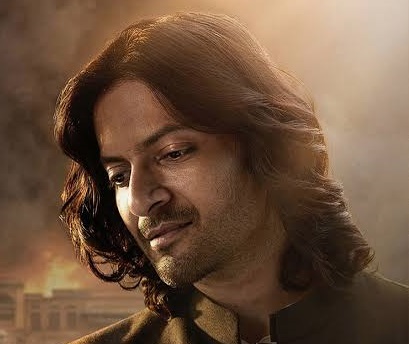
Ali Fazal as the poet, Habeeb Anvar, gets a raw deal. He is fluent and effortless, and deserved a much better delineation and back story than what has been served. Abhimanyu Singh is a stock-in-trade religious fanatic-cum local heavy cum political aspirant, and one can overlook his over-acting. As Tannu, Sikandar’s daughter, Khushi Hazare is sprightful and easy. Radio, voice-over and dubbing artiste Vishnu Sharma, who is an actor too, is cast as the Maulvi, in a brief appearance, meeting his maker at the hands, or rather the knife, of Yaqoob. Adequate support comes from Kanikka Kapur, Isha Sandhir, Khalid Siddiqui, Rukhsar Rehman, Parminder Singh Kainth, Shivika Rishi, Ambika Nagwani, Pankaj Raina, Rajan Modi, Chandan Dilawar, and Rajesh Kamboj.
A.R. Rahman is a surprising choice for a Punjabi/North Indian subject. Five songs are included, in the 145-minute outing. Both, the songs and the background music, are impressive, but not memorable. Since no lyric writer is credited, I assume they have used the songs originally included in the play, by Asghar Wajahat. Santosh Sivan shows what a veteran he is at cinematography. Some of the shots, OTS and two-shots, rapid change in focus from mid-long shot to close-up, entries of characters in the frames, all are of a high quality. As editor Shyam Salgaonkar has had to cut short some scenes into single shots (though it might well be under the director’s orders).
Jis Lahore Nahi Dekhya (those who haven’t seen Lahore) can and must see Batwara 1947, though there is very little, if anything about. There are a few holes in the narrative and flaws in characterisation. But Aamir Khan as producer and Rajkumar Santoshi as writer-director deserve kudos for picking up this subject and gambling with extreme reactions and heavy odds. Partition and religion are a taboo topics, yet the makers manage to deliver the uplifting message, “Religion divides, Humanity unites.” But, above all, this is Shabana Azmi’s film. She lifts the film half a star above the rating I was to assign to Batwara 1947. Take a bow, Ms. Azmi!
Rating: *** ½
---------------------------------------------------------------------------------------------------------------------------------------------------------------
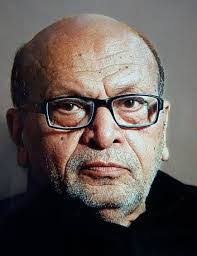
Meet Syed Asghar Wajahat Rizvi
Academic Qualifications
M.A. I -Aligarh Muslim University
Ph.D. - Aligarh Muslim University
Post-Doctoral Research -Jawaharlal Nehru University
Lecturer, Jamia Millia Islamia
Research Associate, Jawaharlal Nehru University
Reader, Jamia Millia Islamia
Associate Professor, ELTE, Budapest, Hungary
Professor, Jamia Millia Islamia
Awards Received
Sanskriti Award for Creative Writing-Sanskriti Pritishthan, Delhi 1978.
Communal Harmony Award, Organization for Understanding and Fraternity, 1992.
Award from Hindi Urdu Award Committee, Lucknow, 1992.
Best Playwright of the year, Bhuvaneshvar Natya Sansthan, 1995.
Vanmali Award for fiction, Bhopal, 2000.
Sahityakaar Samman, Hindi Akademi, Delhi 2000.
Books published
1. Andhere Se, collection of short stories with Pankaj Bisht, Bhasha Publication, New Delhi.
2. Hindi Kahani, Punarmulyankan (criticism), co-editor, Bhasha Publication, New Delhi.
3. Collection of short stories, Prakashan Sansthan, Delhi.
4. Translation of Qurratul-ain-Haider's Urdu Novel, Joanpah, Delhi.
5. Hindi Urdu kee Pragatisheel Kavita, criticism, McMillan, Delhi.
6. Inna kee Aavaz (Play), Prakashan Sansthan, Delhi
7. Veergati (play), Vaya Prakashan, Delhi.
8. Nazeer Akbarabadi, translation of criticism by Prof. Mohd. Hasan, Sahitya Akademi, Delhi.
9. Swimming Pool, collection of short stories, Rajkamal, Delhi.
10. Bund, script of TV series, Radha Kasya, Delhi.
11. Collection of street plays, Gagan Bharta, Delhi.
12. Pak Napak (play), Prem Prakashan Mandir
13. Jis Lahore Nahi Dekhya O Jama Hi Nahi (play), Dinman Prakashan, Delhi.
14. Sab Kahaan Kuchh, collection of short stories, Kitab Ghar, New Delhi.
15. Sat Aasman (Novel), Rajkamal Prakashan, Delhi.
About the play, Jis Lahore Nahi Dekhya, by Ank, and its 410 shows, till 09 August 2026
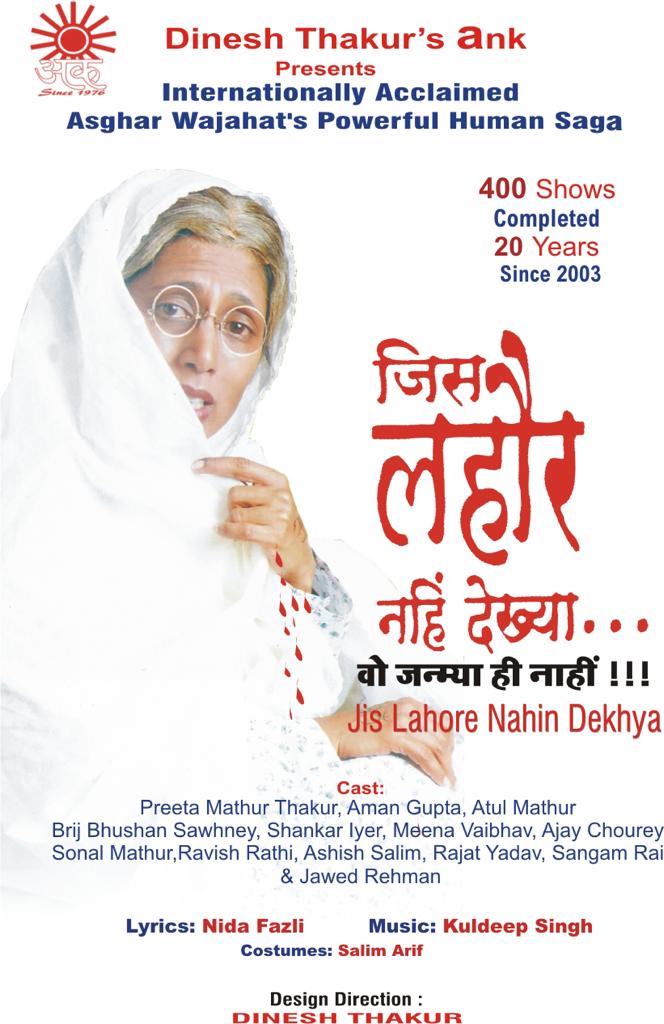
With the loss of Dinesh Thakur, in 2012, Hindustani (Hindi and Urdu) theatre lost one its torch-bearers. His group was, and is, called Ank. But his wife, the indomitable Priita Mathur, did not let the flame extinguish. Ank continues to stage plays all over India, and overseas too. I have had the good fortune of seeing almost all his plays, and reviewing them too. In 1983, Dinesh decided to stage Jis Lahore Nahin Dekhya. He got in touch with Asghar Wajahat, and the play was staged. Wajahat attended the first show. The one man-show behind the curtain, Dinesh handled all aspects of the play. He did take a few liberties with the script, like adding a bit of humour and using Nida Fazli’s poetry in place of the songs that were woven into the original play. It ended with the murder of the Maulvi, the only violent scene in the entire play. Slides of the Partition and communal riots, including Godhra, were integrated into the play and projected, instead of stage violence. Ank was not allowed to stage the play in Gujarat, until a few years ago, for obvious reasons. Dinesh asked Priita to play Durga Mai. Priita, then a young woman, did not want to accept the role. She felt it would require a tremendous amount of time and effort, including learning the Punjabi language, to pull it off. She suggested that Dinesh cast his friend, the acclaimed actress Surekha Sikri, instead. But Dinesh was adamant. As it happened, Priita made a very convincing Durga Mai. Dinesh himself played Habeeb Anvar, the poet.
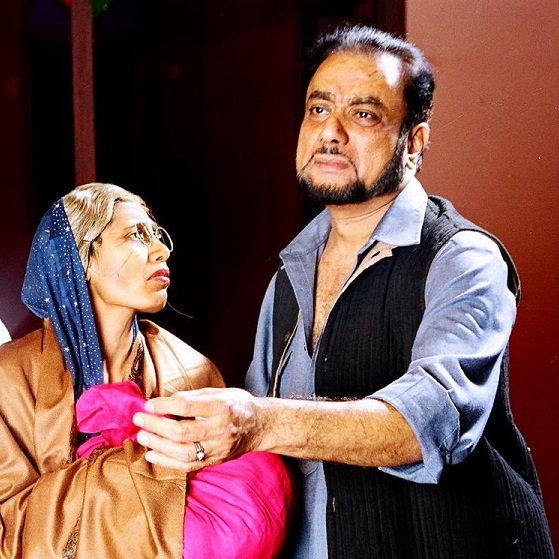
(Wikipedia gives the name of the poet as Nasir Kazmi, a real-life poet. In the film, he is called Habeeb Anvar). The fondest memory Priita has of staging the play is associated with the Indian Army. Ank performed for them, at various Army posts, and they showered encomiums on the unit. Several senior Army Officers, including Generals, watched and appreciated the play. Over the years, Rajkumar Santoshi did come to watch the play, at least twice, but there was no mention of a film to be made on Jis Lahore Nahi Dekhya. And then Priita learnt about the film being planned. Word got around that Shabana Azmi was to play Durga Mai. Yet, about two years ago, she was called to audition for the role of Durga Mai.
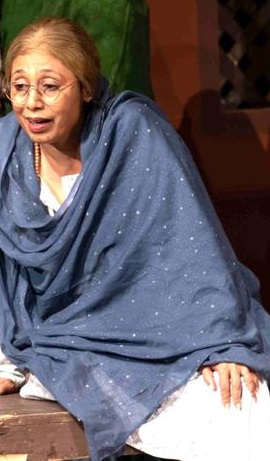
Unassuming and modest, Priita is not likely to hold any grudge against Shabana or the makers of the film. And look what Shabana did!


