Ohh My Dog, Overview: Chase to the cut
Ohh My Dog, Overview: Chase to the cut
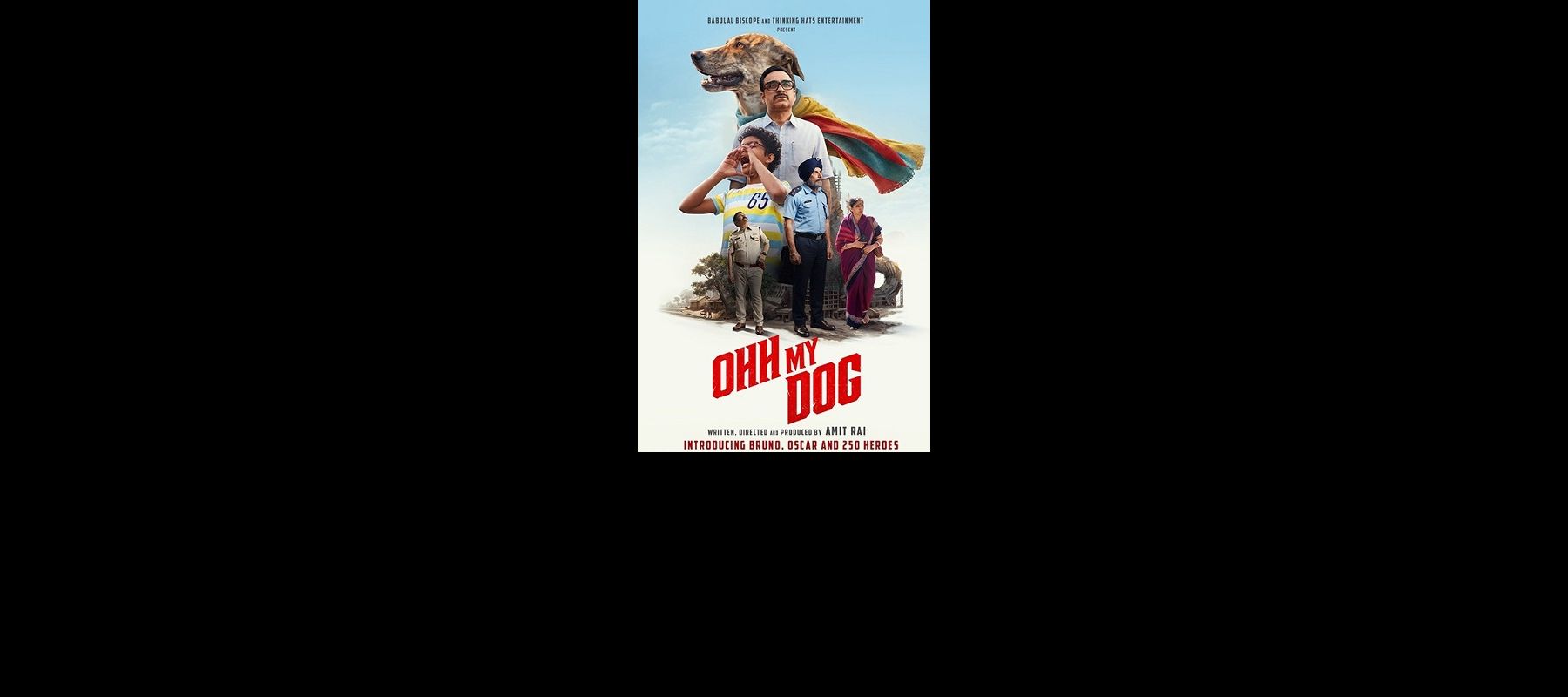
An anadrome. No, nothing to do with an aerodrome. An anadrome is a word that still means something when it is spelt backwards. Like wolf and flow. This film is not about a wolf, but close enough, as the title suggests, about a similar breed. Co-director Amit Rai made Oh My God three years ago. Remember? A devout father takes on a DOGmatic school — and his own moral beliefs--after the school expels his son, over an embarrassing video that goes viral. Dogmatic? Dogma? Dog Ma? Ma Dog? You don’t need to do much thinking when you read a title like that. It must be about a dog. A dog? No, it is about two dogs. No, it is about all dogs, somewhere in Bihar. It is also about a whole lot of stressed people, only some of whom will end getting their just desserts. Ah! Did you notice the anadrome? No? Stressed and desserts? You did not, because, unlike the pace of the film, your thoughts do not flow like a torrent. More of that later. Ohh, how can I overlook the double h in Ohh! Why is it spelt thus? Most likely because the makers did not want prospective viewers to mistake one for the other. Oh My Dog, with a single h in Oh, is a 2022 Tamil film, a children's comedy drama. Though Ohh My Dog has some comedy, and the basis of the story is the bond between a young boy and a stray dog, it is certainly not a children’s comedy film. On the whole, you have seen nothing like it.
If you have seen Oh My God 2 (2023), written and directed by Amit Rai, you might recall the following members from the main cast: Pankaj Tripathi, Pawan Malhotra and Geeta Agrawal Sharma. Amit Rai casts them again in this one. But they all play second, third and fourth fiddle to the main characters, the dogs. Amit Rai arrived on the cinema scene with Road to Sangam (2010), in which the majority of characters were Muslims. And if you remember the cast, a certain Pawan Malhotra was in it, playing Maulana Abdul Qureishi, an orthodox Muslim priest. Pawan watched Urdu language TV channels to get the hang of the language and right intonations for his role. Seems like a century ago, though it is only 17 years since. The idea for the film came to Rai when he read a story about the restoration of the truck that carried Mahatma Gandhi's ashes to the Sangam (the confluence of the rivers Ganga, Jamuna and Saraswati, where Saraswati merges with the other two; considered holy by Hindus) by a Muslim mechanic. The government of the day was so moved by this film that the Indian Post and Telegraphs Department issued special envelopes, called first day covers, on the release of the film. They also put-up posters and advertisements in all the post offices in the country. And yet, although his first film was critically appreciated, between Road to Sangam and Oh My God 2, there was a gap of 14 years.
Why did he not work for 14 years? “Because there was no work,” Rai says, candidly. He wanted to make films on subjects that moved him, and there were no takers for such subjects. Many producers liked his ideas, but were hesitant to put their money behind them. However, he did manage to complete one film in between, which never got released. Incidentally, Rai worked as a teacher for a few years, and socially relevant stories are his cup of tea. And, it is quite obvious that he is loyal to his actors, casting them again and again, the best example being Pawan Malhotra (Salim Langde Pe Mat Ro, Bagh Bahadur, both released in 1989). Here, holding his own against accomplished artistes like Pankaj Tripathi and Pawan Malhotra, is a boy named Maahi Rai. You are Raight. He is the son of Amit Rai. He is named Apu in the movie, an obvious tribute to the master director Satyajit Ray and his master Apu trilogy. We have seen many movies that have child prodigies, who often over-smart adults. Maahi Rai plays a boy who does much more than that. He is a crack-jack at mobile phone technology and Apps (applications), and can argue the hell out of a police officer, five times his age. What do you call such a boy? Highly gifted, virtuoso, immensely talented, master-mind, clever, sure-handed, multiskilled… To be honest, he is too good to be true. The same can be said about the dogs in the film. They bring lumps to your heart a dozen times, but they could exist only in a fairy-tale.
Apu teams up with a kind Masterjee (remember, Amit Rai was a teacher before entering the film world) to find his missing dog, Momo. Their search exposes an illegal animal-trafficking ring, while a parallel story tracks a loyal dog named Oscar, trying to rescue his abducted owner. There is also a track exposing a kidney stealing gang, which lures young boys with biscuits and chocolates, takes them to shady hospitals/clinics, and removes one of their kidneys, for sale in the black market. Their investigation also uncovers a dark animal-trafficking and meat-smuggling ring. The ungodly work hand-in-glove with corrupt-to-the-core police.
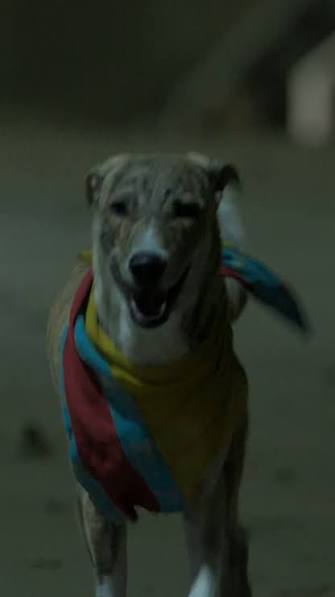
Senapati (Hindi word for commander of an army), a police dog, is no more, and is mourned by the police. His two puppies, Oscar and Momo, are separated, and sent to different places. Momo lives with young Apu's family in Assam (how close can you get to Bengal, the land of Ray?). Oscar lives with a poor construction worker, named Prince, in Bihar (another State-ly neighbour of Bengal). Momo (Bruno in real god-life) goes missing after running out to fetch a ball. At about the same time, Prince is mysteriously abducted. Apu and Masterjee begin searching for Momo, while Oscar works hard to alert others and help find his missing owner. Both storylines cross paths as the dogs and humans fight back against the criminal network. Rai’s script often turns into a Sherlock Homes mystery, with a string of red herrings that only little Apu can identify.
Up, above, I said that “unlike the pace of the film, your thoughts do not flow like a torrent.” I guess I was talking about myself. Ohh My Dog moves at a pace that left me breathless. It must be one of a few films made that have so many cuts, cinematic cuts, often lasting less than one second. There are far too many characters, and the movie soon turns into a road movie, with the climactic chase(s) lasting about 30 minutes, while moving in 30 different directions, including north and south. Now, I am talking about data obtained from the Gods, called Internet and AI. Read on:
While our eyes and ears gather roughly 1.2 to 10 megabytes of sensory data per second, the human brain heavily compresses this information. For conscious, active thought and decision-making, when watching a film, the brain processes only about 10 bits (about 1.25 bytes) per second. Our organs act like wide-open data pipes, but the mind acts as an extreme filter, discarding most background details to focus on a coherent narrative. The retina transmits roughly 10 million bits (~1.25 MB) per second along the optic nerve. The auditory system brings in roughly 100,000 bits (~12.5 KB) per second. Landmark neuroscience studies calculate that the limit for active, conscious, cognitive processing is roughly 10 bits per second.
At age 75, I think I need to upgrade and update my eyes, ears and brain, because this film delivers bits, bytes and megabytes, at a speed that challenged my faculties. It must have clocked 10 megabytes of sensory data, given my brain 1.25 bytes per second to process it and my ears 100,000 bits per second. I am sure this velocity will be a test for a few million other viewers too. But the love of man’s best friends, dogs, and the overall feel good tone of the film, then victory of good over evil supersedes all technicalities. And the good dogs in the film (all are good dogs) bark, but do not byte...bite.
Pawan Malhotra blends with his role of a Sardar Traffic Police Officer Sodhi seamlessly. Pankaj Tripathi is Pankaj Tripathi. Confident, yet subdued, speaking in his patent conversational style. Maahi Rai looks and sounds much older in real life than on screen, but renders a clap-trap performance. Rajesh Kumar is the roly-poly, bloated, corruption personified Darogha (local, Urdu word for Inspector). The other corrupt policeman is the Station House Officer (SHO), Mohammed Yusuf Hazari, played by Vijay Mishra (name unverified) with flair. Competent support comes from Shreedhar Dubey, Bulloo Kumar, Jitendra Joshi and Sulakhyana Baruah (the Assamese mother). Mangesh Dhakde and Aman Pant’s background music, and Máté Herbai, (the 51 year-old Hungarian cinematographer), and Karandeep Singh’s cinematography are above par. There is an overdose of religious chanting, holy music, ritualistic dancing and conch-blowing. One must look forward to a tutorial from editor Suvir Nath, to understand the high octane cutting style and momentum. With a name like Amit Rai in the forefront, the name of his associate director, Gurbir Singh is overshadowed. After at least three films as co-director or associate director, it’s time he appeared in the singular credit, as Director.
“Cut to the chase” is a legendary phrase used to tell a writer or director not to drag a film, and get a move on. Ohh My Dog reverses it, like in a anadrome. Except for a few emotion-charged scenes, which will moisten many eyes, every chase is full of cuts, cut aways, and parallel cutting.
Since the film is not anything like contemporary Hindustani cinema, and automatically appeals to dog (and all animal) lovers, it has to be seen to be believed. Dogspeed and Godspeed to PETA, and to director ka Beta.


