MIFF 2026, 9: All the winners, the winners take all

MIFF 2026, 9: All the winners, the winners take all
Generated by AI, the signature film, made by the Indian Institute of Creative Technology, the Signature Film of MIFF 2026 did not qualify for many award. But many people liked the film. I found it good, but it just carried one idea, a travelling ray of light, symbolising the emblem of the festival, the conch, right through, till the end. Some of the places it passes in its lightning like path seemed too obvious, and some of the reactions of the people who see it flash across made exaggerated movements. But this is not about the Signature Film, it is about the films that bagged wards for their excellence in aspect or another, or for their overall brilliance.
I wrote about the Golden Conch winner a few days ago, Poland’s Documentary, Silver.
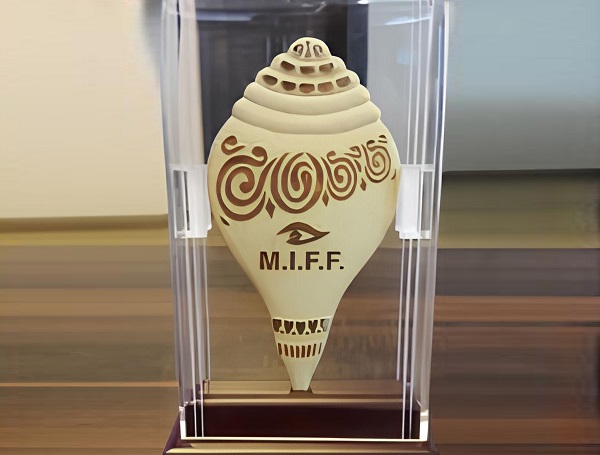
Now, after Silver’s Gold, let’s see who bagged the Silver Conch for the Best Short Fiction film (International Competition):
Ms. Nafiseh Zare, for Under the Snow

A powerful and nuanced story, the film captured the complexities of personal truth and societal expectations with remarkable grace.
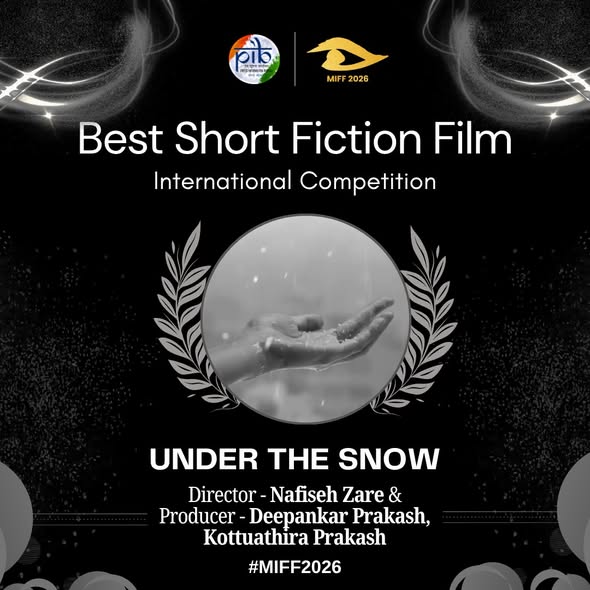
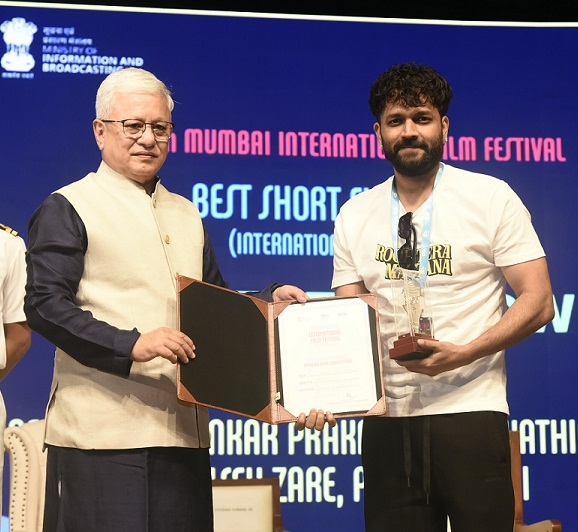
Iran is one country that makes some of the finest films every year. There is censorship, and some film-makers have had to leave Iran and live in other countries, because they either flouted social norms or indulged in making politically motivated films. In spite of all this, it is able to tells stories that are simple, slices of life and have great impact on viewers. Their feature films have won highest awards at several film festivals for decades. It just goes to show that creativity can flourish within boundaries, and yet excel. Deepankar Prakash, one of the producers of the film, received the award, on behalf of director of the film Nafiseh Zare, and the other producer, Kottukathira Prakash.

Maya's Song, directed and produced by Franziska Schönenberger and Jayakrishnan Subramanian (Germany), won the Silver Conch for Best Animation Film. Maya’s Song follows a young girl navigating questions of identity and belonging within her own family. Though Maya feels secure at home, strangers repeatedly question why her brown skin differs from that of her white parents, culminating in a painful moment of public misrecognition. Rather than withdrawing, she transforms her experience into a song that gives voice to her feelings. Tender yet powerful short film in its quiet simplicity, blending documentary storytelling with animation to capture Maya’s resilience and imagination, and the transformative power of self-expression to reclaim her story.
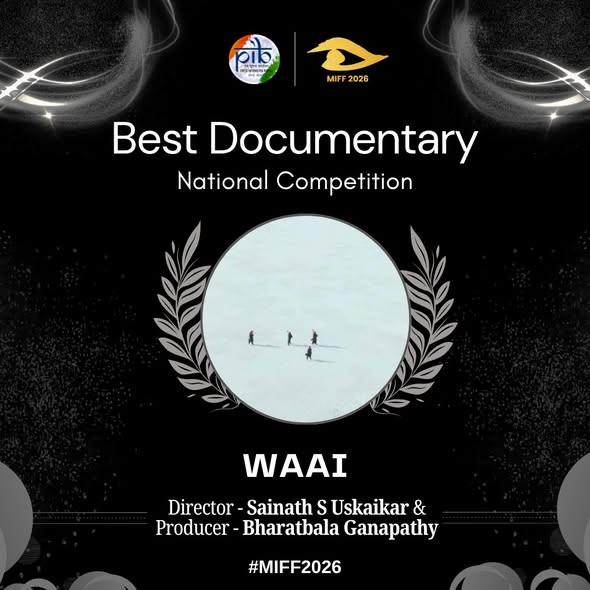
Waai was honoured with the Silver Conch for Best Indian Documentary Film. Prior to its domestic success, the film received international acclaim, winning the Best Documentary (Short) award at the New York Indian Film Festival 2026. It is a documentary, directed by Goan filmmaker Sainath S. Uskaikar and produced by Bharatbala, under Studio Virtual Bharat. The film explores the fading musical legacy of the nomadic Muslim community in Kutch, Gujarat, focussing specifically on the last four surviving Waai singers.

The Silver Conch for Best International Animation Film and a cash prize of ₹ 5 Lakh (To be shared equally by the director & producer of the film) went to the German animation film Maya’s Song. The award was received by Lead Animator and Studio representative Ms. Sanika Kulkarni, on behalf of the Directors and Producer of the film Ms. Franziska Schönenberger and Mr. Jayakrishnan Subramanian.
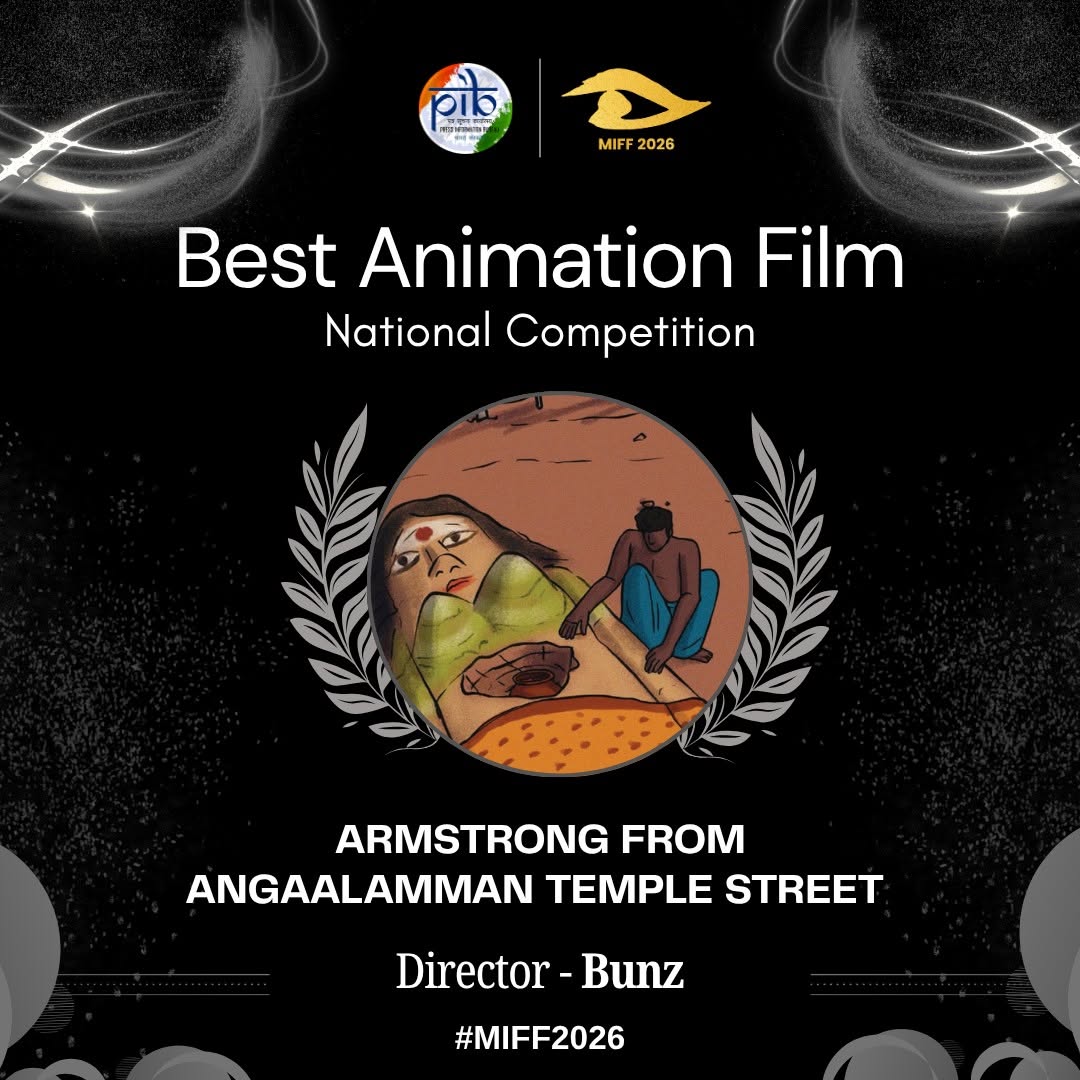
The Silver Conch for Best Animation Film under National Competition and Cash Prize of ₹3 Lakh was bagged by Tamil language animation Armstrong from Angaalamman Temple Street. The Director and Producer Shri Bhuvanesh M. Kumar (popularly known as Bunz) received the Silver Conch Award and cash prize.
The Silver Conch for Best Indian Short Fiction Film Award and Cash Prize of ₹3 Lakh was bagged by the film Small Clouds. The award for this FTII produced film was received by Vice Chancellor of FTII, Shri Dhiraj Singh and director Shri Shubham Sumit.
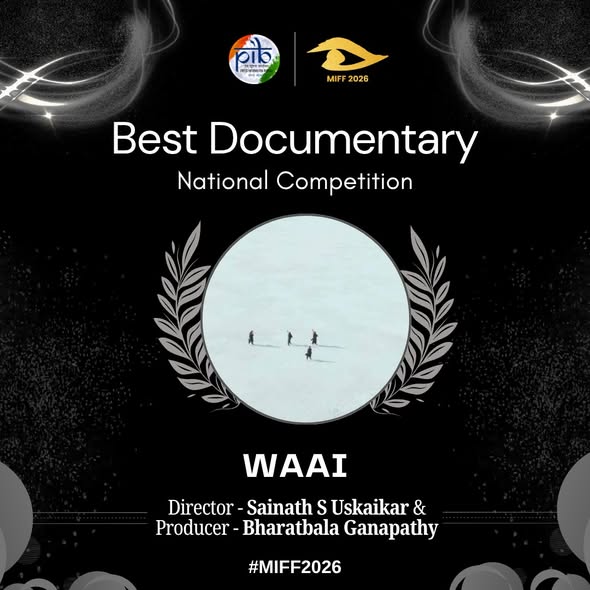
The Silver Conch for Best Indian Documentary Film Award and cash prize of ₹ 5 lakhs (shared equally between director and producer of the film) went to the documentary Waai. Director Shri Sainath S Uskaikar and Shri Jawahar Sharma on behalf of producer Shri Bharatbala Ganapathy received the award.
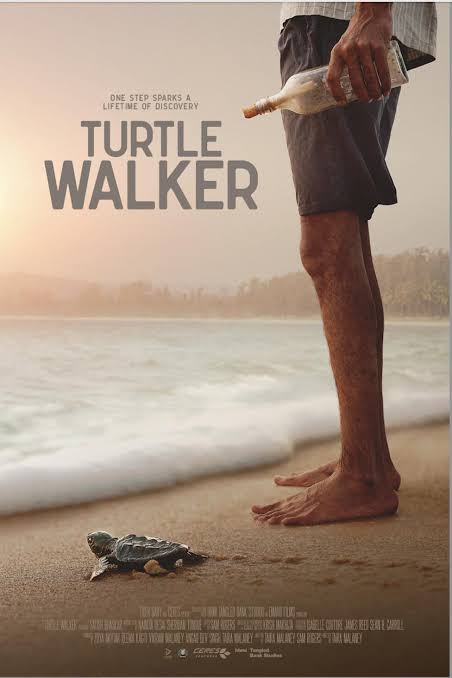
The award for the Best Cinematographer under International Competition category went to Shri Krish Makhija for the Indian documentary Turtle Walker.
The award for Best Editing under International Competition went to the short ficion film Ms. Evgeny Smirnov & Mr. Maksim Smirnov for the film About the Cow from Russia. Director Mr. Anton Simukhin received the award on behalf of the editor-duo.
The Old Bull Knows, or Once Knew, directed by Milan Kumar, received the IDPA Award for Best Student Film, given by the Indian Documentary Producers’.
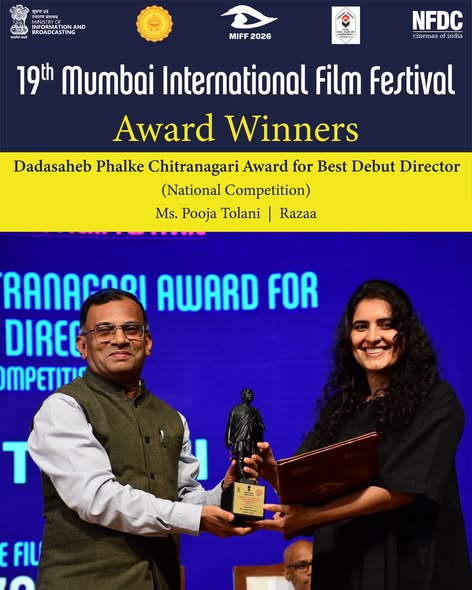
Razaa, written and directed by Pooja Tolani, won her the Best Debut Director Award (given by the Dadasaheb Phalke Chitranagari, also known as Film City, Mumbai). The plot goes like this: Razaa and her mother Sabeen spend a tense afternoon in a gynaecologist's clinic, awaiting an abortion. As they argue over the morality of their decision, Razaa's father suddenly calls. They must ensure he never finds out about the pregnancy. It stars Zeba Hussain, Geetanjali Kulkarni and Archana Patel.
The Hug of Emptiness, directed by Pradeep Kenchanuru, was honoured with the FIPRESCI (International Critics’ Federation) prize. (Incidentally, I am a member of FIPRESCI, which has about 38 members in India, and have served on its Jury several times).
Pramod Pati was a Chief Producer at the Films Division, now absorbed by NFDC. The award is given in his memory. It acknowledges ground-breaking and daring film-making, within the International Competition section. Hoarders, directed by Chuan-Ying Liao (Taiwan), was an experimental film that claimed the Pramod Pati Special Jury Award at MIFF 2026.
In the Technical Craft category, Best Editing was Awarded to Akhil Krishnan, for his work on the film MAYDAY. Best Sound Design award went to Bigyna Dahal, for the cinematic sound production on Kovarty and Best Cinematography award winner was Ranadhir Biswas for his visual work, on the film Small Clouds.
AI film-making Hackathon, co-organised by NFDC and LTM BlueVerse Craft Studio prize: The special creative technology competition awarded a runner-up prize to the short project, The Mumbai Lens, produced by film-maker Bharat Arora and FTII alumnus Rajesh Bhatia. A short AI film about an old Parsi optician in Bombay, who sees everyone’s Mumbai, through his testing lenses, but never his own. The Hackathon was a 48-Hour AI Filmmaking Challenge, with the theme, ‘Mumbai, Through a Thousand Eyes’. Participants created original AI-assisted short films, of 90 to 120 seconds, interpreting the city through perspectives shaped by memory, imagination and lived experience. The prize includes a sum of ₹1 Lakh and Certificate of Excellence.
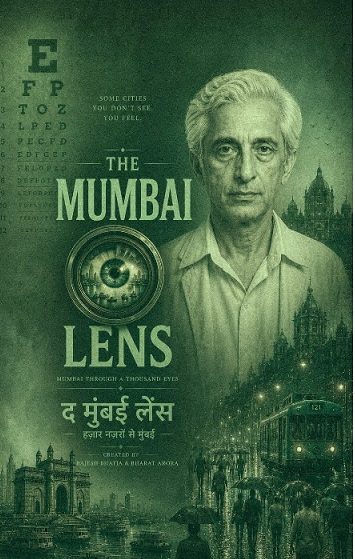
Rajesh Bhatia is the Founder & Director OpenFrame AI Lab. FTII alumnus with over 35 years of experience as a director, writer, producer, and educator. His work spans television drama, socially conscious cinema, and documentary film-making.
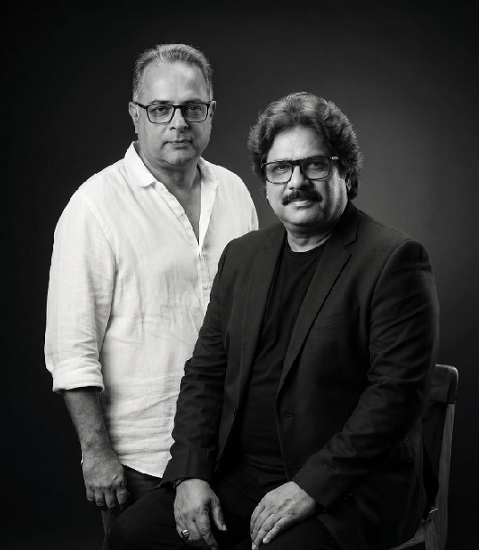
Bharat Arora and Rajesh Bhatia
Bharat Arora, the Co-Founder of OpenFrame AI Lab, is a Cinematographer, colourist, and AI film director, with over 25 years of experience. Trained under the late Shri Dharam Chopra at B.R. Films, Mumbai. He has also been a Canon India Official Mentor and FTII Course Director, building AI-integrated cinematic methodologies combining traditional film grammar with generative visual systems. Arora is based in Jammu, J&K.
MIFF 2026 was special for the duo, because they got to screen 3 films in this festival, a rarity indeed. The other two films being
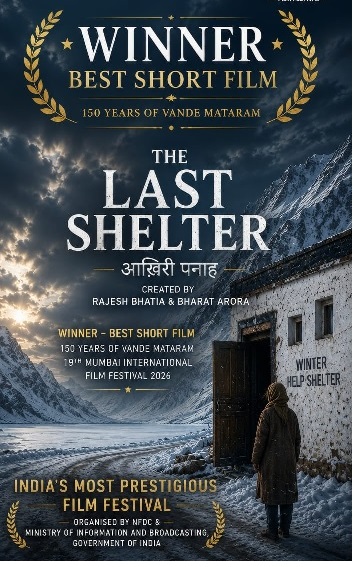
The Last Shelter — Best Short Film National Competition, Viksit Bharat, 150 Years of Vande Mataram
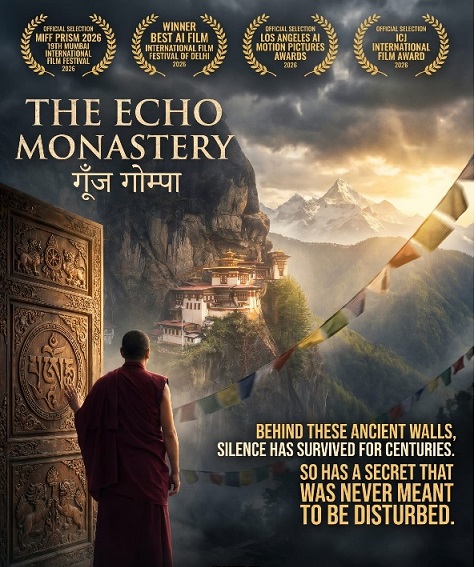
and The Echo Monastery, Official Selection, MIFF Prism Section
Dr. V Shantaram Lifetime Achievement Award
Given at MIFF, honouring a filmmaker for significant contributions to Indian documentary films. It includes Rs 10 lakhs, a trophy, and a citation, commemorating film-maker V Shantaram's legacy, celebrating his 125 birth anniversary. A special screening of the biographical documentary V. Shantaram: The Pioneering Spirit, directed by journalist, academician and author Sanjit Narwekar, himself a V. Shantaram Lifetime Achievement Award, at MIFF 2022, was held at MIFF 2026. The film highlights the legendary auteur’s 60-year career of pioneering technological and social advancements in Indian cinema. V. Shantaram (Shantaram Vankudre), to give his full name) headed the Films Division for a short period. Somehow, I could not trace the name of the winner anywhere. Perhaps the award was with-held this year.
A total of 17 awards recognising excellence in documentary, animation and short fiction filmmaking were presented during the closing ceremony.
Restored Documentary Classics from NFDC-NFAI Collection enthralled audiences at MIFF 2026. Heritage documentaries on Gandhi, Begum Akhtar and Pt. Ravi Shankar shone at MIFF
Five restored documentary classics from the National Film Development Corporation–National Film Archive of India (NFDC-NFAI) collection, were showcased at the 19th Mumbai International Film Festival (MIFF 2026) under the special non-competition section, NFAI Presents – Restored Classics. All the selected films have been restored under the National Film Heritage Mission (NFHM), the Government of India's flagship initiative dedicated to preserving and restoring the nation's cinematic legacy.
The curated package featured five landmark documentaries, produced by the erstwhile Films Division. Together, these films chronicle India's cultural, artistic and social heritage, offering contemporary audiences an opportunity to revisit significant moments and personalities from the country's past.
Three of the documentaries focus on iconic personalities: Mahatma Gandhi, Begum Akhtar and Pandit Ravi Shankar. The other two documentaries are a cinematic representation of Calcutta and India's tribal communities.
Mahatma: Life of Gandhi 1869–1948 (Part I)
Directed by Vithalbhai K. Jhaveri and produced in 1968, this English-language documentary draws extensively from archival footage to present a comprehensive account of the life and work of Mahatma Gandhi. The film offers a valuable historical record of the life and works of Mahatma Gandhi.
Begum Akhtar
Produced by Films Division and directed by N.K. Issar in 1971, this English-language documentary portrays various facets of the life and artistry of the legendary singer Begum Akhtar, revered as the Mallika-e-Ghazal. Through intimate visuals from her home, in presence of family members, and stage performances, the film captures the essence of the celebrated Ghazal and Thumri artist.
Ravi Shankar
Directed by Pramod Pati and produced in 1970, this documentary biopic explores the life and creative journey of the legendary sitar maestro Pandit Ravi Shankar. Through interviews and recital footage, the film presents the many dimensions of the classical musician, composer and cultural ambassador of Indian music.
Portrait of a City
Directed by Chidananda Dasgupta in 1961, this documentary offers a compelling cinematic portrait of the then Calcutta. Through visuals of factories, newspaper offices, rivers and racecourses, accompanied by music, ambient sound and incidental dialogue, the film captures the rhythm and character of life in a bustling city.
Our Original Inhabitants
Directed by Jagat Murari and produced in 1953, this English-language documentary introduces audiences to India's diverse tribal communities. In less than 12 minutes, the film highlights the distinctive cultural practices, attires, ornaments, music and dance traditions of some of the 172 tribal groups spread across the country.
The inclusion of these films at MIFF 2026 highlights the enduring significance of the Films Division archives, one of the world's richest repositories of documentary and non-fiction cinema. Through state-of-the-art restoration undertaken under the National Film Heritage Mission, these films have been revived for contemporary audiences while preserving their original cinematic character.
In his closing speech, Prakash Magdum, Managing Director of NFDC, gave a report about the highlights of MIFF 2026. He informed the audience that MIFF 2026 received an overwhelming response, with 1,459 film entries from across the world. The Competition Section comprised 144 films, including 52 international and 92 national entries, representing filmmakers from 13 countries. The non-competition section featured a total of 202 films, including 106 international titles and 96 national films, from 46 participating countries, collectively, presenting over 83 hours of screenings. The sections were organised across 24 curated segments, including Mosaic, Best of Fest, Busan Next Wave, Oscar Winners, German animator Raimund Krumme Retrospective, NFDC Showcase, Echoes from North East, and Marathi Films, IFFI CMOT, among others, bringing together acclaimed works, emerging voices, and regionally rooted storytelling on a single platform. Master film maker David Attenborough was honoured with the screening of his two films under ‘Centenary Tribute’. A ‘Homage’ section showcased films by masterminds Shyam Benegal, photographer Raghu Rai, and documentary master Fredric Wiseman, whose works reminded audiences why non-feature cinema endures, stated MD, NFDC. This edition of MIFF also introduced two new curated sections, ‘Echoes from North East’, showcasing seven films from the region, and ‘Marathi Films’, featuring 19 films in collaboration with Film City Maharashtra--reinforcing MIFF’s commitment to celebrating diverse regional voices within Indian cinema.


