
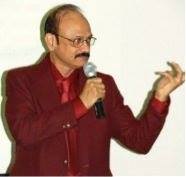
Governor-The Silent Saviour, Overview: Saving India from imminent bankruptcy
Governor-The Silent Saviour, Overview: Saving India from imminent bankruptcy
Some film-buffs, like me, who end-up watching a film without doing any googling or AI-ing, are in for a big surprise here. Governor-The Silent Saviour, is not about the Governor of any state in India, but the Governor of the Reserve Bank of India (RBI). It is this man’s signature and promise that you see on currency notes, of any denomination. Of course, there is also a picture of Mahatma Gandhi. During financial crises, like the one India experienced during 1991-1992, India could have gone bankrupt, unless hundreds of million USD were procured, from any source, as aid or as loans, to see it through the crash. Three key persons hold the keys to devise such a propping-up plan: The Prime Minister, the Finance Minister and the Governor of the Reserve Bank of India. And Governor is the story of one such Governor, who, along with his deputy, came-up with several plans to revive the economy. His name was S. Venkitaramanan, and, in this ‘based on true events’ film, he is played by Manoj Bajpayee. That name itself should ensure visit to the theatre for thousands, mabe lakhs,of moviegoers.
Venkitaramanan served as the 18th Governor of the Reserve Bank of India, from December 22, 1990, to December 21, 1992. He earlier served as the finance secretary, in India's Ministry of Finance, from 1985 to 1989. Venkitaramanan (hereinafter referred to as SV) inherited an economy that was already on the downslide, which began during the tenure of his predecessor, R. N. Malhotra, who held that office till December, 1990. How SV’s earthy wisdom helped India come out of that quagmire is a remarkable tale that ought to have been told, and it is heartening to see a feature film made on this genius of a man. Actually, it was Ananth Mahadevan, who portrayed Venkitaramanan, in Scam 1992, a Sony Liv's original web series, based on the 1992 Indian stock market scam of the notorious Harshad Mehta.
Although most of the film rings true, some changes have been made, possibly at the behest of the Central Board of Film Certification. Reserve Bank is named National Bank on its building, though it is always referred to as Reserve Bank in the dialogue. Governor S. Venkitaramanan is called A. Ramanan, the Prime Minister is abbreviated from Chandrashekhar to Shekhar and Rajiv Gandhi to just Mr. Gandhi. P.V. Narasimha Rao is called Rao and Manmohan Singh…what else, but just Singh. One of the four Deputy Governors of RBI at that time, who was closest to SV, and succeeded him, was Chakravarthi Rangarajan, called CR by SV. CR held office for a full five years. Rangarajan is called CR by his boss. Even the name of a media vehicle, probably the Times of India, in changed to Hindustan News. If it is, indeed, the Times of India that they are referencing, then why is the editor played by Parsee actor Kurush Deboo? ToI’s editor, during 1990-92, was Dileep Padgaonkar. Incidentally, the last scene in the newspaper’s office, a confrontation between the reporter, Miss Varma, and the editor, is poorly handled, compared to the overall handling of the film.
A biopic that focusses on the crucial period of about two years, the film is written by four writers: Suvendu Bhattacharjee, Saurabh Bharat, Ravi Asrani and producer Vipul Amrutlal Shah. As is the case with all biopics, you never know which parts have been imaginatively grafted on to the real events. Except for a brief stand-off between SV and CR, the film shows only positive characters, from Prime Minister, right down to the RBI peon. SV’s own family is loving, caring and highly supportive of him, though his wife indulges in superstition, prayer and worship, like most South Indian wives do. The writers present SV as a simple, unassuming soul, rooted to the earth, who seeks neither fame nor glory for his prescriptions for the country’s ailing economy. He is uncomfortable when the office welcomes him with a ritualistic ‘red-carpet’ and a party in his honour, and wants to avoid it. But a colleague says that it is protocol to welcome the Governor in this manner. SV observes that there is no such protocol. CR then intervenes and says it might not be ‘protocol’, but is an old ‘tradition’. SV finally agrees. During the party, a game of musical chairs is held, and the invitees insist that SV should join the game. Finally, he does, as does CR. They are the last two men left running, or, rather, walking. When the music stops, SV is closer to a chair than CR, but he lets CR win. Dialogue is inspiring in some quotable quotes, probably the best being the one that SV recalls from his teacher’s teachings, “You must never have a Plan B, for if you do, then your Plan A is likely to fail.”
In terms of language and diction, the film varies and veers. SV is not given the Tamil accent that would trace his roots to Nagercoil, in the pre-British princely state of Travancore, where he was born. He completed his master's degree in physics, from University College, Thiruvananthapuram, Keralam, and also obtained a master's degree in Industrial Administration, from Carnegie Mellon University, Pittsburgh, US. As this will show, he was, by no means, an economist. He does use one or two words, off and on which betray his lack of total command over Hindustani, and he even mentions this fact during a conversation, while describing the difference between ‘bechna’ (to sell) and ‘bachana’ (to save). While talking to his wife or daughter, he slips in a few words in Tamil. Likewise, the Maharashtrian peon at RBI, Shantaram Patil, and his family, speak a mixture of Hindustani and Marathi, with more of the former. It is only CR who speaks good Hindi, with a clear Malayali accent. CR graduated from Loyola College of the University of Madras, in the commerce stream and did a PhD in economics, from the University of Pennsylvania, in 1964. No wonder SV trusted him more than anyone else.
Directing such ‘period’ films, even if the period is just 35 years ago, requires careful choosing of locales, props, streets, cars, signage, dresses, etc., besides the main part of deciding camera angles, magnification and directing actors. Marathi stage actor and director Chinmay D. Mandlekar scores high on many counts. A graduate from the National School of Drama, he has worked as an actor in several Hindustani films, like Tere Bin Laden, Shanghai, Gandhi-Godse, Ek Yudh (played Nathuram Godse, Mahatma Gandhi’s assassin), and lately, in Sajini Shinde Ka Viral Video. His directorial debut film, Inspector Zhende, about the international criminal, Charles Sobhraj, starred Manoj Bajpayee in the titular role. And it is quite obvious that he was very happy about Manoj’s performance in that film, so he has cast him in Governor too.

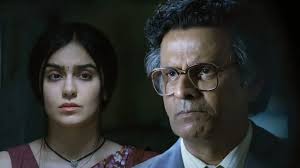
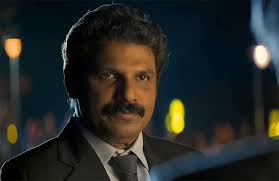
In Governor, there is an amazing pattern that one notices: every time you feel that a particular scene was ineffective and a certain shot went nowhere, he follows it up with a punch or a twist. Parallel cutting is used in some scenes, but it is not always impactful. Manoj Bajpayee as a do-gooder, working within the system, and yet able to rise above it, is no discovery. He’s done it a dozen times before. But Mandlekar is so enamoured with Bajpayee that he relies heavily on the mid close and close-up shots of Bajpayee’s face, which usually betrays nothing, as cutting points. This being only his second Hindustani film, there are a few rough edges, but the potential is shouting out loud.
Having been there and done that so often, it is to Manoj Bajpayee’s credit that he can still instil life in almost every character he plays, as he does here. But he does not come across as a Tamilian, by any stretch of imagination. Therefore, you feel that Mandlekar should have gone with another, more typical actor. It is Noushad Mohamed Kunju, as CR, who is the scene-stealer here. A genuine Keralite, going by his name, Kunju, he fits the role like the proverbial glove. Kunju, 59, who hails from Thiruvananthapuram, studied stage performance at ITI - Intercultural Theatre Institute, and currently lives in Hyderabad. Adah Sharma does a routine job as Miss Varma (Sharma playing Varma).
Old-timer Madhoo is cast as SV’s wife, Vandita, Mounis Ratta plays Paresh, aka Popat, Varma’s man Friday, while John Forbes is brought in to play the American with whom SV tries to strike a deal, and get a few million dollars as a bail-out package for India. Umar Raza Khan is the informer, who brings vital information for Varma. Others in the cast are: Krisha Kurup, Amitabh Pandey, Devaang Bagga, Deepak Bindra, Aryan Pushkar and Paritosh Sand, all of who acquit themselves well, some of them really impress.
Described as a historical economical thriller, Governor assumes importance in the face of talk about India selling some of its gold reserves, in May 2026, to help its economy tide over the allegedly precarious economic situation. To counter this claim, some government politicians were heard saying that India had sold its gold in the past too, during the tenures of Prime Ministers Chandrashekhar and P.V. Narasimha Rao. The difference, to be sure, is that the earlier ‘migration’ of gold, was as a mortgage, not a sale, and the gold was brought back, in later years. There is some amount of ambivalence about SV’s decision to allow American planes to refuel at Bombay, en route from the Philippines, to bomb Iraq, in return for US votes for a loan from the International Monetary Fund. The USA held 87% voting rights in the IMF. Was this a sell out to America, at a time when India’s traditional source of succour, the USSR, was falling apart?
For the educated and economically aware film enthusiasts, Governor-The Silent Saviour has a lot to offer. For the front benchers, there are three or four lines that, unintentionally, sound claptrap and will please ultra-nationalists. All due credit to S. Venkitaramanan for planning and executing a financial triumph, and preventing India from sinking into bankruptcy.
Trailer: https://youtu.be/Mvm0bRY0Qyg


