
Charak, Review: Cult, occult and difficult
Charak, Review: Cult, occult and difficult
As I child, I had seen posters about Ayurvedic medical products, sold under the name of Charak. Then I saw a clinic somewhere in Bombay, probably in Mahim, run by a doctor called Charak. Then, I learnt through the media that actor Salim Khan (yet to become a writer) had married Sushila Charak, who came from a Hindu Dogra Rajput family, hailing from Jammu. She changed her name to Salma Khan, after marrying Salim Khan, on November 18, 1964. When my mother bought a flat in Bandra, in 1972, I found that the adjacent bungalow housed Salim Khan’s family, and often saw Salma Khan around. I never came across that name or word after that, until two days ago, when I received an invitation to attend the press show of the film Charak, which had a tagline: Fair of Faith. Time to Google. And for Google to AI. “The original meaning of 'Charaka' is the great teacher of ancient Indian Ayurveda and author of the 'Charaka Samhita'. He was the royal physician of Kanishka. Literally, it is derived from Sanskrit and means 'wanderer' (itinerant physician or ascetic). Additionally, Charaka also means spy, messenger, or leprosy-stained person.”
Charak, the film, is about none of these. It is a fiction film about an annual fair held in Eastern India, where Lord Shiva comes down and participates, along with Ma Kali. Celebrated withy pomp and splendor, the fair is also believed to be an occasion when prayers are answered, particularly prayers from couples who have no children, and are yearning to have a child. But the deity demands a sacrifice, a sacrifice no less than the corpse of a child. Desperate, such couples resort to digging bodies out of graves, or buying them from faraway graveyards. Since most Hindus burn their dead, bodies are scarce. But so are childless couples. So the practice survives. Going one step further, some couples believe that the sacrifice of a living child is much more effective than that of a corpse.
In a place called Chandpur, Charak is celebrated on a very highly level. The language spoken is not clear. An old lady speaks fluent Bengali. The others speak some forms of Hindi. At the centre is a school-going child called Birsa Mahto, an Adivasi name, whose best friend is a boy called Kanu, belonging to an inferior caste. Birsa Munda is a legendary hero of present-day Jharkhand, which, not long ago, was part of Bihar. If you go back even farther, you will find that Bengal, Bihar and Jharkhand were part of one Presidency. One villager in Chandpur is elected head ‘priest’ for the Charak festival every year. There are a few couples who are childless. This leads to adoption of children born to parents who have children. Incidentally, the head priest is also childless. Into this scenario arrives a Police Inspector called Subhas Sharma. Married for 12 years, the Sharmas have no children, though there are no medical issues that could pregnancy. His wife, Shefali, is Bengali. She is an author, and keeps suggesting that the two should adopt an infant child, but Sharma feels that an adopted child is no substitute for their own offspring. Sharma’s mother keeps sending him various potent concoctions that, she insists, have proven effective.
As is often the case, the local politician wields a lot of power. Elections are due soon, so he announces a donation of Rs. 3 lakh to the upcoming Charak festival, due in two weeks. He also issues a diktat, that in the run-up to the festival, and during its pendency, they should release the two prisoners held in the police lock-up, and not charge anybody with ‘minor offences’ henceforth. Looking at the fit and aggressive Sharma, who is not a local and has come there on a posting, he tells the other personnel at the police station to restrain this ‘Balaji Singham’ from getting into “his act”. The police officers assure him that he is “one of us”. Sharma’s wife learns about a learned scholar, a man who has investigated occult and blind faith practices, like Charak, and takes her husband along to meet him. Sharma is unimpressed with his views. Shortly before the beginning of the Charak fair, Birsa, Kanu and the forest-guard disappear. Subsequently, Kanu and the guard’s bodies are found. Kanu’s corpse is sighted floating on the river, while the guard seems to have dies of a bullet wound from his own rifle, suggesting suicide.
Reading the above paras, you might think that this is a simple, direct narrative film. Far from it. Based on a short story by Sanjay Halder, it looks very likely that the screen adaptation and direction have gone overboard. Farauq Malik is credited with the screenplay and dialogue (is Farauq is a strange spelling of Farooq, or is it a different name altogether?). Malik has written a children's feature film, Salaam Bachche. His painting of the two children into the frames of their parts is quite good. There are a lot of stock characters: the village granny (a tribute to Pather Panchali’s Pishima?), the village drunk, the unscrupulous and manipulative politician, the ever ready to appease police force, the strong friendship between two school-boys, one of a higher caste and one of a lower (although, it appears that both are Adivasis, I am told that even among Adivasis, there are higher and lower sub-castes). But he is unable to provide any clarity about of the Aghoris in the film.
Aghoris are a distinct Hindu ascetic sect, based mainly in North India, particularly Varanasi, known for non-dualist Tantric practices, including living in cremation grounds and using human remains. Derived from the medieval Kāpālika tradition, they believe in overcoming fear, disgust, and discrimination to reach a state of divine oneness, often defying orthodox social norms. Key aspects of the Aghori in India include ritualistic practices, like Aghoris smearing their bodies with cremation ashes, use human skulls for rituals, and engaging in unorthodox, taboo-breaking practices. In the film, they appear and disappear at will, without contributing much to the story. Though their forms are almost translucent, characters in the film see them. They chant Har Har Mahadev, time and again. In one scene, some Aghoris come in the way of the Sharmas’ car. They stop the car. One Aghori comes up to the window where Mrs. Sharma is seated, and gives her a stare. She immediately covers her midriff, which is exposed. The Aghori then goes away.
Scenes often appear incomplete and shots end with no particular cutting point. Almost all characters have back stories, and directors Amarnath Jha and Shiladitya Moulik choose to use flashbacks much too often to let you in on them. However, even then, there seem to be gaps in the narrative. Sharma is shown speaking to his mother only thrice in the whole film, and all three calls come from her. In every call, all she talks about is ways of getting Shefali pregnant. He is never shown calling her, or any other relative. We can assume that his father is no more. There are too many characters in the tier 4 town, and it is difficult to remember who is who. To the credit of the makers, all the inhabitants look credible, given the right make-up, get up, skin complexion and hair. In the extended climax, the Charak fair is both breath-taking and a perfect example of ritualistic fervour gone berserk: body piercing, people getting ‘possessed’, ominous music, crazy dancing, men swinging from poles 50 feet in the air, on two ends of the same revolving stick, and all of it leading to the sacrifice of a child. To give the film due credit, the end is an unanticipated twist, though it consists of several flashbacks, one too many.
Sahidur Rehman (like his character’s name, Subhas, the h is missing in his real name, which should be pronounced Shahid) fits his role, and goes through the motions, till he gets a chance to come into his own, in the climax. Anjali Patil is an effortless performer, whether she is in a Hindi film, Marathi film or an international film. Both these characters are, sadly, not well-integrated into the film, till we come to last 10 minutes, a case of lazy writing. Shashi Bhushan as Sukumar, the head priest for Charak, does a good job. Subrat Dutta does a regular drunk. Young Shankhadeep does a creditable job as Birsa, as does Shounak Shyamal as Kanu. Also in the cast are Nalneesh Neel, Debasish Mondal, Koushik Kar, Sreya Bhattacharya, Manosree Biswas, Debdas Ghosh, Bhiku, Constable Madan, Partha Pratim Sarkar, Abhishek Kumar, Sushmita Sur and Prasun Gain.
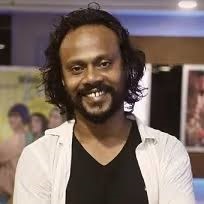
Of the two producers, Dhaval Gada and Sudipto Sen, the latter had directed the 2023 film The Kerala Story. Why was he not retained for the sequel, producer Vipul Amrutlal Shah knows best. Why did he turn producer, only Sudipto knows. And now read his statements to the press before the release of Charak. “I will not produce again. It is a very tough job. When you produce a film, you carry the entire burden on your shoulders.”
He explained that, “… directing allows him to stay focussed on story-telling without the constant pressure of managing finances and logistics. I want to concentrate on direction. That is where my strength lies,” he added. About Charak, he shared, “Charak: Face of Faith is not meant to judge or sensationalise religious practices. Instead, the film aims to present the subject through a balanced narrative that encourages viewers to think about belief and tradition. Sen shared that the film required extensive groundwork. We did a lot of research. We spoke to people and studied the rituals closely before writing the script.” Extensive groundwork and research may have gone into the making of the film, though that does not necessarily result in a good film, as is the case here. His claim that “the film aims to present the subject through a balanced narrative that encourages viewers to think about belief and tradition” is not a matter of debate. How is all this captured on film, in an effective mise en scène, is what a viewer looks for. On that front, the film is largely fails.
Myths, mythology, mythological texts, blind faith, rituals and occult practices are dangerous territory. There are no statistics about who and how many people in India subscribe to such practices, but there have been many cases reported of rationalists, who questioned and pooh-poohed many such practices and claims, being murdered. In this scenario, putting forth all aspects of the Charak rituals before the audience, without taking any stand, is, at best, an exercise in futility.
Rating: * ½
Trailer: https://youtu.be/uESlhtAmOtk


