Ethan Coen: Tribute at FICCI 59
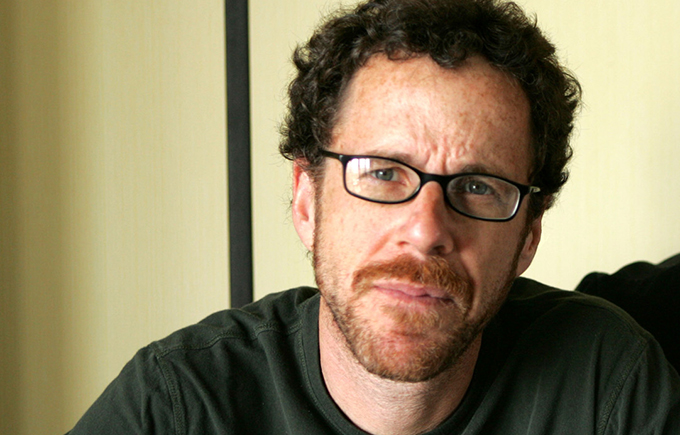
Joel and Ethan Coen have become icons of world cinema. The brothers' multiple collaborations have earned them five awards at the Cannes Film Festival, four at the Oscars, two BAFTAs, and one Golden Globe. Their films combine genres, portray eccentric characters, weave complex plots and black humor, and are influenced by literary sources and genres of classical cinema, especially film noir. Ethan, the younger of the pair, will be honored with a tribute and the presentation of two of his most outstanding films.
Ethan Coen trained in philosophy at Princeton and then began working with his brother writing film scripts. In the dawn of the eighties, while Joel was a production and editing assistant for horror films such as The Evil Dead (1981) by Sam Raimi, Ethan began writing for the Cagney & Lacey police series. The brothers would go on to write Raimi's second feature with him, Crimewave (1985).
From Blood Simple (1984) to The Ballad of Buster Scruggs (2018), the most recent film, this "two-headed director" has built a successful and prolific career around a particular narrative style, crafting films where irony, chromatic darkness, and certain violence combine in a unique formulation.
To mention only Ethan's most outstanding films would not do justice to the other titles of his wonderful filmography. However, No Country for Old Men (2007) received the Oscar for Best Film, Best Adapted Screenplay, and Best Director, in addition to the Golden Globe for Best Screenplay and the Best Director Award at the BAFTAs. Fargo (1996), the brothers' biggest box office success at the time, received the Best Director award at the Cannes Film Festival and the BAFTAs, as well as the Oscar for Best Original Screenplay. The films The Man Who Wasn't There (2001) and Barton Fink (1991) earned the Best Director Award at the Cannes Film Festival, as well as the Palme d'Or for the latter. In 2013, Inside Llewyn Davis took the Grand Jury Prize at Cannes.
Ethan Coen has also written for the theater and composed short stories and poetry. Gates of Eden (1998), a collection of stories influenced by noir themes and his own youth, is among his most notable work.
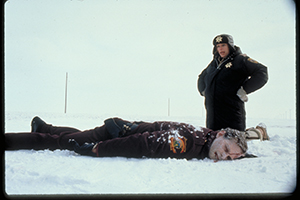
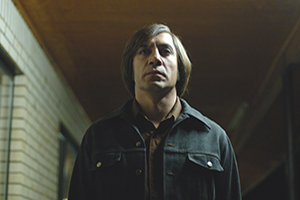
FICCI 59 will honor his outstanding work in a tribute that includes screenings of two of his films: Fargo and No Country for Old Men.
FARGO (1996)
Even before the opening scene when they joke that the story we are about to see is a true narration of the facts, the film that catapulted the Coen brothers to fame openly ridicules human stupidity. In the deep Minnesota winter, a car dealer with financial troubles has the idea of kidnapping his own wife and getting his filthy rich father-in-law to pay a million dollars in ransom, nearly all of which he plans to keep for himself. To do the job, he hires a couple of goons whose ineptitude creates a completely unnecessary bloodbath. Violence and idiocy are the two vital ingredients of the Coen brothers' films, along with their sagacious sense of humor. In this case, money is the only thing that motivates these men. The only intelligent person in the whole mess is the police officer, who happens to be the only female in a lead part. Boasting a gorily entertaining, absurd and witty script, Fargo is one film by these two geniuses of world cinema you simply have to see. |
NO COUNTRY FOR OLD MEN (2007)
Judging from the body count, a drug delivery in the Texan desert has gone terribly wrong. When Llewelyn Moss accidentally comes upon the macabre scene, he decides to take the money and run. He knows it won't be easy, but the booty is well worth the risk. Determined to get back what's theirs, the drug dealers hire the unscrupulous Anton Chigurh, brought to life by the incomparable Javier Bardem in a part that has already gone down in the history of cinema. Perfectly scripted, directed and produced, this now classic Coen brothers' film went on to win four Oscars. Violence is the only law that reigns in this world where the moral code either doesn't exist or is perverted and where the characters—including the police officer who is the third vertex of the triangle—never actually meet face to face. At the heart of it all, money and the violence in engenders. Simply brilliant! |