
Visual Poetry in Jim Jarmusch’s “Paterson”
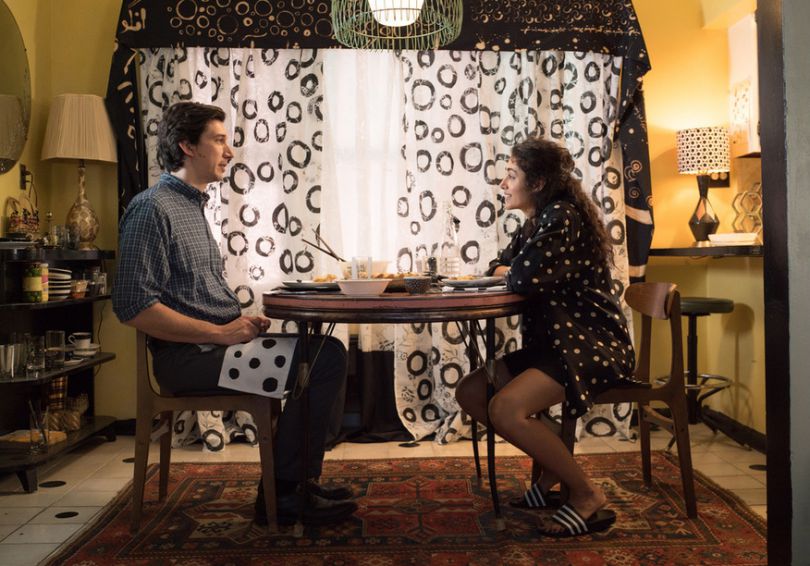
Jim Jarmusch’s Paterson is set in the eponymous New Jersey town, and although its brick mill vibe seems an anachronism in our time-lapse, media blitzed world, it invites us to enter a time warp and ponder eternal themes like love.
Poetry is of essence in Paterson, beginning with its soulful protagonist. Adam Driver plays a bus driver who composes verse while working his route, and then scrawls it on the pages of his secret diary. He has the same name as this former epicenter of silk manufacturing and as the famous poem by former co-resident William Carlos Williams. Both harken to a more lyrical century. By the looks of things, we’d never know that century has finished its run.
Spanning one week in early autumn, the saga unfolds in daily installments that open with variations on a visual refrain: an overhead shot of Paterson and his Iranian-American wife Laura (Golshifteh Farahani) in the intimacy of their bed. His alarm clock may be ticking, yet the rhythms of his spirit are all but timeless. Each morning Paterson basks in the romance and recounted dreams of his beloved.
One of those dreams is about twins. Though the couple is childless — unless you count their bulldog Nellie — duality flows through Paterson like the Passaic River. Paterson treasures his wife yet cops to sometimes noticing other women. Labor is both a source of satisfaction for our working-class protagonist and a historic nexus of strife, as borne out right here in Paterson. The poetry of others, including a young girl, can arouse Paterson’s admiration and envy in equal degrees.
This low-key drama is inflected with nuance, yet black-and-white motifs fill Mark Friedberg’s production design. More about that design here: http://www.thalo.com/articles/view/1285/jim_jarmuschs_poetic_paterson_spotlight_on_the


