
Do film sets insure their cars or simply buy in bulk?
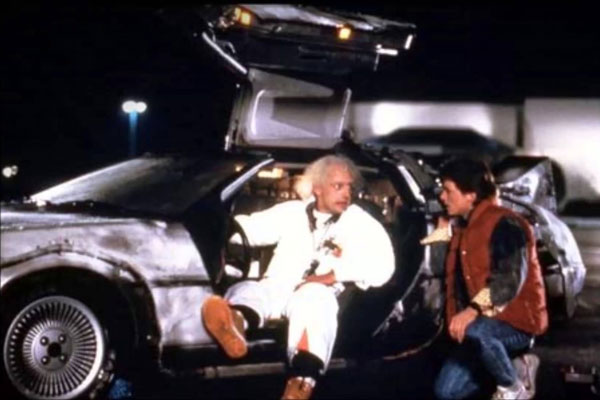
Throughout the years, as an audience we have witnessed some remarkable and iconic cars to feature on the big screen. We’ve had the privilege of seeing the DeLorean in Back to the Future, the Pontiac Firebird Trans Am in Knight Rider, the Mini Coopers in Italian Job and the Aston Martin DB5 made famous in the James Bond films. However, there is an interesting factor in regards to film and cars- what happens to them once they have been disposed of. Do the studios buy them in bulk or do they insure just the singular car? The answer to that question depends solely upon the studio and the specific car. Some have insured just the one specific car; however some cars are bought in bulk if they are being represented as the generic model.
Scenarios are to be considered for insurance
If a film set were to insure a car for their feature film, there are couple of scenarios that they need to consider. Scenario one: damage to the vehicle and Scenario two: third party bodily injury or property damage. This allows them to cover all areas in regards to the car itself and the driver operating it. This is most commonly associated with cars in the James Bond and Mad Max movies simply because only one car is needed in the production and because the car may be involved in several stunts, the insurance covers a number of areas which allows the directors to have a sense of freedom in their directing as they won’t be restricted with the conditions of the car and set. With this being said, you don’t need to have a Hollywood car or be a Hollywood actor to ensure you have the right insurance. At Gap insurance, you are able to get free instant quotes, allowing you to save on your gap insurance. All you need to do is enter your details, get quotes and then the rest is in your hands; you’ll soon realise if Gap is worth it.
Why sometimes buying bulk is more beneficial
In some films, the car embodies a character of its own- the DeLorean, 1973 XB GT Ford Falcon and the 1970 Dodge Charger can be seen as their own unique characters within the movies, so it’s quite important to have these insured. However, if you have the generic car with the purpose of filling the set or maybe to act as a prop, buying in bulk can prove to be more beneficial as you don’t need a specific car in regards to that scene. If a car is to be blown up for example and has no specific significance within the scene you can easily replace it with another car from the bulk order. There’s no need for the insurance as it can be easily replaced. More significant cars however, need more special treatment as most of the time; they are modified to fit the film. It’s just like your supporting cast and your main cast-an extra can be more easily replaced then your Oscar nominee main actor.


