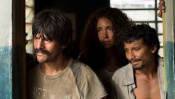

The competitors for the Horizontes Award

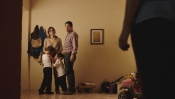
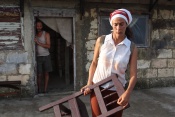
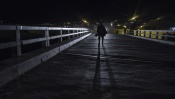
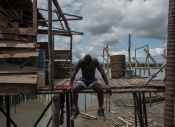
Juan Andrés Arango, Daniel Burman, Amat Escalante, Alejandro Fernández Almendras, Carlos Lechuga and Christopher Murray, among the competitors for the Horizontes Award
Five former participants in last year’s Films in Progress will this year feature in the selection of the best in Latin American cinema
The Horizontes Latino selection, consisting of feature films not yet screened in Spain, produced totally or partially in Latin America, is made up of thirteen films, half of which are related to previous editions of the San Sebastian Festival: four participated in Films in Progress 28 at San Sebastian (with a fifth in Toulouse 29) and another in the Europe-Latin America Co-production Forum, while the short by one of the directors won first prize at last year's International Film Students Meeting.
The Brazilian, French and Spanish co-production Era o Hotel Cambridge (The Cambridge Squatter) helmed by Eliane Caffé (Sao Paulo, 1961), narrating the tale of a group of refugees who join homeless migrants in occupying an old abandoned building in Sao Paulo, carried off the Films in Progress Industry Award last year in San Sebastian.
Also part of the same section, which has the aim to promote the completion of films at the post-production stage, was the fourth feature film by Alejandro Fernández Almendras, Aquí no ha pasado nada (Much Ado About Nothing).Starring a solitary and foolhardy young boy who becomes the main suspect of a hit-and-run accident, the film premiered at Sundance, picking up the FIPRESCI Prize at the Cartagena de Indias Festival. The debut by Fernández Almendras, Huacho (2009), premiered at the Cannes Critics’ Week and participated in Horizontes Latinos; the second, Sentados frente al fuego (By the Fire, 2011), was part of Films in Progress 21 and competed for the Kutxa-New Directors Award; while his third work, Matar a un hombre (To Kill a Man) after participating in Films in Progress 24 and Horizontes Latinos, obtained the Jury Grand Prix at Sundance and was selected to represent Chile at the Goya and Academy Awards. This year, the Chilean filmmaker will participate in the V Europe-Latin America Co-production Forum with his latest project, Una periodista.
For its part, El Amparo was selected for Films in Progress 2015 with the title Sobrevivientes. This is the second film by its director Rober Calzadilla, also an actor and screenwriter, following El país de abril (2013). El Amparo stands on the border between Venezuela and Colombia, where two survivors of an attack are accused by the army of being guerrilla fighters.
Pepa San Martín, who has a recognised track record in shorts, takes her first steps in the field of feature films with Rara, a tale also carrying the Films in Progress stamp, taking its inspiration from a Chilean judge who lost the custody of her children due to her sexual orientation, told from the point of view of her eldest daughter, Sara, aged thirteen. The film, premiered at the Berlinale, follows the story of a family told in a maze of lawyers, courts, lawsuits, plaintiffs and victims.
Last year’s Films in Progress 27 Toulouse also saw the participation of El Cristo ciego (The Blind Christ), second feature film by Christopher Murray (Santiago de Chile, 1985), programmed to compete in Venice, about a man who claims to have had a divine revelation and decides to set out on a pilgrimage with the mission of achieving a miracle: to save a childhood friend, victim of an accident.
La idea de un lago (The Idea of a Lake, formerly Pozo de Aire) is the second feature by Milagros Mumenthaler (La Falda, Córdoba, Argentina, 1977), following Abrir puertas y ventanas (Open Doors, Open Windows,2011), winner, among others of Best Film at Locarno, and of the FIPRESCI Prize in her country. La idea de un lago (The Idea of a Lake) is a co-production between Argentina, Switzerland and Qatar which, after its participation in the Europe-Latin America Co-production Forum in 2013, went on to form part of the Swiss festival’s official selection. The film tells the tale of a photographer whose work on an album prompts her to explore her past.
The short by Kiro Russo Nueva vida won first prize at last year’s International Film Students Meeting. His first feature film, Viejo Calavera, recently awarded at Locarno with a Special Mention in the Cineasti del Presente section. Russo is also presently participating in the programme providing support to audiovisual projects, Ikusmira Berriak, promoted by the Festival, Tabakalera-International Centre for Contemporary Culture and San Sebastian European Capital of Culture 2016, with the collaboration of Filmoteca Vasca and Donostia Kultura.
Also coming from an outstanding short film background, the moviemaker and screenwriter Ana Cristina Barragán (Ecuador, 1987) signs her first feature film, Alba, starring an eleven year old girl obliged as a result of her mother’s illness to move in with her father, a man she barely knows. Alba won the Lions Award in Rotterdam.
Best Director Award in Cannes for Heli, Amat Escalante will premiere in the official competition in Venice his first feature, La región salvaje (The Untamed), which plays with a meteorite, a young couple in crisis and a mysterious woman. The film’s director of cinematography, Manuel Alberto Claro, has worked on the latest films by the Danish moviemaker Lars von Trier, Melancholia, Nymphomaniac. Volume 1 and Nymphomaniac. Volume 2. La región salvaje is the third film by Escalante, selected for Horizontes Latinos, coming after Sangre and Heli, which can be seen in this year’s thematic retrospective: The Act of Killing. Cinema and global violence.
Screenwriter and director, Carlos Lechuga debuted with Melaza, premiered at Rotterdam and acknowledged with numerous awards including Best Film at the Malaga Festival in 2013. In Santa y Andrés (Santa & Andres) he follows three days in the life of a 60 year old homosexual writer watched over under Cuban Government orders by a peasant woman aged 30.
In the film by Juan Andrés Arango we can hear Spanish, French, English, Tagalog and Mazahua being spoken to tell the tale of three teenagers who despite living in different contexts share a feeling of mourning and the need for it not to consume them. X Quinientos, his second film after La Playa D.C. (2012), participated in the Co-production Forum in 2014.
The two films in this year’s Horizontes Latinos with one single country in their production come from Argentina. El rey del once (The Tenth Man) is the twelfth feature film helmed by Daniel Burman, whose career includes a Silver Bear at the Berlinale, FIPRESCI Prize at the Seminci and the Robert Bresson Award in Venice, among other accolades. El nido vacío (Empty Nest, 2008) competed in San Sebastian’s Official Selection and won two awards: Silver Shell for Best Actor (Oscar Martínez) and Best Cinematography. The author of El abrazo partido (Lost Embrace, Made in Spain, 2004), directs a comedy of errors and encounters looking at the impossibility of shaking off the past, premiered in the Berlinale’s Special Panorama section and winner of the Jury Prize at Tribeca.
For his part, Francisco Márquez (Buenos Aires, 1981), author of the short film Imágenes para antes de la guerra, and Andrea Testa (Buenos Aires, 1987), author of the short Un Dos Tres, who met while studying at the ENERC (National School of Film Experimentation and Production in the Argentinian capital), bring us their feature directorial debut La larga noche de Francisco Sanctis (The Long Night of Francisco Sanctis). Presented in Un Certain Regard at Cannes, the film centred on an office clerk who leads a routine, family life, who must decide whether or not to become involved in saving the lives of two people unknown to him who are about to be kidnapped by the army under the orders of the dictatorship.
All of the films in the section will compete for the Horizontes Award, coming with 35,000 euros for the director and distributor of the film in Spain. Films participating in Horizontes Latinos which are the first or second works by their director will also compete for the EROSKI Youth Award, decided by a jury of 300 young students.
|
|
||||
|
||||
|
|
||||
|
|
||||
|
||||
|
|
||||
|
|
||||
|
||||
|
|
||||
|
|
||||
|
||||
|
|
||||
|
|
||||
|
||||
|
|
||||
|
|
||||
|
||||
|
|
||||
|
|
||||
|
||||
|
|
||||
|
|
||||
|
||||
|
|
||||
|
|
||||
|
||||
|
|
||||
|
|
||||
|
||||
|
|
||||
|
|
||||
|
||||
|
|
||||
|
|
||||
|
||||
|
|
||||
|
|
||||
|
||||
|
|