
CENTRAL PARK FIVE: A Very Important Documentary @ AFI Fest
Sarah Burns and husband/ fellow director David McMahon were in attendance at AFI fest last week to present their new film that they co-directed along with documentary master Ken Burns, CENTRAL PARK FIVE. “This film will make you angry,” said AFI moderator upon introducing the film. “It shows how important it is to look back at history.”


The film is a result of Sarah Burns’ time spent working for a civil rights lawyer in college> She first started researching the story of the famous “Central Park Five” for her thesis on racism and the media in the case. After 5 years of research, “We knew we had to make a film,” said Burns. “It’s kind of the family business for me.”
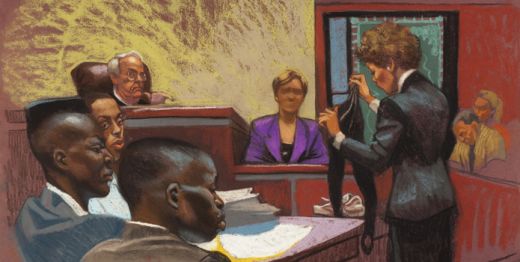
On April 19, 1989, five black boys who were convicted of the rape and attempted murder of a white female jogger while running through Central Park. Thirteen years later, the real criminal surfaced; the five young men had been wrongly convicted. This film, mostly comprised of interviews with the five [now] men, would finally give them a chance to tell the story in their own words.
For me this movie is mostly about two things: 1) The power of the media. It reminds me of when I first took a media studies class in college and was astounded and disgusted as I realized how much the media is in control of how people think, how entertainment is a big part of "journalism." Does objective media even exist? It was then that I knew I wanted to be a voice, that I wanted to work in media. 2) This movie is about coercion. After 14-30 hours of custody and interrogation, the boys ended up confessing. Why? They were told that if they confessed, they could go home. The boys wrote statements full of lies just to satisfy the interrogators (who were seasoned detectives, disturbingly enough). Even though none of the boys’ stories matched up, even though there was no evidence that matched their stories, they boys were convicted. “The problem is that once you form a guilty criminal, contradictory details are just that…The problem is, confessions trump everything else.” The boys were convicted. Two got out on parole, the other three couldn’t afford that.
One of the five convicted, Raymond Santana, was in attendance for a Q&A after the screening on Hollywood Boulevard. “We always wanted the facts to be told right. We never trusted the media. Finally our story will be told. Finally the rock is lifted off our shoulders. Now you can see us as human beings, as kids.” Santana spoke about how they had established trust over the years of research with Burns, and how they know they could trust her with this story.
This case happened at a time when there were six murders a day in New York City. This case got tons of attention comparatively. “The case was more interesting when it was a white woman raped by 5 black kids.” The Central Park Five were convicted “…during a tense time racially.” This movie is about race, power, and politics. The case shows what peoples’ fears were at that time. “It goes back to those issues we’ve been wrestling with in this country for centuries, in terms of how we look at and see minorities, particularly African-Americans, because of the history of slavery,” says Sarah in an interview with the New York Times.
“A lot of people didn’t do their jobs,” said one man interviewed. “This was a proxy war being fought. The men were proxies for all other kinds of reasons.” You will be frustrated when you watch because you think, “someone had to not believe the details of these boy’s confessions. None of their stories match up. There is literally NO evidence besides their confessions. Who did know? “
The most horrifying part of the entire story is how little attention the Central Park Five got when they were acquitted, compared to the public frenzy that happened when they were found guilty. “No one cared if you lived or died.” “It felt like the whole world hated us,” said one of the boys. “I didn’t go outside a lot,” said one boy who got out on parole.
“I lost my youth. I lost that youthfulness,” said Santana after the screening. Once interested in music, “Due to the case I lost a lot of ambitions,” says Santana, though now because of this documentary, he has found an interest in writing. “Writing has become therapeutic for me.”
In 2003 three of the wrongly convicted filed a trial against prosecutors and police for malicious prosecution, racial discrimination and emotional distress. Ten years later, the lawsuit continues today. Recently, suspecting bias, lawyers for the city demanded Burns turn over footage, interviews and outtakes on the five suspects who were later exonerated so the city can defend itself against their $250 million federal lawsuit.
THIS IS NOT A POST-RACIAL ERA. The underlying problems have not been resolved.
Though it’s not clear which parts of the documentary Sarah is responsible for aside of her father and husband, her passion and sharp mind came through as she spoke. Movies have a capability of reaching a wider audience than other mediums. Curious whether she would continue making films of great importance, I asked Mrs. Burns afterwards whether she’s making more documentaries. Now she and her husband are working on Jackie Robinson. How lucky we are for the Burns family. I hope they keep bringing us important stories.


