
SEARCHING FOR PERU's CINEMA HERITAGE
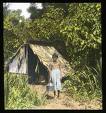

native
SEARCHING FOR PERU
THE IRELA PERUVIAN FILM ARCHIVE COLLECTION
Researching the Film Archives
The little-known historical cinema culture of this Andean nation has
found a heroine in an indefatigable and earnest native archive
researcher, Irela NUNEZ DEL POZO, who although currently based in
Italy, criss-crosses world film venues, looking for films from Peru
ranging from the Silent-epic works to lost and rare documentaries.
It was in 1991 that the Peruvian film restorer became a collector with
the donation of newsreels from the 50s she received from Eduardo
Telleria's Film Productions .
Her constant efforts to trace and purchase all kinds of nitrate or
other copies blossomed into a very rare gathering of cinematic works
from her native country spearheaded by a constant mission from the
start : always to collect film material made in, or even about Peru.
A former researcher for the Peruvian Image & Sound Archive, a
non-profit association in Lima, she since has established herself in
Italy where she works as a film restorer at Cineteca Nazionale, which
belongs to the prestigious Centro Sperimentale di Cinematografia in
ROME, for which she has renovated and saved many otherwise lost
important works, including : Israel (1919) and silent documentaries
like "Industria degli Zolfi"., "Le Api", and "Sperimenti Sugli Effetti
Dei Narcotici".
This pragmatic activity coupled with her keen hunting down and appeals
for material relating to her native country has resulted in a personal
collection of unusual and rare early newsreel footage and films about
explorations of the Amazon in the 20's and 30's as well as rare
historical aspects of Lima and other Peruvian cities.
She now has one of the largest collections of Peruvian silent films on
8mm and Super 8, 16mm, and 35mm formats.
This personal film archive, acquired and painstakingly maintained by
Irela and Mario Lucioni, contains early TV newsfilm, silent film,
newsreels, home movies, industrial films, promotional films for
advertising purposes, tourism, expeditions into the Amazon,
documentaries, amateur performances, and didactic films. Subjects
treated are historical sports, the building of cities, the Peruvian
capital Lima as it was, labor strikes, scientific expeditions, and
civic events.
Of special interest is an amateur silent film, starring an entire
family (Garland), Comedy by the Garland Workshop. The ultimate goal of
the non-profit association called Archivo Peruano de Imagen y Sonido
is to acquaint audiences around the globe through cineclub and
television viewings, soon to be complemented by viewing on the web. For
the Archive, it is very important to also preserve the Memory of
Peru's national heritage for upcoming generations of Peruvian nationals
or people of that origin outside the country, products of immigration.
For them, the Archive also preserves creole music on 78 RPM discs,
pianola reels, stereo views and postcards that reflect the fascination
that this country has aroused in other countries.
The Peruvian culture, sure to capture film buffs' interest by its
mesmerizing and myriad ethnic complexity, strong Colonial influences in
Architecture, life-style and moeurs, is graphically depicted as well as
the impact of its indigenous population in such footage, which contain
all the vital components of them enthralling history of this country.
SILENT FILMS IN PERU
Till now, only a few films have been found and repaired. They are :
Comedy by the Garland Workshop, Revista Excelsior de Actualidades
Peruanas, The Capture of the Andres Ramos Bandit, Inca Cuzco , Yo Perdi
Mi Corazon en Lima (carried out by the Filmoteca de Lima).
The early film industry is represented by the following documents: La
Perricholi, El Carnaval Del Amor, Mientras Lima Duerme. Early feature
films were produced by companies named : Amauta Films, Gloria Film,
Patria Film, Asosiacion de Artistas Aficionados, since the 20s..
The Association created by Ms. Nunez, Mario Lucioni and Armando Luque,
ARCHIVO PERUANO DE IMAGEN Y SONIDO now includes several of these
earlier moving pictures in its private film collection, and undertakes
the expense and task of repairing and conserving the works. Countless
works have been destroyed in the past either inadvertently or through
indifference, even by semi-official National Archives, since there is
no actual official Archive body in that country and have long displayed
a preference for foreign works and totally ignored their own national
film heritage.
Her personal mission is to recuperate often discarded or stored away
and forgotten copies, usually found in a pitiful state, which she
lovingly brings back to life.
HIGHLIGHTS OF THE NUNEZ PERUVIAN FILM ASSOCIATION COLLECTION :
A collection of original 35mm nitrate negatives of features and short
films made in Peru during the early part of the 20th century.
A series of the early motion pictures documenting the Indian
communities with a particular focus on the Amazon.
The Collection represents a collection of early Peruvian movie
trailers, home movies, television and commercials, post cards, early
and pre-cinema apparati.
THE NUNEZ PROJECT
Through private funding, the entire collection is being catalogued in a
special database, prepared by Mario, and is searchable by title and
date. The news film collection chronicles twentieth-century Peruvian
history from the early century through 1986 when video recording began.
Glass slides depicting people and places from Peru in the early century
are also part.
The material in the collection is silent and sound, black and white and
full colour.
This collection aims to be a rich source of audiovisual witnessing of
decades of Peruvian history and is invaluable, providing rich detailed
portraits of the country?s natives, their mannerisms, physical
presence, and voices recorded for posterity.
Until vulgarisation of video on demand becomes effective, when the
works can be shown and appreciated by the public, the search is still
on for any films or material from Peru to complete the collection.
PRESERVATION
Most of the nitrate-based films in the collection are currently
inaccessible, and being in a tropical climate. Also most of the acetate
material is decaying too, because affected by the vinegar syndrome.
They need to be copied to safety film for projection and because they
are nearly a century old and decaying, Irela is pursuing film
preservation grants which will provide funding to copy the nitrate to
safety film and video for access. The grants are provided on a
title-by-title basis. Most of the nitrate in the collection are
projection prints. The nitrate base in many cases has begun to decay,
and this results in image loss. By copying the negatives to 35mm safety
film (polyester base), the film can be preserved and shown to new
generations of fans.
A short silent film made in Peru in the year 1927, has already been
copied from a nitrate print through a grant from the George Eastman
House, part of the Reel Emergency Project . New 35mm film elements were
produced, as well as video copies.
The Association is working to acquire and preserve and later show,
early feature films from the 1910s and 1920s.
Click here for links to Irela Nunez' ARCHIVO PERUANO DE IMAGEN Y
SONIDO: related websites :
irelanunez@yahoo.com, mariolucioni@yahoo.com
archipeliculas@hotmail.com
DONATE OR SELL YOUR FILM PERUVIAN FILM !
Irela relies on auction sales and donations to improve and expand the
collection. Do you have film made in Peru ? If you have home movies you
have copied to video, kindly let her know. The association collects all
kinds of film made in Peru, including home movies, art school film,
industrials, and documentaries.
Contact Irela Nunez Del Pozo.


