Honorable Mention to US Documentary Too Late to Learn
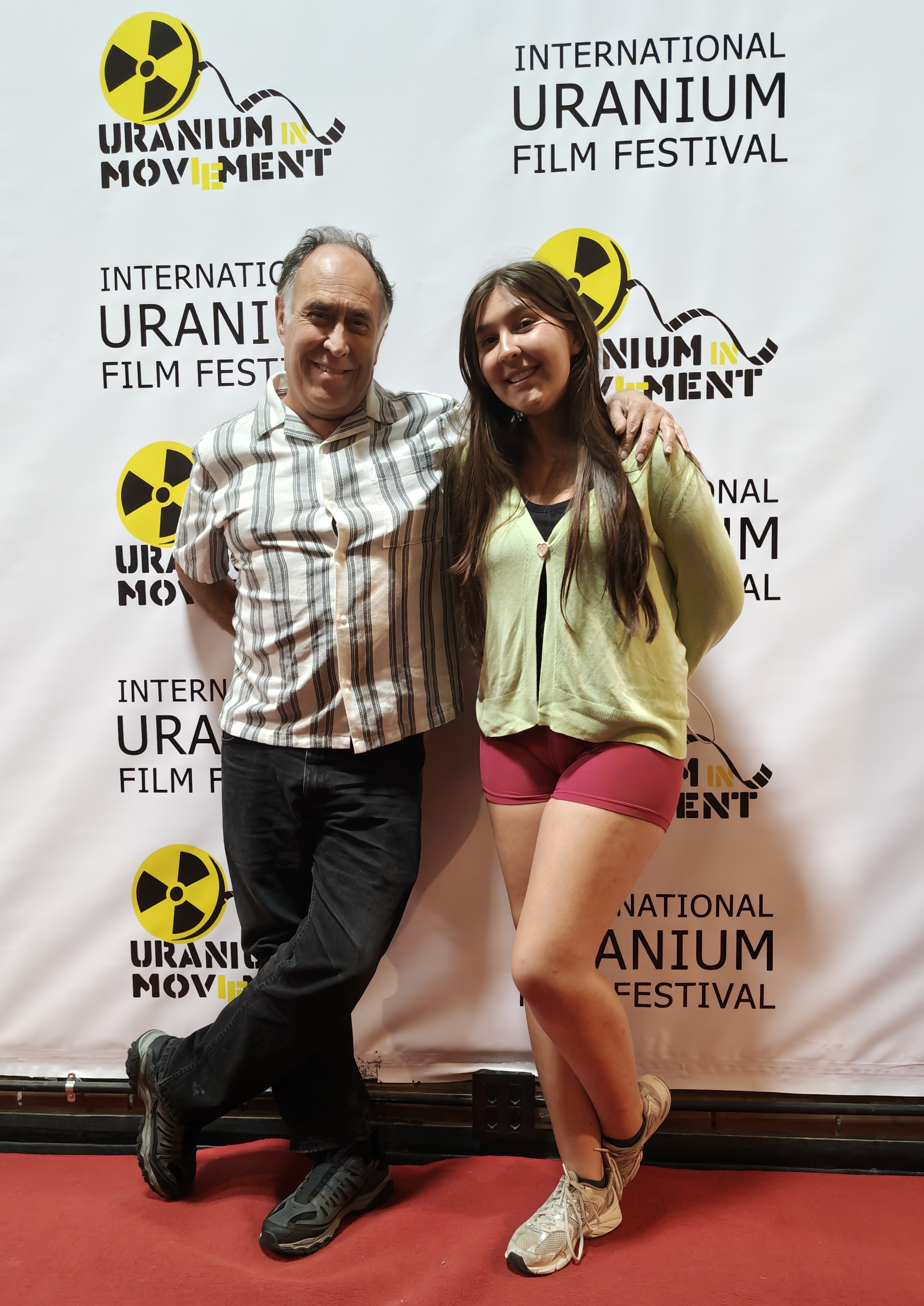
The new feature documentary „Too Late to Learn“, directed by THOMAS KANADY received an Honorable Mention of the 15th International Uranium Film Festival of Rio de Janeiro, May 2026. The world premier of „Too Late to Learn“ took place at the Cinematheque of Rio’s renowned Museum of Modern Art (MAM Rio). The film was presented in Rio de Janeiro by Marshall Islands Atomic Clean-up Surviver Paul Griego and his daughter Sophie from New Mexico.
Video file
“TOO LATE TO LEARN is a very tough movie. Heartbreaking. A film that gets under your skin. And a film that everyone should see – especially those who still or again consider nuclear weapons as an option, and the younger generation. For them it’s not too late to learn", states festival director Norbert Suchanek.
USA, 2026, Director Thomas Kanady, Producer Anita Jean Kiser, Documentary with Paul Griego, 68 min.
AWARD ACCEPTANCE STATEMENT
„Thank you to the festival organizers and everyone behind the scenes for selecting our documentary for festival screening. Myself, along with our whole team, are very proud to receive the HONORABLE MENTION at the 2026 International Uranium Film Festival in Rio de Janeiro, especially among so many incredible films. I learned a lot from this world premiere and will always cherish the International Uranium Film Festival. Thank you very much!" Thomas Kanady, Director of „Too Late to Learn“
FILM REVIEW
All together 67 nuclear weapons tests were carried out between 1946 and 1958, involving 250,000 soldiers and 300,000 civilians. „Too Late to Learn“ film recounts two atomic bomb explosions in the Marshall Islands and the decontamination work in the affected areas later. The tests aimed, among other things, to assess the effects of the explosions on warships. The first test, the Able Test, on July 1, 1946, and the second, much more powerful test, the Baker Test on July 25, 1946, resulted in the fallout of radioactive isotopes of strontium, cesium, beryllium, plutonium, and iodine.
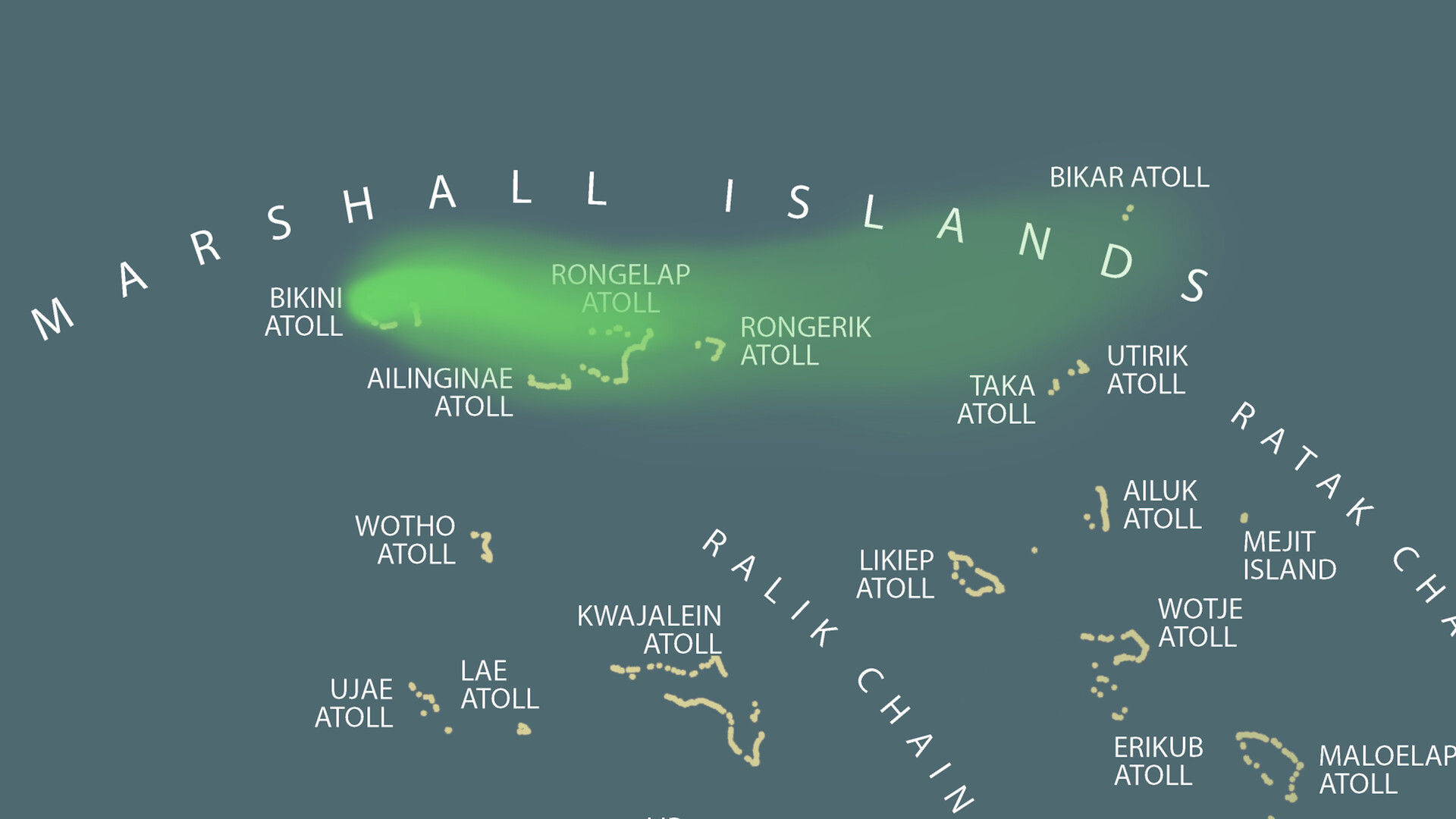
Survivors of these events provide many details of what happened there in interviews. The operation involved 42,000 soldiers and civilian volunteers. Most of them were exposed to considerable doses of ionizing radiation, resulting in serious damage to their health and that of their descendants. The chosen study area were the Marshall Islands, in particular the atolls of Bikini and Enewetak. In Bikini, the population would be removed to the island of Rongerik, and to that end, they were convinced that these tests would mean the end of all wars in the world and that afterwards they could return to their homes. In addition to having to start wearing Western clothes, none of the promises were fulfilled. They will then be moved again to the Kwajalein Atoll and finally to Kili Island.
The soldiers who arrive initially having a good life. They feel in paradise, which will soon turn into hell. They bring everything: heavy equipment, provisions, animals. They don't know what they are going to do there and are not informed about the risks of contamination with radioactive elements or exposure to radiation.
After the first bomb explodes, teams go by landing crafts to decontaminate the ships with jets of seawater that is contaminated by the explosion! The food and water that follow will be transported on the same vessels that carry the radioactive debris that the decontamination teams removed from the areas of 17 islands considered to be the only contaminated ones. Certainly, everything is contaminated and it is no longer possible to fish or consume fish, nor to reuse rainwater. Initially, there does not seem to have been systematic use of Geiger-Müller detectors. After evaluation operations on the islands, the personnel were sent to the hospital ship without further explanation.
In 1978, Paul Griego, who worked at the Eberline Research Physics Laboratory, volunteered to spend 179 days in the Marshall Islands for a humanitarian cleanup on Enewetak. At the time, 43 nuclear tests had already taken place. The decontamination would last from 1977 to 1980. Paul, whose father was an uranium prospector, attracted by the beauty of the place, dared to dive into one of the craters opened by the explosions on Boken Island: the water was clear, turquoise blue, and small fish were swimming in it. Having played with his father's Geiger counter to measure radiation in childhood, he knew the importance of having one during the cleanup work. For that, as the leader of a task force, he repeatedly asked the military for a Geiger counter, but it was systematically denied, citing a shortage of equipment. He discovered by chance that this was a lie.
The soil was dug up to 45cm deep, but, strangely, the residues were not separated according to the level of activity. Huge quantities of hotter waste ended up being dumped into 4 explosion craters and finally encased in concrete; the dome of one is visible in Enewetak, and there are three more underwater. The weight of this material dumped into the atoll's craters crushed the coral that supports the islands. For a long time, the authorities tried to hide the consequences of the radiation and contamination. Paul tested positive for beryllium antibodies, probably from contamination of the distilled drinking water using water from the lagoons! There was no iodine contamination due to its short half-life.
Paul was sterile for a while, which led to his divorce. Later, he had a daughter, Sophie, who studies Nuclear Engineering. She is concerned about her own health, about genetic problems she might pass on to her future children, about her father's bone fragility, and about the environment in the Atomic test areas that has been irreparably destroyed for thousands of years. Sophie draws attention to the responsibility regarding the nuclear legacy that is left for hundreds of generations to come. At a meeting of Marshallese expatriates in the USA, a 97-year-old surviver of these tests spoke of the "blisters" he had on his face and body, the hypothyroidism that afflicted him, and his daughter who died at age 46 from pancreatic cancer. Another survivor had three children, all of whom suffered consequences: one used a colostomy bag, another went blind, and the third died as a child after his third heart operation.
56 percent of those exposed to radiation had rare radiation-related diseases, and 21 percent had children with birth defects. Death is just one of the curses, as they live with a sword hanging over their heads: from the fear of becoming ill, in addition to the guilt that parents feel for raising sick or malformed children. The Marshallese were scattered across the globe in a true diaspora. Many have never seen their homeland, have lost their beliefs and culture, having lost their true identity and their pride as a nation.
Alphonse Kelecom, Professor for Radiobiology and Radiometry at the Laboratory of the Institute of Biology, Fluminense Federal University Niterói, Rio de Janeiro, member of the Uranium Film Festival Jury.
(Photo: Paul and Sophie Griego: Red Carpet of the International Uranium Film Festival Rio de Janeiro 2026 - Photo by Norbert Suchanek)
For 15 years the International Uranium Film Festival (IUFF) raises awareness about the risks of atomic power and promotes nuclear disarmament with independent films and panels of experts around the globe. In October 2024, Hollywood's MovieMaker Magazine named it one of the "25 Coolest Film Festivals in the World 2024". And in 2025, the festival's founders, Márcia Gomes de Oliveira and Norbert Suchanek, received the prestigious "Nuclear-Free Future Award" in New York City in the category education. The Uranium Film Festival especially in Rio focuses very much on the young generation.
„You’ve never seen two people get more done than the life and project-partner duo Márcia Gomes de Oliveira and Norbert G. Suchanek, who run the International Uranium Film Festival in deep collaboration with activists around the world. The festival has its grand event in Rio, but also does an extensive U.S. tour in regions impacted by uranium-related industry. Inevitably, folks wonder whether there are enough films on the subject to warrant a festival. The answer is yes. This, of course, is because the issue is expansive, impacting all 50 U.S. states and many more corners of the world than most folks realize. From the Navajo Nation to Las Vegas to Chicago and many places between, this spirited DIY art, advocacy, and activism project brings folks together in a space of support, education, shared outrage, and a good time. The Uranium Film Festival is a refreshing example of what activism and advocacy can be: inclusive, expansive, and celebratory.“ Hadley Austin, MovieMaker Magazine
Since the Uranium Film Festival is not sponsored by big companies like other film festivals, it relies on donations. To ensure the festival's continuation, we appreciate every contribution from those who can afford it. Donate via PAY PAL to info@uraniumfilmfestival.org
Festival Team
Márcia Gomes de Oliveira
Founder & Director
Email: uraniofestival@ gmail.com
Norbert G. Suchanek
Founder & Director
Email: norbert.suchanek@ uraniumfilmfestival.org
Production Assistent: Juan Giestas
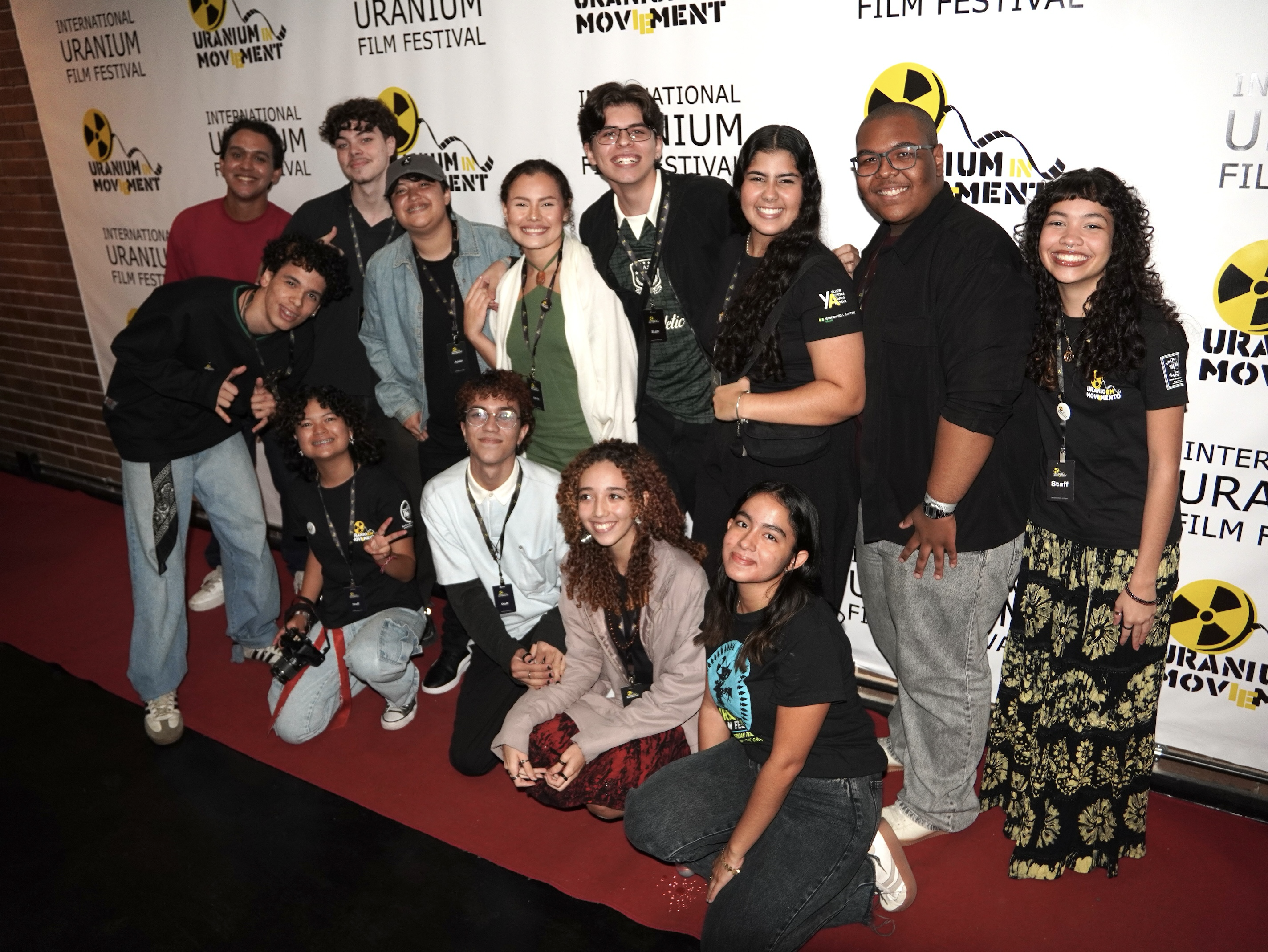
Festival Volunteers & photographers: Students of the FAETEC State School Adolpho Bloch
Website
https://uraniumfilmfestival.org
https://www.instagram.com/uraniumfilm/
Top Photo by
Fernando Alvim


