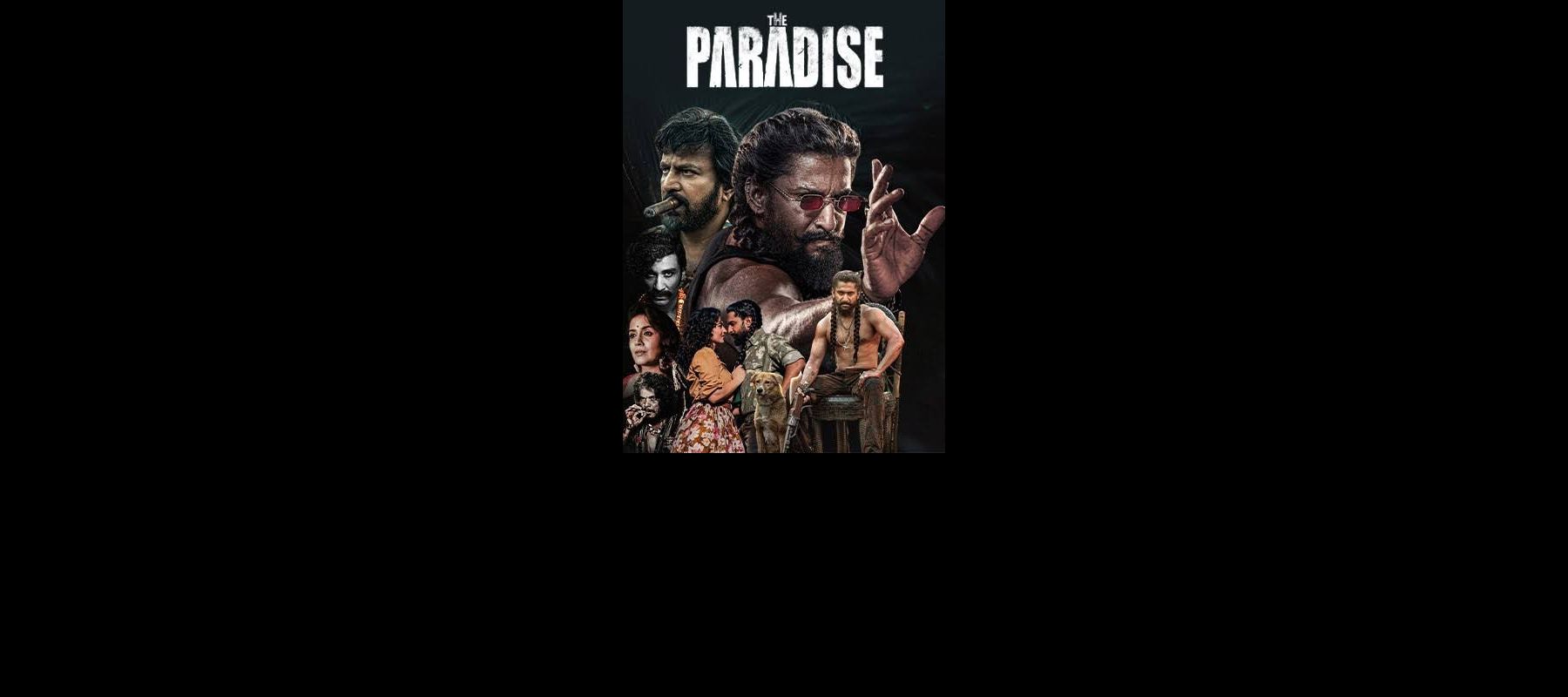
The Paradise, Review: Paradise lost
The Paradise, Review: Paradise lost
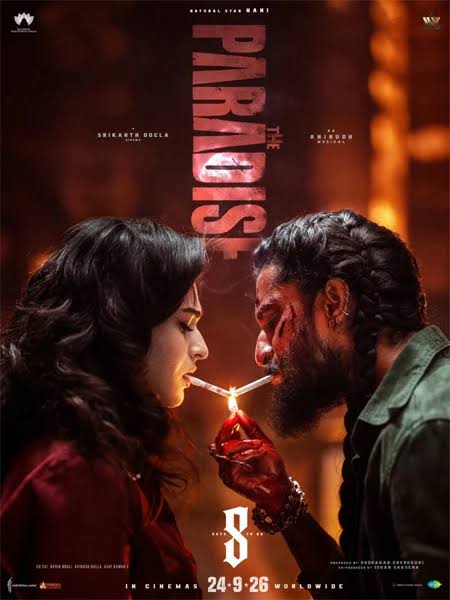
One of the greatest classics of English literature is John Milton’s Paradise Lost. It is an epic poem in blank verse, one of the late works by Milton, originally issued in 10 books, in 1667 and, with Books 7 and 10, each split into two parts, published in 12 books, in the second edition of 1674. Milton was an English poet and historian, considered the most significant English author after William Shakespeare and Paradise Lost is widely regarded as the greatest epic poem in English. John Milton became totally blind by 1652 at the age of 43, likely due to bilateral retinal detachment or glaucoma, these illnesses being the only thing in common between this writer and the master poet. Unable to write by hand, Milton dictated his great masterpieces—including Paradise Lost, Paradise Regained, and Samson Agonistes—to family members and paid assistants. But if the sound-track of the film The Paradise was played to him, he might have possibly gone deaf too. There is nothing even remotely common between The Paradise and Paradise Lost. The dictionary meaning of the word Paradise is ‘the perfect place where some people think that good people go after they die’. The film The Paradise, though, is a movie in which an extremely large number of people die, and there is not even a hint that they go anywhere near paradise. It is one of the bleakest films ever made. The conditions under which the community of attention lives can be described as the very opposite of paradise. Perhaps the makers of the film were using it as an antonym of ‘hell’, which is what we are shown, on screen, in all its dystopian glamour.
Instead of a regular review, I am posting here an imaginary meeting between the makers of the film—Director, story-writer and screenplay co-writer Srikanth Odela, screenplay co-writer Vinay Sagar Jonnala, dialogue writers Thota Srinivas, Madhava Murthy Bojanapu, Arjuna Paturi, Vamshi Krishna Pinnika, Manupati Karunakar and Vasanth Masadi, and producers Sudhakar Cherukuri and Ishan Saksena, on the one hand, and members of the SeeBeeEfSee on the other. The Paradise has just been screened for the purpose of obtaining a Certificate and a rating for the film, without which no film can be shown in India.
Para lives
Makers: So how did you like it? We hope you will give it a Universal Exhibition Certificate, without cuts and beeps.
SeeBeeEfSee: The film is okay, but we are afraid we cannot give you a U certificate. And there will be cuts and beeps.
Makers: What? It is such a clean film, for family audiences, with huge emotional appeal, and shows the oppressed and their women rising for a cause: their very existence and recognition.
SeeBeeEfSee: That is not entirely true. You have shown a lot of ethnic cleansing, but that does not make it clean. There so much blood flowing, blood-spilling and muck raking that it cannot be cleaned with tons of detergent and floor-cleaners. Moreover, your film is about a community of 5,000 persons that was not recognised at all, with no identification, even till then 1980s. Who will believe that?
Makers: Our film is based on facts. Look at this AI search result: Savara (also spelled Savaris, Sabars, or Saora) is an ancient, historically marginalised tribal group, found in regions, including Andhra Pradesh and neighbouring states.
SeeBeeEfSee: But read further: Recent popular references to a newly named "Savari" nomadic community relate to cinematic portrayals of marginalised groups in the erstwhile Hyderabad/Telangana region.
Makers: Please refer to the Aitareya Brahmana, the Mahabharata, and various Puranas, where it is mentioned that the Savaras are a non-Aryan group dwelling in the southern Deccan (Daksinapatha).
SeeBeeEfSee: Do you seriously think that filmgoers would have read these texts?
Makers: If they have not read these texts, they should.
SeeBeeEfSee: Hmmm. We think that if you expect the average filmgoer to be aware of this ancient mention, you expect too much from the layman.
Para dies.
Para lives.
Makers: Ok. Let us come to more recent mentions. During British rule, many segments of these tribal and nomadic communities were branded under the Criminal Tribes Act, of 1871, subjecting them to severe social stigma, surveillance, and forced settlements. Following independence, many de-notified and nomadic tribal offshoots faced administrative oversight, lacking formal classification or falling into bureaucratic "blank spaces", where they were denied basic civic benefits, voting rights, or Scheduled Tribe (ST) recognition for decades.
SeeBeeEfSee: You have a point there. But you have singled out one despotic landlord, who rules over these hapless unfortunates, with crushing might, in hereditary succession.
Makers: Ladies and gentlemen, this is a film. We need to have a single villain, to follow a tradition. There is heightened interest when a hero faces a villain, one-on-one. However, we have shown not one, but four villains: The Lord grandfather, the Lord father, named Shikanja Malik, the Lord son, Vikram Malik and the Top Advocate.
SeeBeeEfSee: But your hero does not fight the grandfather and the Advocate. He only fights with the father and son.
Makers: Saar, we cannot show him fighting everybody. The Lord grandfather is already paralysed and wheel-chair bound. And the Advocate is an elderly man who comes from outside to help Shikanja, with a large team. Viewers would be interested in seeing the hero fight the real villains, Shikanja, and his son, Vikram.
SeeBeeEfSee: Hmmmm.
Para dies.
Para lives.
SeeBeeEfSee: Is there any basis for classifying and depicting Savaris as crow worshippers? Records show that they worshipped Lanjia Saora/Supreme Deity, Saora Thakurani (Mother Earth, Sonum (Ancestral Spirits) and Nature Worship.
Makers: Well, the Savaris were treated by the ruling class just as crows are treated among birds, with birds like the peacock enjoying pride of place. They are hated and despised. We wanted to show this symbolically. You might have heard the saying “eating crow”?
SeeBeEfSee: Er…but in your film you have shown the Savaris being given only sugar-cane residue to drink, after it has been squeezed, to make illicit liquor for Malik, and the ruling class relishing biryani. Where do crows come in?
Makers: Saar, “eating crow” "Eat crow" is an American idiom that means to admit you were wrong or defeated, after taking a strong or confident position, usually in a humiliating or embarrassing way. In the scene where Malik admits his mistake of tattooing on our hero’s arm “I am the son of a prostitute,” he is eating crow.
SeeBeEfSee: Oh! So you were inspired by an American idiom!
Makers: No Saar. We were inspired by American action heroes, like Ryan Reynolds (as Deadpool in Deadpool & Wolverine) and Alexander Skarsgård (in The Northman).
SeeBeEfSee: Couldn’t you find inspiration from Indian superstars?
Makers: Of course. We were inspired by megastars like Rajinikanth (in the movie Jailer) and Chiranjeevi (in Bhola Shankar), But we have our own superstars: The Mohan Babu, who plays Shikanja and the Natural Star, Ghanta Naveen Babu….
SeeBeEfSee: Ghanta Naveen Babu? But there is no such name in the credits.
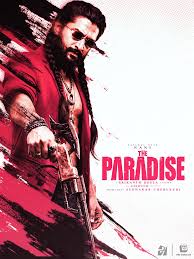
Makers: Saar, he is better known as Nani, so we have given that name in the cast. Nani plays the hero, Jadal, alias Sarakka, who can fight a hundred armed men, chop their arms, legs and heads, unarmed and alone.
SeeBeEfSee: Yes, but how is it that he beats Vikram, who is exactly his age, to pulp and decapitates him, while he is smashed to smithereens by Shikanja, a man in his 50s?
Makers: What are you talking, Saar? How can we show Mohan Babu fighting and losing? Nobody will accept that.
SeeBeEfSee: Hmmmm.
Para dies.
Para lives.
SeeBeEfSee: In your film, you have two Mumbai-based actors, Sonali Kulkarni and Raghav Juyal playing Jadal’s mother and Vikram, respectively. Why cast Mumbai actors in a film et in Secunderabad?
Makers: That is done to attract North Indian audiences. We would like the film to be popular among North Indians too. The film has been dubbed in Hindi, for release in North India. Sonali is a very good actress.
SeeBeEfSee: But Raghav Juyal is a dancer, choreographer, and television presenter. He is known as the "King of Slow Motion" for his surreal dance moves in slow motion style and for his reinvention of the Slow Motion Walk in India. Why have you cast him as a villain?
Makers: Raghav can do action also. We saw his work in Kill (2024) and the Netflix series The Ba***ds of Bollywood (2025).
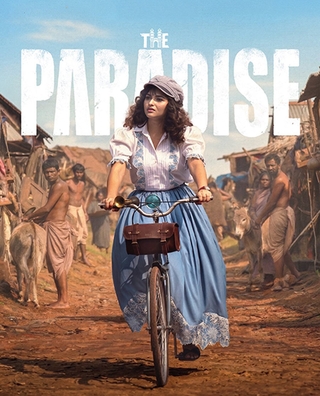
SeeBeEfSee: Where did you find Kayadu Lohar, who plays Jadal’s love interest, Subbulaxmi? And how can a heroine have a name like Kayudu Lohar? Lohar means blacksmith, doesn’t it? Is she from Andhra or Chennai?
Makers: No, Saar. She is a popular actress in Tamil, Malayalam and Kannada films. But she was born in Assam and brought up in Pune. Her original family surname is Gadali, but her father changed his surname from Gadali to Lohar.
SeeBeEfSee: That is good for national integration. But you have an actor playing Bichchhoo Singh, a DCP in Patiala, who is summoned to deal with the Savari rebels. We have heard of names like Shaitaan Singh, but Bichchoo means a scorpion. Where did you get that name from?
Makers: That is a tribute to the Bichchoo gang, in the ShahRukh Khan starrer, Josh. With all due respect, Saar, casting is not a factor in granting a Censor Certificate. Please talk about relevant things.
SeeBeEfSee: Hmmmm.
Para dies.
Para lives.
SeeBeEfSee: It is hard to believe that the 5,000 Savaris, who practically starve all their lives, have regular bodies, with no indication of severe malnourishment. Jadal is a veritable bull-dozer and a great dancer. Your heroine makes B grade films, shown in cinema halls, in which her mother shoots her in various sexy poses, and there is no other actor. You have copied the tattoo idea from Deewar, and used two songs from Hindustani films of the 80s, thanks to Saregama.
Makers: All of that is called cinematic licence. But let us correct you. There are 5,000 Savaris mentioned when the film begins, but their population has been reduced to 3,000 very soon.
SeeBeEfSee: And by the time the film ends, there must be only 2,000 left! How many Savaris are killed in the film?
Makers: We cannot give an exact figure.
SeeBeEfSee: And how many of the Lord’s men are killed?
Makers: It is difficult to give a proper figure.
SeeBeEfSee: How many policemen and other men killed?
Makers: Saar, we cannot provide such a break-up.
SeeBeEfSee: Totally, how many litres of blood flow in the film?
Makers: As you know, that is not real blood. In films, we use glucose syrup, corn syrup, or sugar syrup, tinted with red and blue food colouring.
SeeBeEfSee: We know that. Can you tell us how many limbs are severed, bodies split into two, and decapitations shown in the film?
Makers: If you give us time, we can run the film frame by frame and try to give you some numbers.
SeeBeEfSee: Never mind. How many expletives, profanities, swear words, profanities, expletives are uttered, and how many ear-shattering screams/yells/shouts/wailings are used in the sound-track?
Makers: Saar, no film-maker keeps a count of such things.
Para dies.
Para lives.
SeeBeEfSee: Okay, so here is our decision. We will give you the benefit of doubt and grant you ‘Adults only’ certificate, with several cuts and many beeps, and you can release the film after carrying out these corrections.
Makers: As you say, Saar.
SeeBeEfSee: Ok. We feel you have made a good effort, and so we can share with you a secret, which will make it easier for you to get your next film passed without any cuts and beeps. We are going to change our rules, and an action film will only be granted a certificate if it meets the following criteria:
- Number of killings: Minimum 100 killings per minute. If YOUR 173-MINUTE FILM The Paradise would have come to us after we changed our rules, you would have to prove that there were at least 17,300.
- Number of severings of limbs or fingers, decapitations and body splittings: Minimum 10 per minute.
- Number of item songs, with deep revelations and highly sexciting moves: 1 every 15 minutes of screen time.
- Number of expletives, profanities, swear words, profanities, expletives: 20% of all dialogue.
- Number of ear-shattering screams/yells/shouts/wailings: 1 every 3 minutes.
There are more, but these are the main changes we are considering.
Makers: Thank you for sharing this important information. We assure you that we will adhere to these revised guidelines in our very next film.
Para dies.
Rating: * ½
(Trailer not available).