
Paro PInaki Ki Kahani, Review: Laudable subject, deplorable film
Paro Pinaki Ki Kahani, Review: Laudable subject, deplorable film
Consider this possible scenario: A writer-director approaches a prospective film producer with the following subject. “A small town sewer cleaner, from a scheduled caste, falls in love with a Muslim vegetable vendor’s daughter. Their love blossoms on a train on which the boy and the girl, she accompanied by her father, travel, daily, to the bigger town, to ply their trade. The lovers meet in the toilet in the train, and at a small cubicle, where she brings him lunch every-day. They both want to have sex, but cannot do so, because they cannot afford to pay for a room, even in a cheap hotel. Suddenly, the girl disappears. She is no more to be seen at her father’s shop, where she used to assist him. Shattered, the boy launches a hunt for his beloved, only to discover that she has been sold by her father, who has many mouths to feed. Determined, the boy decides to find her at any cost.”
The prospective producer might feel that the premise is contemporary and relevant, but finds it too serious, preachy and not likely to attract audiences that seek entertainment. He opts out. So do many others. Finally, two lead actors, along with a third partner, decide to produce the film themselves. The writer–director had made a film last year (2025) that bluntly showed how one faces discrimination similar to untouchability, if one is suffering from skin diseases, like Vitiligo. He had produced it himself, along with a family member. Not much is available about the movie on the Net. The hero, the heroine and a co-actor feel that caste and human trafficking/slavery, are very serious issues, and that they might jell with the viewers. Moreover, the film might get them exposure and their talent might be noticed. They decide to back the film.
There is a major difference between a storyline and a screenplay. Most storylines, that sound interesting, need careful mise en scène. Film is an art and a language, a language with a grammar of its own. There are tools that help you translate a story into a screenplay. Sometimes, an ordinary sounding story shapes into a powerful screenplay. On other occasions, a powerful story deteriorates into a pedestrian screenplay. Screenplay in place, now it is time to go to the floor and start shooting. Even with the best of directors, it is very difficult to make a meritorious film on a bad screenplay, whereas an average screenplay can be treated to some deft direction and result in a watchable film, especially if it has strong characterisations and very good actors.
Paro Pinaki Ki Kahani fails on three of the four components, that are the backbones of a good film: A weak story, an unimaginative screenplay and slipshod direction. The fourth estate, characterisations, and acting just manage to get minimum marks, not enough to rescue a sinking ship. To any student of cinema, the film seems incomplete, with many scenes missing. Several scenes appear to have been shot without a script, relying on improvisation and dubbing to pass-off as scripted shots and scenes, as we understand cinema to be consist of. Several songs have been thrust into the film, which, by themselves, are tuneful and meaningful. But the use of Punjabi folk songs, and a Kabeer song, probably one of those where he used the most difficult language to say the simple things he said so effectively in his major compositions, are out of place and out of sync with the movie.
Image

From the introductory paragraph, that I have penned, arise so many questions that have no answers.
*There is no back story. How and when did the two, a boy belonging to an untouchable caste and a Muslim vegetable-seller’s daughter, meet and fall in love?
*It is suggested that the couple meet every day in the toilet of the train, where the boy waits for the girl. She excuses herself and tells her father that she is going to the toilet. These meetings take place every day. The couple spend several minutes together. Nobody ever knocks on the door. The father never becomes suspicious about his daughter going to the toilet every day at the same time, and returning inordinately late.
*How does she manage to make and carry food for the boy every day, deliver it to him and remain there for some time, till he finishes his lunch, without the father getting a whiff of what is going on?
*The girl insists that she will offer him her virginity only if she takes her to an air-conditioned hotel room. Does she not realise that this is not possible, since she is all the time at the shop, assisting her father?
* He assures her that he will soon book an air-conditioned hotel room, costing Rs. 2,500 per night, although he lives hand-to-mouth.
*After she is no more to be seen on the train or at the shop, the sewer cleaner cooks-up a cock-and-bull story about her disappearance and accuses her father of stealing gold from his house. The police fall for this bait hook, line and sinker, and search the father’s home. The boy runs through every nook and corner of the house, while the police watch.
*We learn that the boy has parents, but neither his parents nor his home are ever shown.
*When he disappears for days on end, trying to trace his beloved, he is neither missed at work nor at home, and nobody tries to find out where he has suddenly gone away.
*He manages to find the girl rather easily, by just asking around, but is caught and severely beaten-up by the people who bought her. Next, we see him perfectly normal, with no visible wounds.
*When told that his girl-friend was bought for Rs. 15,000, and the buyers will return her only if they are paid Rs. 30,000, he immediately agrees. Coming from a man who has only one pair of clothes and, as a guess, not more than Rs. 30, in his pocket, this is a pompous, ludicrous claim.
*Mariam, and not Paro is the girl’s name. She is called Paro by her buyers, because she was brought form another place, ‘par’ (across).
*Her real name, Mariam, is heard only once in the whole film.
*She has eight siblings, propagating the popular belief that Muslims, even those who barely make a living, tend to have a large number of children. And because they cannot feed so many mouths, they sell off their daughters.
Image
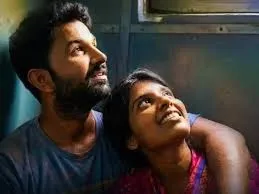
Wonder what was the fate of his first film, Pied, but writer-director Rudra Jadon serves us a highly amateurish second film, in the shape of Paro Pinaki Ki Kahani, something like what a not-so-gifted, film-school student would make, as his first project. It is clear that the makers did not have the resources to complete the film, and even the patch-work needed to make it appear as a whole is missing. Either the censors have chopped the film to bits, or the gaping holes in the narrative are a result of poor writing. Even at 92 minutes, the film is tedious and boring.
Producers Sanjay Bishnoi and Eshitta Singh, as the lead pair, take pains and put in immersive performances, but they are likely to go waste, just like the waste Pinaki cleans for a living. The supporting cast includes Hanuman Soni, Dhananjay Sardeshpande, Madan Deodhar, Pratap Bhosale and Sanjay Dole. No other actor has a major role. Britto Khangchian’s compositions, rendered by Neeraj Arya, would have had some life outside the film, if the film did well at the box office, of which there are very slim chances. Cinematographer Abhay Balkawade and Editor Aanand Prabhat will not earn any encomiums for this forgettable entry in their CVs.
Generating sympathy for the plight of the characters, and a reminder of centuries old social malaises, like the caste system, inter-religious romance and selling of daughters, are not enough ingredients to make an impactful film. However laudable a subject may be, if it lacks craft and competence, it will result in a deplorable film. That, in short, is the story of Paro and Pinaki.
Rating: *
Trailer: https://youtu.be/RIkPtqHXmSY