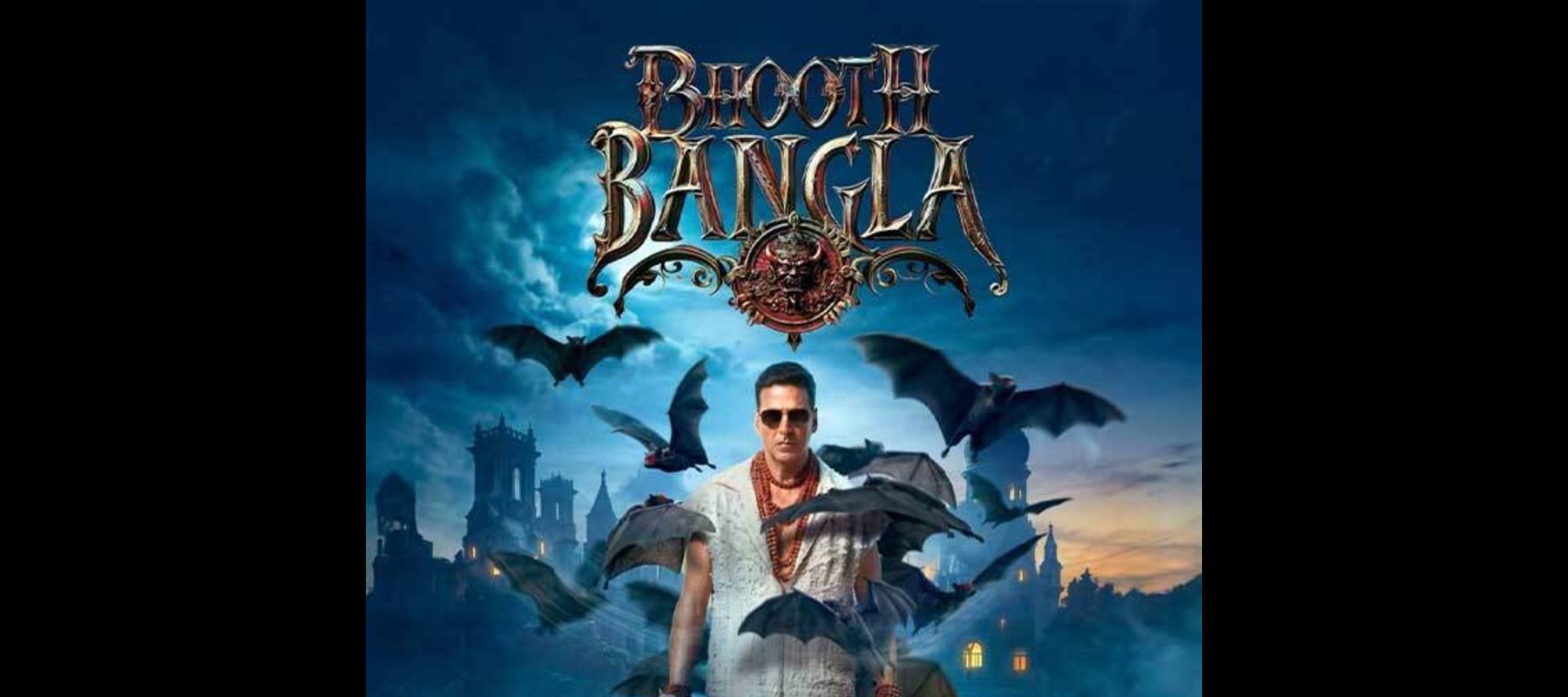
Bhooth Bangla, Review: Fantasising about horror and comedy...keep fantasising!
Image
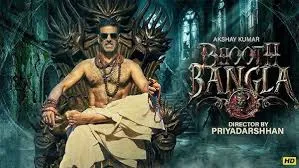
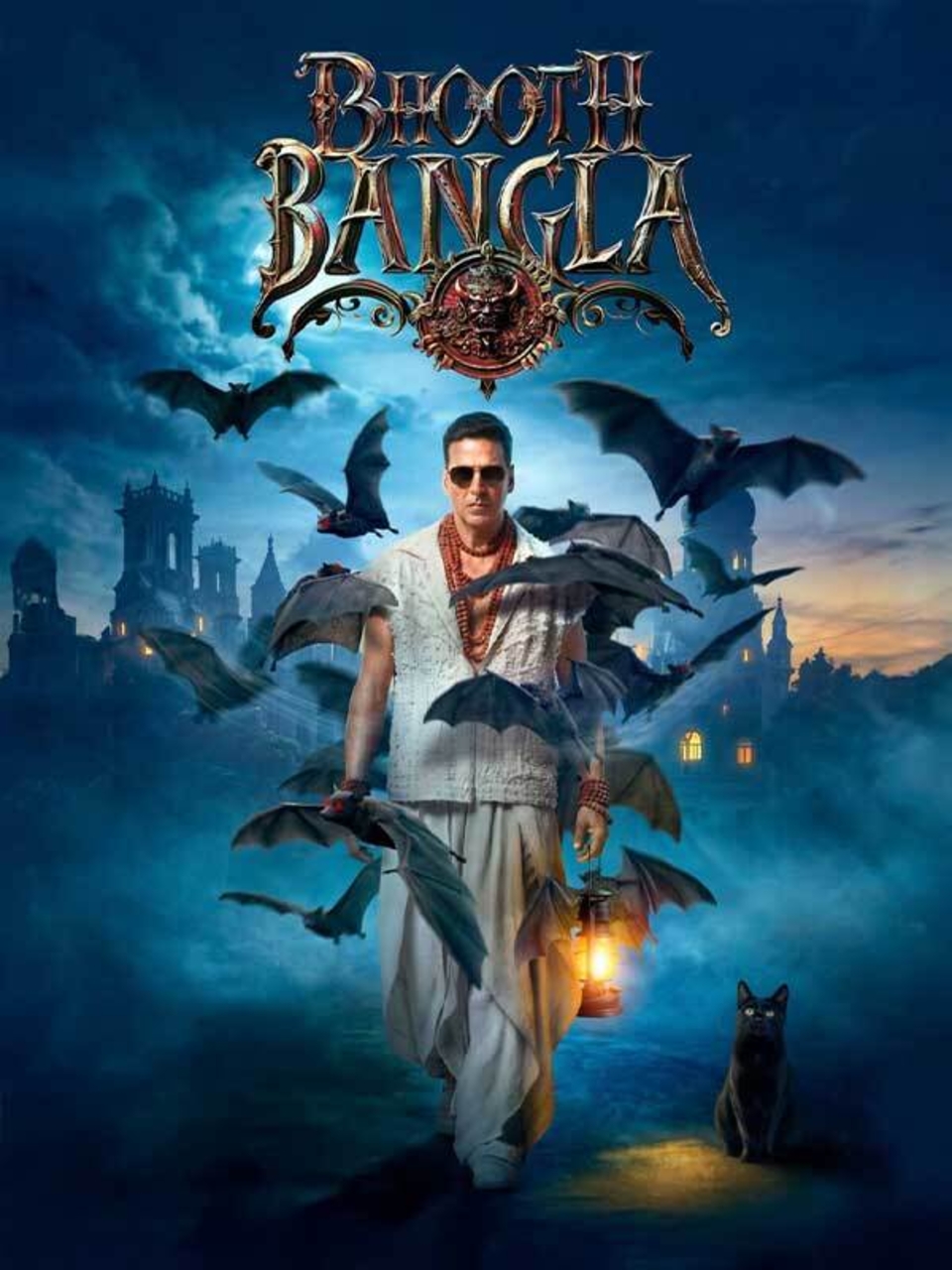
Bhooth Bangla, Review: Fantasising about horror and comedy...keep fantasising!
Three personalities must take credit or discredit for the quality of the product they have collaborated on: Akshay Kumar (producer, and lead actor of over 150 films), Ekta Kapoor (producer of over 60 films) and Priyadarshan (director of around 95 films). The ‘nom de film’ Akshay (not his real name) means immortal, indestructible, unending, or imperishable. Ekta means unity, oneness or harmony. Priyadarshan means Handsome, charming, pleasant to behold, good-looking, or "one who has a beautiful vision". Good news: the three will survive Bhooth Bangla. Bad news: many viewers will not survive Bhooth Bangla.
For Akshay, this will be one aberration in his career, which has many a super-hit to his credit to justify his status as a super-star. The exceptions prove the rule, all actors are not best judges of the potential of scripts, and often get swayed by riding the trend or making a film with what could be considered a great ‘set-up’. He will remain ‘indestructible’, i.e., a bankable star. Ekta leads the team that has strung together a director and actors in the hope that they will jell in harmony and get the box-office coffers jingling. AI says that most of her films have had thriller, horror, or offbeat content, and only about 10 have been really successful. This would suggest that she is a poor judge of film subjects to produce, though she is often considered among the Head Honchos of TV entertainment. Nevertheless, she will make more films and more serials, good bad or indifferent, with oneness of approach. Priyadarshan has made films of all genre and in many languages, though it can be claimed, with some confidence, that he is not highly knowledgeable about the Hindustani language.
Films like Hera Pheri (2000), Hungama (2003), Garam Masala (2005), Bhagam Bhag (2006), Malamaal Weekly (2006) and De Dana Dan (2009), have established him as a specialist in the comedy genre. Add to these his horror foray, Bhool Bhulaiyaa (2007), and you have a director who usually lives up to his reputation. For reasons unknown, Bhool Bhulaiyaa, which became a franchise, had Anees Bazmee helming the second and third parts, both turning out to be block-busters. His last Hindi film was Hungama 2, a romantic comedy. Asked how would Bhooth Bangla be different from any other ghost or horror comedy film, he had said that the element of fantasy would stand out as the difference. He did not mention that it also contains at least three lip-sync songs, not usual to the horror/comedy phylum. Darshan, in Hindi, also means philosophy, and at least this time, Priyadarshan’s philosophy has not worked. But never mind! One misadventure does not cancel out some memorable adventures. This ghost will not haunt him for long.
Bhooth Bangla, meaning ghost bungalow, has no bungalow in it. Yes, there is a titanic size palace, with several hundred rooms, “marginally less than Buckingham Palace”, says Arjun (Akshay Kumar), in an early scene, when he discovers that his sister Meera has been bequeathed this property, in a place called Mangalpur, North India, by her grand-father, who has just died. Living in London, with his father and doting sister, Arjun gets the news from an English Solicitor, who represents his Indian counterpart, and locates the heiress, to hand over the property papers. Their father is, at that point of time, in Sydney, giving lectures on myths, mythology, spirits and ghosts, a subject he specialises in. Since the children cannot contact their father, his phone being out of reach, Arjun decides to go and see the inheritance for himself, and, if found suitable, to hold his sister’s impending marriage to her lover, Rahul, there; a real destination wedding.
On the train to Mangalpur, from the nearest airport, he saves a woman from falling out of the compartment. Her name is Priya, and her Darshan entrances him instantly. It is love at first sight. Now the Londoner Arjun is blissfully unaware that Mangalpur is an accursed destination, where an ancient demon, Vadhusur’s, remains are buried. He is so named because, though clinically dead, he preys upon the Vadhus (brides) of the small town, and Asur is a generic term for all ungodly evil forces. Some 12 of them have disappeared on their wedding day, and rumour has it that if he is able to abduct the 13th, he will be reincarnated. And he does so not without reason. He was betrayed by his beloved Vrikshni (Of the Tree), who stuck a dagger in the garland that she was to put around his neck, to solemnise their marriage. This was a divine plan to prevent him from using his evil energy, against the wishes of Lord Shiva. Shiva had sent Vrikshni to earth with this very mission: attract Vadhusur, lure him into marriage, and strike when the flowers are still fresh…er…when iron is hot.
Vadhusur’s remains are kept in a small cave like structure, deep into the forest, and to keep watch over him, Vrikshni forms a real, large tree near it, in the shape of an arc. Apparently, Vrikshni is not doing a great job, and neither are the Acharyas, who inhabit the area, so Vadhusur is having his way, causing storms, deluges, attacks of Batmen…er…thousands of just bats, that circle and swerve at his command. Arjun is beside himself with joy, when he discovers the sprawling campus of the palace, gifted to Meera, by her grand-father, who, unbeknownst to him and Arjun, was an Acharya of the area, and one of the few great learned men who were trying to deal with the gory misdeeds of Vadhusur. Arjun pooh-poohs the ‘superstitious’ tales, and decides to hold his sister’s wedding right there. To arrange this event, he hires a Wedding Planner called Jaggu, from Delhi, who arrives there with his nephew, Sunder, an electrical wizard, whose pet name is Ballu, and who is entrusted with the task of making all the lighting, fans and other electrical equipment ready and working for the big day.
Image
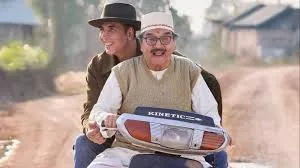
Discovering that Shantaram Yadav, the estate manager of the late Acharya, has been selling off priceless antiques disguised as Shyam Babu, Arjun sacks him. Ballu is a blubbering fool, and his attempts to get the electrical connections working result in setting Jaggu’s behind on fire, more than once. To add to this, Jaggu’s clothes catch fire and, guess what, his behind gets burnt. Arjun gets an electrical shock and is declared dead, but, out of the blue, Priya arrives, to use Cardiopulmonary Resuscitation, and he comes back from the dead. He cannot believe his luck, and romances his lady love, even proposing to her. Meanwhile, strange things start happening in the palace. Humanoid forms appear and disappear, slide and fly. Whenever Ballu tries to sleep at night, some strange power pulls off his pants. He also gets possessed, and serves his infiltrated spirit. Arjun starts seeing people and things that are not visible to anybody but him. Then there is the room that is permanently locked, and no one can open it. This was the room that only the Acharya could access, with his key, and he never parted with the key. All attempts to break open the door prove futile. Into all this chaos arrives the father of Arjun and Meera, and he carries in his mind memories that will make the entire entourage shiver in their pants and dhotis. Everybody, but Arjun, for what are heroes for?
Unbearably over-written, the film tries to work on several planes, but the plain truth is that it does not work at all. Four writers are credited: Aakash Kaushik for the story, Abhilash Nair, Rohan Shankar and Priyadarshan himself for the screenplay, and Rohan Shankar for the dialogue. Partly inspired by the 1979 pure horror outing, Jaani Dushman (mauled by the censors of that era), the story tries to upgrade superstitious mythology with contemporary thinking and logic, includes a plethora of characters so voluminous that it is difficult to even remember their names, stutters along at an uneven pace and shoots off tangentially more times than one can count. The screenplay has so many loopholes that any number of ghosts, or, for that matter, humans, can pass through easily. At least a dozen scenes are incomplete, cinematically, and many freaky incidents left unexplained. Of the various forms of comedy, Bhooth Bangla, tries to cash in all possible options: Chaplinesque (very little), slapstick (a lot), situational (not much), dialogue/language-driven (frequent, but falling flat most times), double entendre (in poor taste, toilet humour (using the toilet itself) and rude comments about personal looks (thankfully, just once or twice).
Horror here consists of the usual tropes: dark, shadowy figures, shapes materialising and Demat (de-materialising), sudden thunder-storms, car crashes, trees getting uprooted and thrown around highways, bats dotting the sky, lights going off countless number of times (Vadhusur can only operate in the dark), eerie forests, suspenseful music bangs (all too often) to give you jump scares. Then there are the comic horror scenes, where the piano starts playing on its own, but it is soon discovered that a succession of animals, like rats and cats, reincarnations of Franz Liszt, Sergei Rachmaninoff, and Vladimir Horowitz, are stepping on the keys, and the scene where a famous haunting song, ‘Kaheen deep jaley kaheen dil’, from the 1962 film Bees Saal Baad (1962) is heard in the palace, in the middle of the night, and it runs out that Ballu is playing a radio. Dialogue is woefully bad, in terms of choice of words, grammar and pronunciation. Many a times, it seems that the actors have improvised the lines, and incomplete sentences are often left hanging.
Either Priyadarshan has been very busy, or he has not been keeping good health. Otherwise, why would he need Abilash Nair as co-director and Ravi Thyagarajan as associate director? I think there was even a third name sharing the direction credit that is not mentioned on imdb. Seeing the result, one is inclined to believe that either their visions clashed or the narrative could not be seamlessly integrated. I tend to believe that the same subject, made in a language that these three gentleman are fluent in, would have turned out to be a much better film. Especially, when it comes to comedy, one has to know the language to predict whether some dialogue is sounding funny or not. One other aspect of the direction is the pacing. Everybody seems to be in a big hurry. They either speak too fast or move too fast, quite unnecessarily. I really wonder whose idea it was to incorporate at least three songs in the film and add another during the end credits, all lip sync. The idea has backfired, and only adds to the length of the film, which ends up consuming 174 minutes of your time. Okay, so the songs are well-written, but why the Punjabi words, when nobody either speaks Punjabi or is said to be from Punjab? The father of the heiress speaks with a trace of Bengali. One does not mind watching the entertaining last song, but, by then, the audience has already been accustomed to going out during the earlier songs, and their patience and their bodies are waiting to rush for the exit.
Image
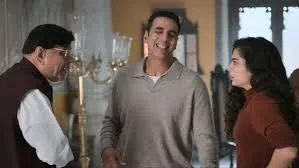
It is a case of just one more film for Akshay. He is in command and unruffled, even when the goings-on are far from credible. But age has just about begun to show, on this 57 year-old. Tabu, at 54, shows great versatility in her song and dance moves, but her entry is delayed far too long and her role far too short. Jisshu Sengupta looks a bit like Kanwaljit, and matches Tabu in their song number, by playing the tabla like a veteran. He looks too young to be the father of Akshay and Mithila Palkar (Meera). Paresh Rawal has a longish role, but it his butt that is the source of some comic relief (and he is made to say that himself, in case you missed it), not his lines. Wamiqa Gabbi as Priya and her twin sister and a ghost has an inherent cuteness about her and one can expect to see more of her soon. She wears her 32 years lightl;y. Of the few dedications, the film honours late Govardhan Asrani (Shantaram Yadav/Sham Babu). In the film, he has a straight role with very little on his plate by way of comedy. Speaking in his normal voice, he could have been used in a much better way. Maybe the role was longer and more meaningful, but was cut short by his passing away last October. Manoj Joshi is made to throw tantrums, and get slapped, behind closed doors, by Akshay. Easy pickings. Zakir Hussain is his usual competent, fluent self, as a priest/Guru. Rajesh Sharma is mis-cast as the Guru of Jisshu Sengupta, and fails to impress. Not surprisingly, some of the few funny scenes are centred around Rajpal Yadav (Ballu/Sunder). Are Mithun Chakraborty and Vindoo Dara Singh in the cast? You tell me. Also in the cast are Mahek Manwani, Ashwini Kalsekar, Jamie Lever (Johnny’s daughter).
Image
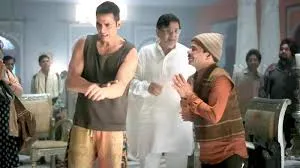
Pritam Chakraborty’s efforts as composer are in vain, and Ronnie Raphael is made to work overtime to generate ‘chills’, in his background music. Director of Photography, Divakar Mani, does a serviceable job, but with so many scenes where light and dark keep alternating, and with so many shades of not easily visible grey, his workmanship takes a back seat. Editor M.S. Aiyyappan Nair, quite definitely, must have been given an overload of footage, and could salvage 174 minutes out of it, which seemed coherent.
All things considered, this Bhooth Bangla is a misspelt Bungle (and I am not talking about the extra h at the end of Bhoot) that lacks Spirit.
Rating: * ½
Trailer: https://youtu.be/XW1RkKiRnsg