
Party Girl: Review
REVIEW:Party girlby Marie Amachoukeli, Claire Burger, Samuel Theis / France-Un CertainRegard
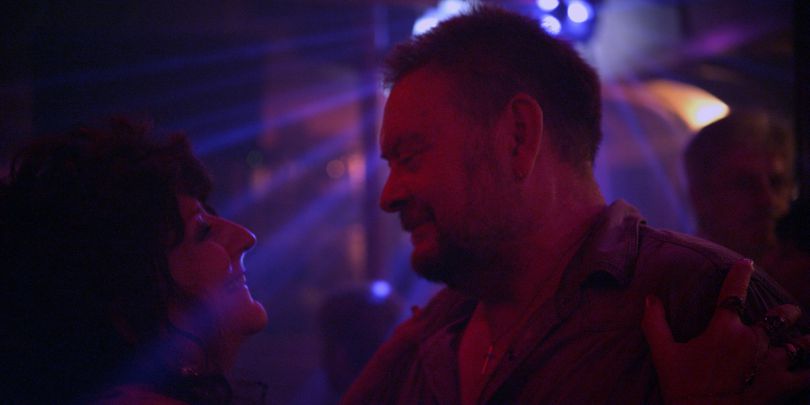
Three young directorsportray the life of Angelique-a girl that likes to party,agirl that adores life.
In anunusual social realist drama with touches of documentary,the firstof the three directorsSamuel Theissets a close-up onhis mother Angelique Litzenburger,rewinding her life andcreating a web of memories mixed with a certain dose of fiction. With mostof the cast actingreal-life, the lines between reality show, documentary and fictitious extravaganza are blurry,though this detail rapidly fades away as the story starts to unfold.
When we enter her world in a seemingly ‘from god forgotten’ cabaret bar on the French-Germanborder,inevitablyourbody is forced to follow the rhythmsof the music-classic jazz, 80s tophits and contemporary hip hop swing down the road to signify the presence of a protagonist.
Angelique has learned to be theprotagonist in a life full of joy,colourful nights, music, danceand love affairs. A bohemian woman, strong and self-confident, Angelique lives for the momentand seemsdesigned to extract every drop out of it. She spends her nights in the oldcabaretwhereshe used to perform and attract powerful and wealthy men.Her last remaining client, Michel,who has fallen in love with Angelique, proposes her a marriage and for the first time the heroineis tempted to leave her old life behind.
Angeliqueintroduces her four children, her girls and her rich past. Sheenters the latter withstrong determination to fill the gaps that have been left uncovered the first time. She failed tocreate a family, to be the desirable mother and to stand by anyone elsebut herself.
Angelique's dilemma takes her to unknown paths, and her psychological ups and downs areclosely monitored in order to transfer the emotional crash she experiences. We witness herfurious outbursts in the cabaret and her clumsily covered fearwhen she faces her four childrenbut at same time she desperately seeks compassion and support, though the way of requesting itdefinitely eludes her.
As she tries to recover and stabilise her relationship with her younger daughter who grew up in afoster home, the tones become slower, the party stops andbehind the caricature of a glamorouspersona, the human character is being pulled from underneath.The three directorsunitetoharness their characters while at the same time pursuing a cinematographic style that fits realismwithout deforming it. Smart close-ups and travelling cameras that speak the body language createa joyful atmosphere and the eye follows the touching hands, the sparkles and the feelings andmove from scene to scene with the almost unnoticed transitions.
Party girl does not force deliberate messages but allowsthem to flow and take personalizedforms as we identify with characters or situations. Intheephemeral and superficial realityoftoday, the story of Angelique redraws the guidelines of grown-up decision making whereconformities end up vague and outdated anddreams have no expiration date.


