Mundruczó Sheds Light on <i>Pleasant Days</i>
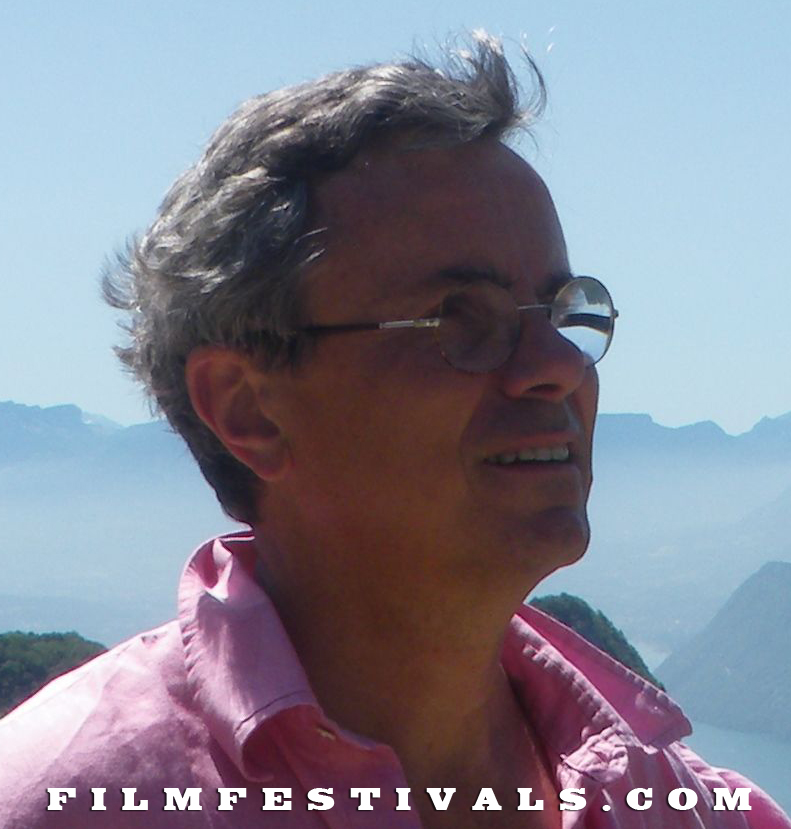
Hungarian Kornél Mundruczó, born in 1977, is one of Europe's
most talented young directors. His first feature, This I Wish and Nothing
More, won the best début prize at the Hungarian Film Week 2000, and
his subsequent short, Afta (Day by Day) succeeded in collecting an impressive
string of best short film awards at many festivals. Last year, Pleasant Days
(Szép Napok), a portrait of an abused youth drifting into small time
crime and dubious morality, generated heated discussion at Locarno Film Festival
and eventually won a Silver Leopard. The film was also nominated for the most
promising young film at European Film Awards (a prize that in the end went to
fellow Hungarian György Palfi for Hukkle).
The definitive cut of Pleasant Days had its premiere in Rotterdam last
January, and recently won the best film prize at the first competitive Sofia
International Film Festival. At present, the film is in competition at the Infinity
Film Festival in Alba (Italy). In the meantime, Mundruczó directed a
short as part of a collective film, called A Bus Came
The feature,
made up of five segments directed by five young Hungarian directors (Mundruczó,
György Palfi, Viktor Bodo, Ferenc Torok and Arpad Schilling), won a special
prize at this year's Hungarian Film Week. We met Mundruczó in Rotterdam
and talked with him about his Pleasant Days.
In Rotterdam you've been premiering a version of Pleasant Days that
is slightly different from the one that won a Silver Leopard in Locarno. What
were the changes you were willing to make to the film?
When I watched the film screening in Locarno I had the feeling that it wasn't
ready. And that was before of receiving the prize. My major problem was with
the rhythm of the film, because I felt it was too loose. So I worked on the
rhythm and I cut out the seaside at the end. Now the end is just after the rape,
when Péter runs away by car, and that's all. I think it was a little
bit too sentimental to go to the seaside. At that time it seemed to me something
of a brutal happy end.
This cut completely changes the mood of the ending
Yes, absolutely. That is the main change in the new editing. All other changes
only concern the rhythm of the film. By the way, now the film is much closer
to the original idea I had of it, to what my hopes were for it to be.
This style that you have already developed, where does it come from? You've
been portraying young people living in a desperate environment. Time seems suspended:
it passes through them and over them. How did you develop this concept?
I was looking for a vision of the world to work on, a precise point of view.
I decided that I didn't want to focus on more humanistic and sociological aspects,
so I got rid of them. I wanted to make clear the miscommunication between people,
the lack of communication between them. The changes in the story are so big
that it's not even that they aren't communicating, they just can't. There is
no way of communication. So, from the inside they have a lot of feelings, but
nothing comes out to the surface.
What about the violence that sometimes suddenly explodes in the films? Is
it caused by this inability to communicate?
That comes out as the first thing. My characters would really much more like
to say, "I love you", but instead they just end up hurting each other.
It's just like a kindergarten type of situation they're living in.
How did you become a director? What made you want to make films?
First I went to acting school but as soon as I had finished it I was feeling
I really couldn't be a good actor. So I submitted to the directing school and
I ended up making films. I really don't want my films to say something, to make
a big message. I only want my own thoughts to be expressed. There's no bigger
aim in my work. I surely want to put a needle into your ass, a small aching
that makes you feel uncomfortable. I want people to react to my film and start
reflecting on it themselves.
Do you think any filmmaker has influenced your work?
Among the directors I admire the most I would like to mention Fassbinder, Pasolini
and Tarkovski.
Do you think there is anything specifically Hungarian in your films?
For sure the big changes happened in Hungary in the last ten years or so, especially
the fall of communism, have much influenced Hungarian directors, but I doubt
there is something like that in my films. Anyway, the changes people went through
in the last decade can surface in my films. Actually the films are very Hungarian
as the language spoken is Hungarian and the actors Hungarian.
The two women in the film, at the moment they trade the baby for money,
they both become guilty, and that leads to consequences for both of them. And
Peter?.
I was especially interested in the character of Péter, because he's
not active, but just a sort of bystander who gets dragged into this whole situation
only by circumstances. It is much like my own position in the society at this
very moment. Making a simple comparison, if war broke out now, I would be the
innocent bystander in Hungary, as Péter is in the story.
The reason is that he shouldn't have been there in the first place. If he just
got his passport in the beginning of the film, he would have escaped like he
wanted to. I compare him to Oedipus, who didn't have to go back to Thebes to
his mother, but he did it anyway. In the film, Péter even falls in love
with the wrong girl. From that point on he gets dragged in the middle of it
all. But this wasn't planned. It was all very fatalistic. It all started with
not getting his passport.
And even the rape, it didn't have to be there, but it is, and so you feel
a negative catharsis in the whole film.
In the end the rape comes as something Péter does against himself. The
only way to escape this whole narrative is by committing a new crime: that's
how he escapes from all these crazy things. On the credit list at the end of
the film it is written that Pleasant Days is based on Albert Camus "The
Stranger". It comes from the fact that my protagonist commits a crime to
get out of the situation in which he finds himself trapped. Actually nobody
understands that, because the story is completely different. I just got the
original idea of a narrative in which to sort out a situation generated by a
crime, you have to commit another crime from Camus' book. And since I'm not
a genius as he was I wanted in a way to acknowledge this little theft.
What about the work with actors? If I'm not wrong, they are nonprofessionals.
Yes, the main character, Tamás Polgár, is an amateur. I found
him for Afta, and he was in jail at that time. When we were shooting
Pleasant Days, he was free. The two girls are nonprofessional too. Actually
one of them is a student and she's studying acting, but she is still a non-professional.
And also the other characters are nonprofessionals.
Will you work with these same nonprofessionals in your next project?
I think that for Tamás Polgár this film it's the end for acting.
He is a very sensitive guy and he's living a really difficult period after the
jail. Now he's a workingman and he's no longer interested in acting. Anyway,
it depends. It depends on the story. Yes, I think I'll still be using nonprofessional
actors. The general thing I feel with Hungarian actors is that when they act
they're sort of lying. Their work doesn't seem to come from the gut. It is surface
acting: fake acting. I think actors need to be real, so whether they're amateur
or even a goat, it doesn't really concern me as long as they produce reality.
Actually I liked very much the work Orsolya Tóth in the role of Maya.
I think she has potential, so I think that maybe I'll still be working with
her.
Paolo Bertolin