

Viva Carmen Turns a Femicide Myth Over to the Children
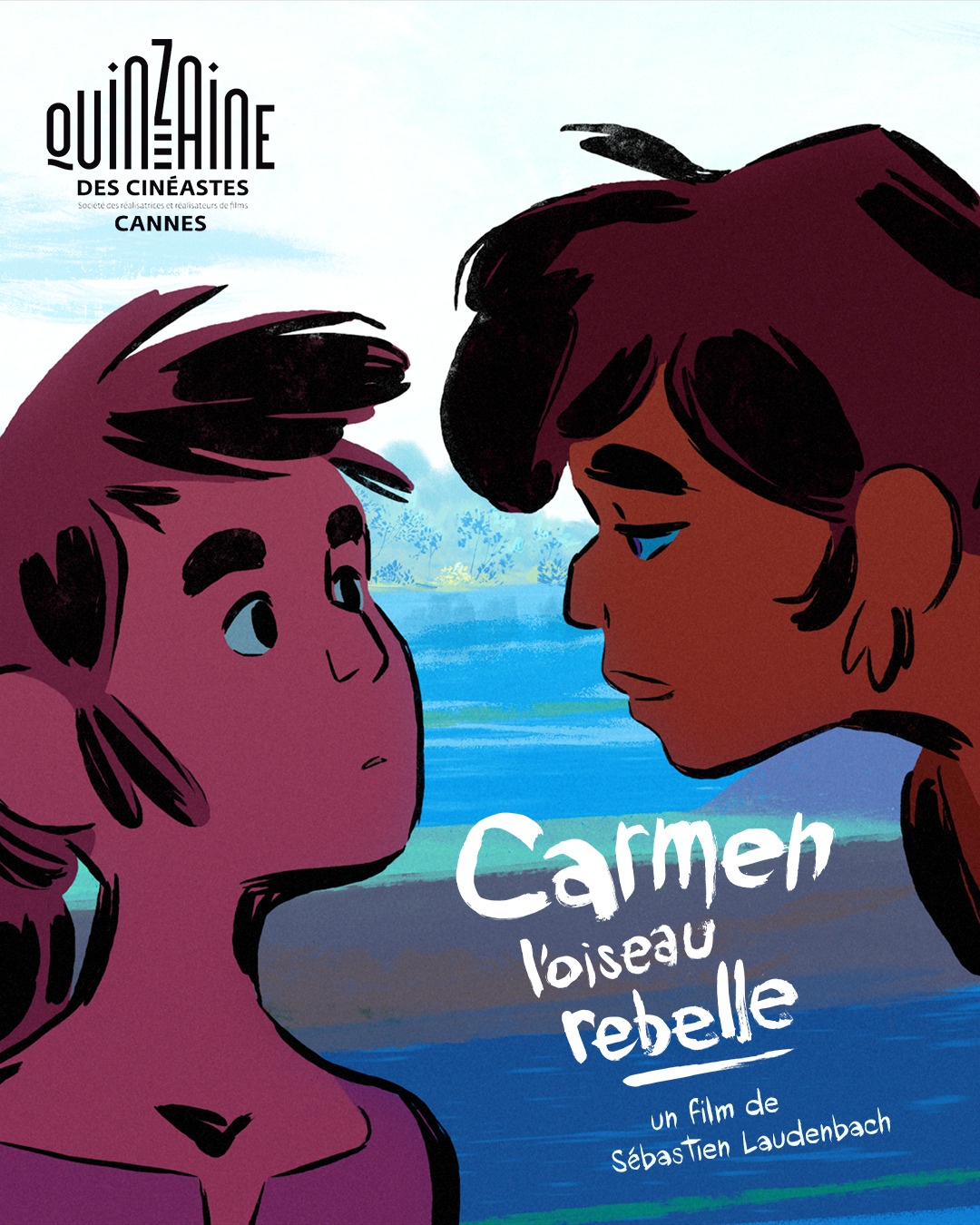
Viva Carmen (also known as Carmen, l’oiseau rebelle) is directed by French animator Sébastien Laudenbach, (The Girl Without Hands and Chicken for Linda)
The screenplay is written by Sébastien Laudenbach and Santiago Otheguy, based on the iconic opera by Georges Bizet. Visual design is led by Cyril Pedrosa, with music composed by Amine Bouhafa and Isabelle Laudenbach.
Produced by Damien Brunner and Sarah Delmas, the film premiered at the 2026 Cannes Film Festival in the Directors’ Fortnight section.
Sébastien Laudenbach has made a career out of finding the thread other people miss. In Viva Carmen, his animated reimagining of Bizet’s opera, he pulls on the one most of us have hummed past for a century: the children’s chorus that opens the show with “La Garde Montante” and then vanishes from the story entirely.
Laudenbach hands those kids the whole film. What if the children who march on in the first act stuck around to fight for the woman everyone else has already decided is doomed?
The setting is Seville, 1845, a port town filled with sailors, fish markets, and small time crooks, rendered in Laudenbach’s loose, hand-drawn line that always feels caught mid-motion.
We see it through Salvador, a teenage boy apprenticed to Antonio, a knife grinder gifted (or cursed) with the ability to read the future in a sharpened blade.
When Carmen sashays in, the town tilts toward her. So does Salvador. And so does Antonio’s prophecy, which sees her death at the hands of the soldier José well before the opera’s machinery starts grinding her toward it.
What Laudenbach does with that prophecy is the film’s real argument. Carmen is, as he has pointed out, one of the most frequently staged stories of femicide in all of art… a death we buy a ticket to watch again and again. Viva Carmen refuses the comfort of inevitability. Salvador gathers a scrappy band of street kids, led by the fierce Belén, and they set themselves against fate itself. They lose, of course; you cannot rewrite Bizet. But the attempt reframes the whole tragedy. The opera asks us to mourn Carmen. The film asks why no one tried to save her. Which hit me in a way I didn’t expect as beautiful, confident and sovereign women, even today, are often not afforded protection or grace. And they’re oftentimes what we call “the strong friend”.
The animation carries that idea in its texture. The fish market sequences are exciting and wild, in this world, gender roles aren’t so important as a girl spears a fish straight out of the water with a knife while a hungrier, clumsier boy fails and goes to sleep with his stomach growling.
Flutes and blades recur as the film’s twin motifs, music against violence, and Laudenbach lets the imagery drift toward the mystical: ghosts, an “Egyptians” alchemy that nods at the older meaning of “gypsy,” a women’s dance that the townsfolk read as witchcraft because they have no other language for female autonomy. I couldn’t stop thinking ot the book The Alchemist, also set in Spain as I watched. I wondered if that was intentional.
One of the children offers the film its thesis in a single line, that “you’re not really dead if someone remembers you.”
Carmen, performed into eternity, is the proof.
Not everything lands with equal force. Carmen herself can feel less like a character than a principle, a magnificent, untouchable “bad bitch,” to borrow the spirit of it, admired more than known. In the end when the “deed was done”, the woman seated next to me at the screening kept weeping, I too had hoped that fate could be rewritten but; I stayed dry-eyed, moved by Carmen’s defiance without feeling I’d been let close enough to grieve her.
That may be deliberate. We never really knew her in the opera either; we only knew we couldn’t have her. But it leaves the film’s emotional payload resting on the children, and they more than carry it.
BTW, I was proud of myself for not being amongst the chorus of sniffling audience members, until the very last line of the film. It got me and the tears welled up.
I also can’t fail to mention that I appreciated the film’s very subtle nod to the problem of policing in America. It was woven in so slyly that most will miss it.
Coming off The Girl Without Hands and Chicken for Linda!, Laudenbach again proves that animation can hold the heaviest material without flattening it. Viva Carmen doesn’t reinvent the opera so much as interrogate it, turning a story we’ve staged as fate into one we might have changed. Long live Escamillo, sure. But this time, long live the kids who tried.