

Alexandr Gorchilin on his First Feature Acid
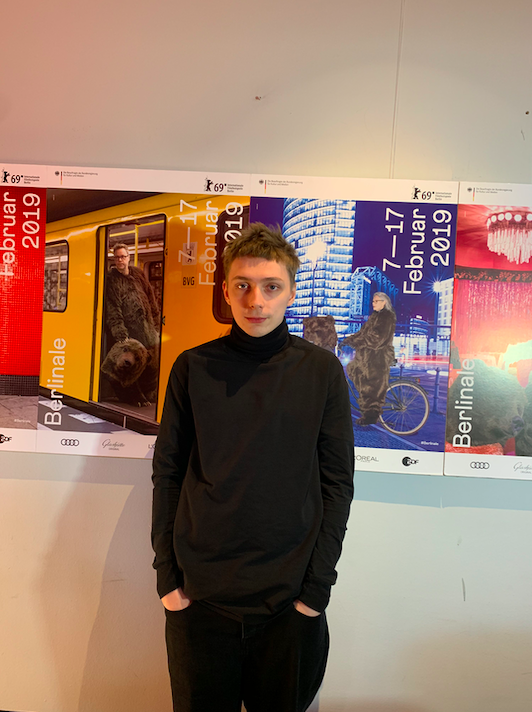
Alexandr Gorchilin is a breakthrough talent from Russia who surfaced in the festival world from projects by his mentor Kirill Serebrennikov.
Alexandr’s first feature film Acid, part of this year’s Berlinale Panorama section, is a coming of age drama for the reality of Russian teenagers and their struggle to embrace the changes coming in their life, adulthood, family and sexuality. It is a portrayal of Russia’s youngest generations and their heightened sense of self-destruction and rebellion in a place where Western modernities are still elusive.
It’s your first feature film. What’s the feeling of it being selected in Berlin after its theatrical release in Russia?
The reception of the film in Russia was very diverse and I think this is a very good thing. Cause if you just get one type of feedback, means you got something wrong. Negative response is also much better because it can help in a constructive way to develop me further as a creator. I am very curious to see what a different audience, and a diverse one here in Berlin, will think of the film.
Why Acid?
My screenwriter came up with the idea, because acid is a dangerous substance, sometimes a drug, but it can also refer to the description of feelings and emotions.
Teens and young people today have access to numerous ways of self-destruction. You choose in your film quite an unconventional way to show the way they feel, they react and express their rebellion. Is this also a parallel metaphor for Russia and how the world sees it?
I didn’t think about portraying Russia as different. You’re right in saying that acid is portraying a protest, the protest of people agains themselves rather than against others. They ask who they are, where they are and why they are at that stage at their life. If my protagonists had grown up in a different place where lot their nation would treat differences not as a disadvantage, maybe the whole topic of acid would not have come up at all. All their existential questions have to do with the environment they are settled in.
Revenge and remorse are also very important lines in the film. Do you think they more universal in teenagers nowadays?
I think everything emotional is universal. We are disappointed and desire things in the same way. But how this reflects on our lives depends very much on where we are.
Is sexual liberation for youngsters in Russia influenced a lot by western standards you reckon? Did you have to explain much to your actors about the level of confidence they should have in regards to this matter?
Everything concerning body and sex is taboo in Russia. It’s still a matter of shame and sexual expression should be very much done behind closed doors. Of course it has to do with history and cultural developments. In Europe and America there was a sexual revolution, there was a colourful hippie movement, while in Russia everyone was closing their eyes to sex related issues. Homosexuality is even prohibited by law, the states decides for yourself and who you should love and be with. Hence a lot of people are lonely and suffer a lot in contemporary Russia.
Now that you have directed and acted, what do you think your next steps would be?
Whatever speaks to me, might not even be film, might be music, modern theatre. I am surrounded by a good team of people with inspiring ideas, so I am open to a new challenge.


