
The Lazarus Effect, Review: Death-act and cataract
The Lazarus Effect, Review: Death-act and cataract
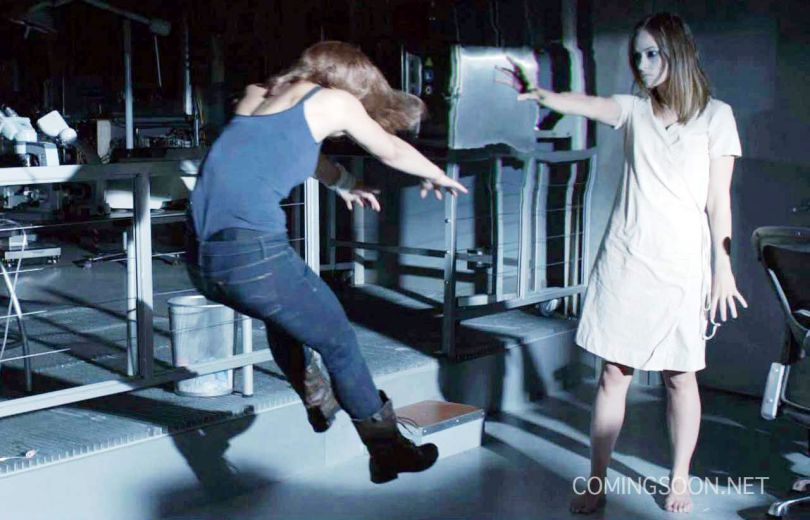
Back from the dead. Brought back from the dead. One dog and one woman brought back from the dead. The dog as a guinea pig (after a pig failed to make the grade), the woman because her fiancé cannot bear to live without her. But how? The couple and their team are research scientists working on a serum (Lazarus, the original title of the film) that could revive dead beings. One day, it works: a dog is brought back to earth from what the couple later suspect was dog heaven. The woman believes that reviving the dead was not quite right, and the team is interfering with God and destiny. Nevertheless, they carry on. Before the team can get down to coding the top secret discovery, it finds that an unscrupulous pharmaceutical company has spied on the team, bought over the educational research lab where it was working, and confiscated all its possessions. They break in and try to copy the vital information, so that they can work on it elsewhere, but they lose their star scientist to a freak accident. Time to try the serum on a human being, decides her better-half to be. It is not sure whether she is brought back from heaven or not, but all hell breaks loose soon after her rebirth. That is The Lazarus Effect.
What works in Luke Dawson (Shutter) and Jeremy Slater’s screenplay is the novelty of the idea—marrying supernatural with pure science. Although it is a Blumhouse film, it’s not purified horror on parade, but the disturbing possibility of death being tampered with, and a hell that haunts the living. It is also the brevity of the film, at 83 minutes. What work against are the factors that led to a MPAA Rating of PG13, “for intense sequences of horror, violence, terror and some sexual references.” Also, the stock -in-trade ploys used in 99% of all horror/suspense films, of people creeping-up and shadows enlarging, only to be identifid as friendly folk. Let’s add a milk-shake looking Lazarus and a hand-held blender-shaped brain injecting apparatus. And while we are at it, it could be mentioned here that when the dog is revived, the cataract he had in both eyes is gone.
David Gelb (Jiro Dreams of Sushi, documentary), who gets his major break here, does some interesting casting and uses SFX and VFX to good advantage. The casting of Olivia Wilde (who turns 31 this week) as the lead actor, as a woman who has to exhibit contradictory qualities with great conviction in each of the film’s halves, is commendable. Even more convincing is Mark Duplass (of the writer-actor-director duo Duplass brothers, Mark and Jay, seen in The Puffy Chair, Baghead and Cyrus and Jeff, Who Lives at Home), the square-jawed lead scientist. The rest of the team is played ably by Sarah Bolger, Evan Peters and Donald Glover. Playing an in-house videographer who is archiving the project is an actress who disappoints and jars with her dialogue delivery. I could not find her name billed in credits I checked.
Rating: **1/2
Trailer: https://www.youtube.com/watch?v=1Ks6JqLzVTA
David Gelb
“This was a really special dog and we really wanted to make sure of that because he was sort of the precursor to what happens to Zoe (Olivia Wilde). Also, with reference to Pet Sematary (1989), which is one of my favorite horror movies I watched when I was growing up, it was like having seen what happens with an animal first and then it happens to a human, and so we wanted to get a dog that would start out looking cute and friendly, and then things start to turn. So Kato, who plays Rocky, was just incredibly expressive. He is a dog with great eyebrows! One of my favorite shots in the movie is when he goes into the MRI machine and just looks around and stuff. He’s like, ‘What is happening to me?’ So he was a great actor.”


